


Optimizing Oral Medication Schedules for Inpatient Sleep: A Quality Improvement Intervention
- PMID: 33731336
- PMCID: PMC8006200
- DOI: 10.1542/hpeds.2020-002261
Optimizing Oral Medication Schedules for Inpatient Sleep: A Quality Improvement Intervention
Abstract
Objectives: Hospitalized children experience frequent nighttime awakenings. Oral medications are commonly administered around the clock despite the comparable efficacy of daytime administration schedules, which promote sleep. With this study, we evaluated the effectiveness of a quality improvement initiative to increase the proportion of sleep-friendly antibiotic administration schedules.
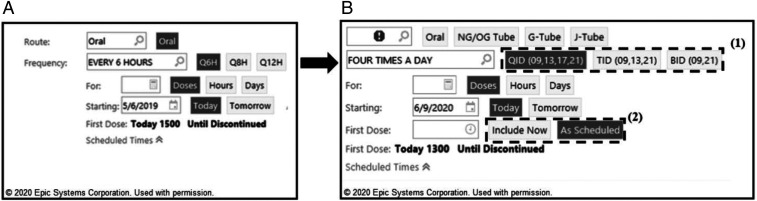
Methods: Interprofessional stakeholders modified computerized provider order entry defaults for 4 oral antibiotic medications, from around the clock to administration occurring exclusively during waking hours. Additionally, care-team members received targeted education. Outcome measures included the proportion of sleep-friendly administration schedules and patient caregiver-reported disruptions to sleep. Pre- and posteducation surveys were used to evaluate education effectiveness. Balancing measures were missed antibiotic doses and related escalations of care.
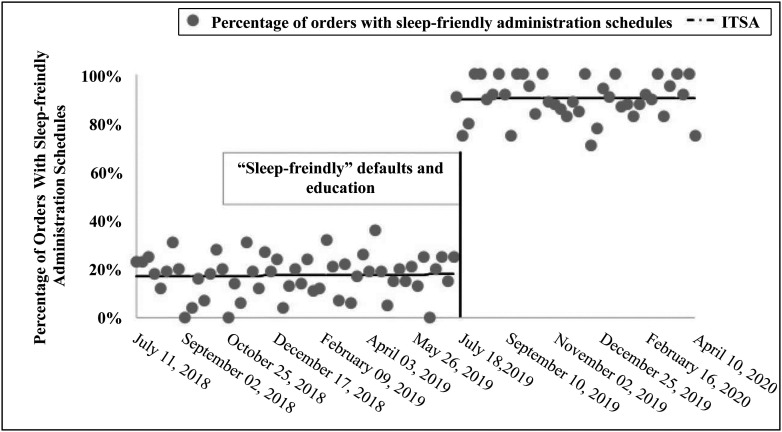
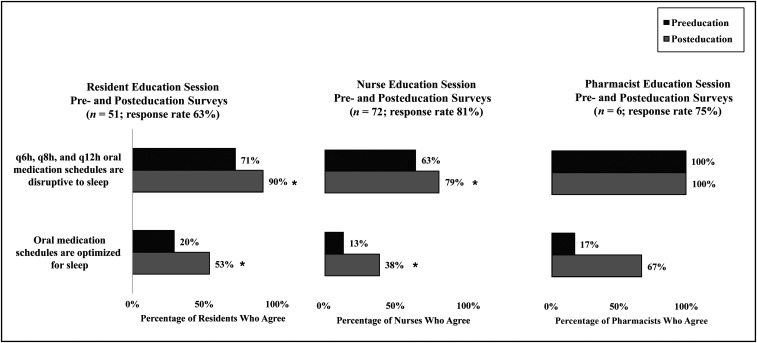
Results: Interrupted time series analysis revealed a 72% increase (interceptpre: 18%; interceptpost: 90%; 95% confidence interval: 65%-79%; P < .001) in intercept for percentage of orders with sleep-friendly administration schedules (orders: n pre = 1014 and n post = 649). Compared with preeducation surveys, care-team members posteducation were more likely to agree that oral medications scheduled around the clock cause sleep disruption (resident: 71% pre, 90% post [P = .01]; nurse: 63% pre, 79% post [P = .03]). Although sleep-friendly orders increased, patient caregivers reported an increase in sleep disruption due to medications (pre 28%, post 46%; P < .001).
Conclusions: A simple, low-cost intervention of computerized provider order entry default modifications and education can increase the proportion of sleep-friendly oral antibiotic administration schedules for hospitalized children. Patient perception of sleep is impacted by multiple factors and often does not align with objective data. An increased focus on improving sleep during hospitalization may result in heightened awareness of disruptions.
Copyright © 2021 by the American Academy of Pediatrics.
Conflict of interest statement
POTENTIAL CONFLICT OF INTEREST: The authors have indicated they have no potential conflicts of interest to disclose.
Figures
References
-
- American Board of Internal Medicine Choosing Wisely Initiative. American Academy of Nursing: don’t wake patients for routine care choosing wisely. 2014. Available at: http://www.choosingwisely.org/clinician-lists/american-academy-nursing-a.... Accessed June 14, 2019
-
- Stremler R, Adams S, Dryden-Palmer K. Nurses’ views of factors affecting sleep for hospitalized children and their families: a focus group study. Res Nurs Health. 2015;38(4):311–322 - PubMed
-
- Herbert AR, de Lima J, Fitzgerald DA, Seton C, Waters KA, Collins JJ. Exploratory study of sleeping patterns in children admitted to hospital. J Paediatr Child Health. 2014;50(8):632–638 - PubMed
Publication types
MeSH terms
Grants and funding
LinkOut - more resources
Full Text Sources
Other Literature Sources
