Review
. 2021 May;21(5):313-324.
doi: 10.1038/s41568-021-00340-6. Epub 2021 Mar 17.

Targeting FAK in anticancer combination therapies

Affiliations
Review

Targeting FAK in anticancer combination therapies

John C Dawson et al. Nat Rev Cancer. 2021 May.

Abstract

Focal adhesion kinase (FAK) is both a non-receptor tyrosine kinase and an adaptor protein that primarily regulates adhesion signalling and cell migration, but FAK can also promote cell survival in response to stress. FAK is commonly overexpressed in cancer and is considered a high-value druggable target, with multiple FAK inhibitors currently in development. Evidence suggests that in the clinical setting, FAK targeting will be most effective in combination with other agents so as to reverse failure of chemotherapies or targeted therapies and enhance efficacy of immune-based treatments of solid tumours. Here, we discuss the recent preclinical evidence that implicates FAK in anticancer therapeutic resistance, leading to the view that FAK inhibitors will have their greatest utility as combination therapies in selected patient populations.


Figures
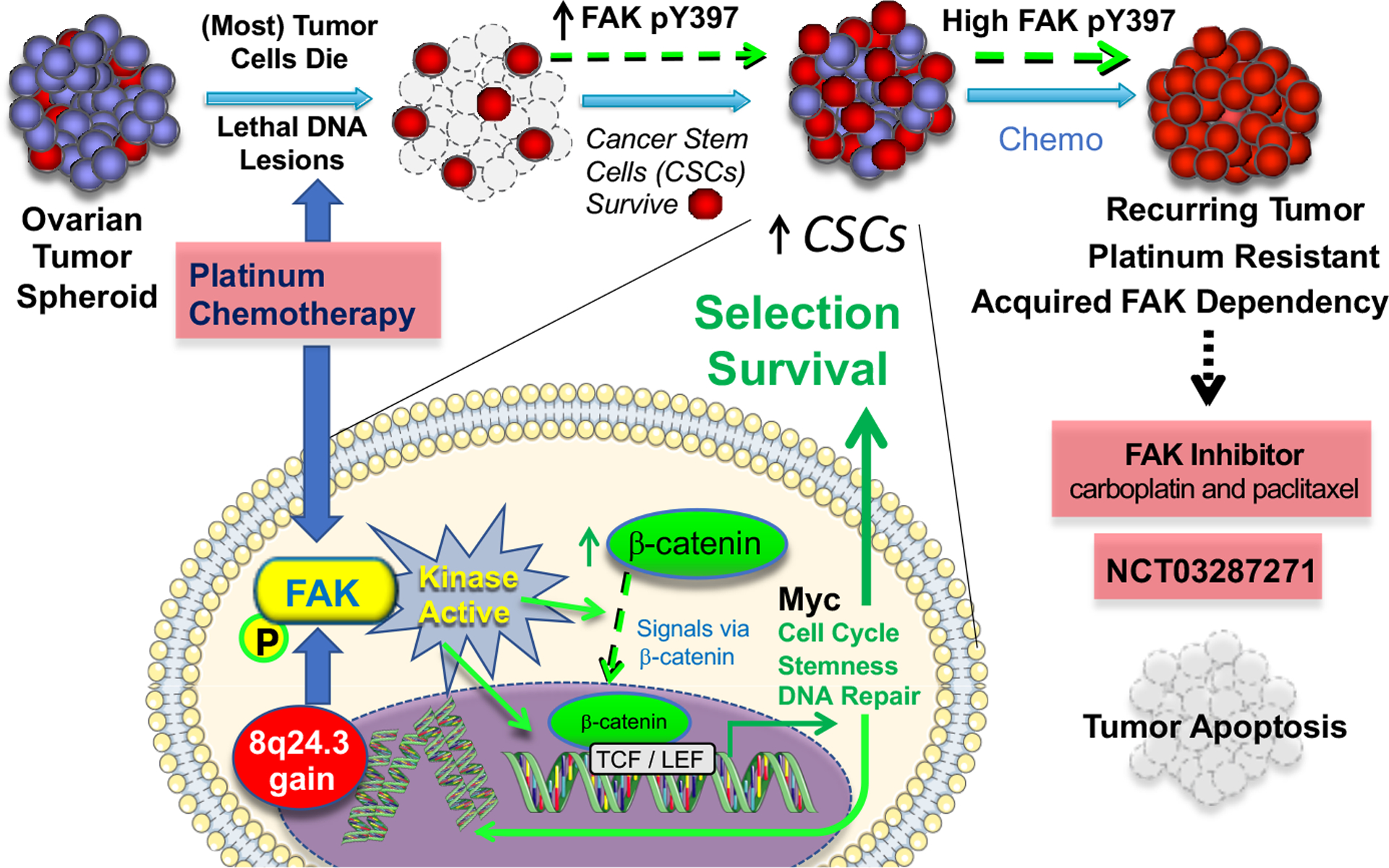
Fig 1.
Fig 1.. FAK mediates resistance to therapy in high grade serious ovarian cancer
Model of chromosome 8q24.3 gain encoding the gene (PTK2) for focal adhesion kinase (FAK), FAK activation in tumourspheres surviving platinum chemotherapy, and the survival of cancer stem cells (CSCs) in high grade serous ovarian cancer (HGSOC). Gene breakage, gains, or losses are common drivers of HGSOC phenotypes. Over 70% of patient tumours contain gains at both PTK2 and MYC loci within chromosome 8q24. FAK signalling sustains tumoursphere growth, CSC survival, and enhances platinum resistance. Although the mechanisms of FAK activation in tumourspheres by increased expression or chemotherapy stress remains to be determined, intrinsic FAK activity is needed for β-catenin-associated increases in mRNA levels of MYC, cell cycle, pluripotency, and DNA repair gene expression. Spontaneous and induced cellular platinum resistance is associated with high levels of FAK tyrosine phosphorylation and the acquired dependence on FAK activity for platinum-resistant cell survival in culture. As the combination of a small molecule FAK inhibitor and cisplatin trigger platinum-resistant tumour apoptosis, a clinical trial is testing the combination of FAK inhibition, carboplatin, and paclitaxel for recurrent platinum-resistant HGSOC for which no approved treatments are available.
Fig 2.
Fig 2.. Molecular targets for FAK inhibitor combination therapy
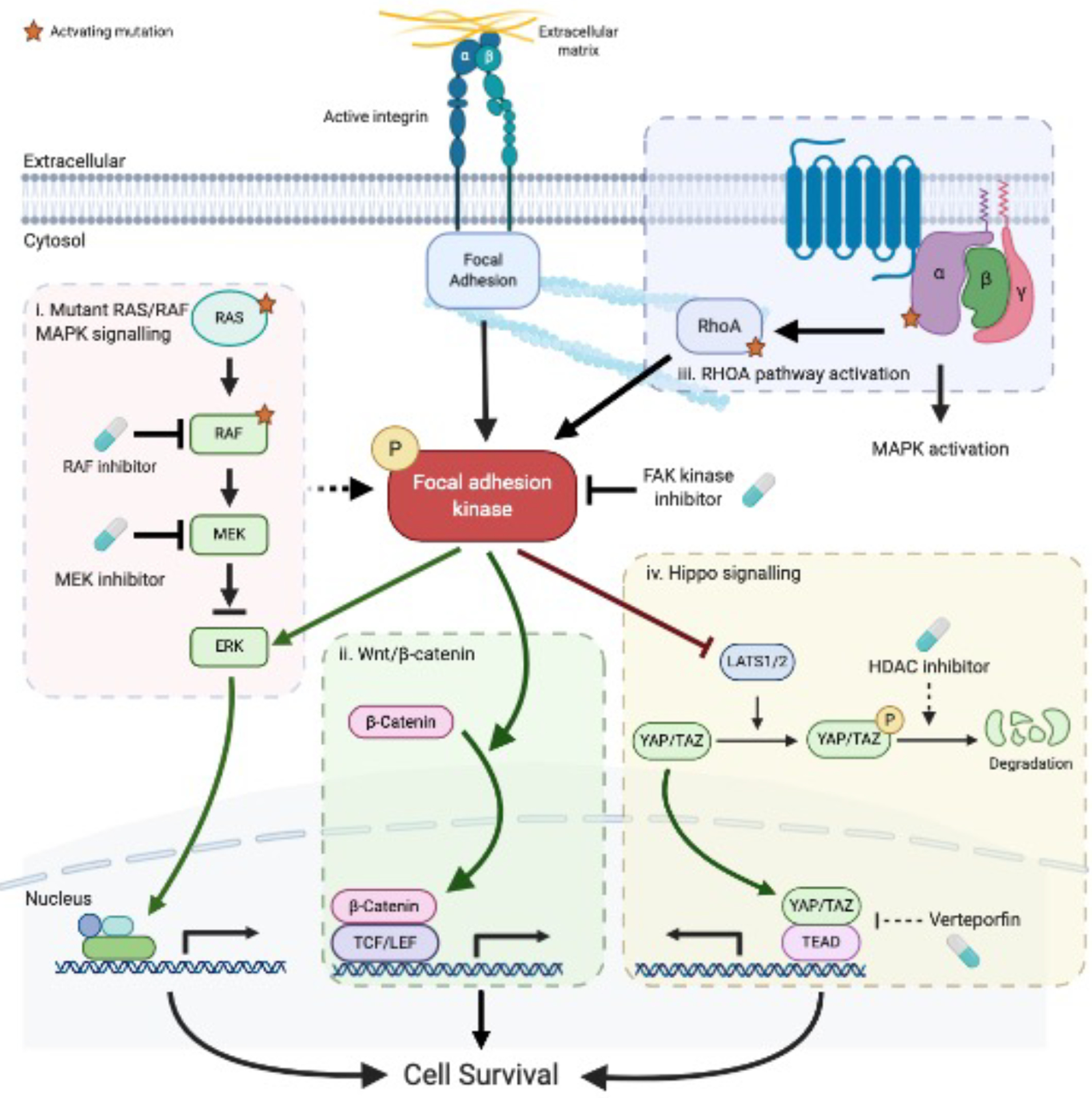
Focal adhesion kinase (FAK) supports myriad oncogenic processes. (i) Activation of the RAS/RAF/MEK signalling cascade is a common oncogenic driver in many tumour types and can be activated by mutations in a tumour type specific manner. KRAS mutations at amino acids G12 or G13 are for example commonly found in colorectal and pancreatic cancer which results in defective GAP-mediated GTP hydrolysis and constitutive activation. In melanoma, BRAF frequently has an activating phosphomimetic mutation at amino acid V600E. In RAS or RAF mutant cancer cells, blockade of the RAS/RAF/MEK pathway using either RAF or MEK inhibitors activates FAK and promotes cell survival by reactivation of ERK signalling,,. The combination of FAK (defactinib) and dual RAF/MEK (VS-6766) inhibitors is being investigated in clinical trials in patients with melanoma, non-small cell lung carcinoma, low grade serous ovarian cancer, colorectal cancer, and other RAS mutant solid tumours. (ii) In mutant-BRAF colorectal cancer cells, MAPK pathway blockade activates FAK in a β1-integrin and SRC independent way and promotes Wnt/β-catenin signalling and survival. (iii) The small GTPase RHOA regulates the actin cytoskeleton. Activation of the RHOA signalling pathway by either gain-of-function mutation of RHOA and inactivation of the tumour suppressor CDH1 in diffuse gastric cancer activates FAK and subsequent YAP, PI3K and β-catenin signalling. Alternatively, activating mutations in Gαq subunits (GNAQ or GNA11) of heterotrimeric G-proteins in uveal melanoma activates FAK via the RHOA signalling pathway to support YAP signalling and tumour growth. (iv) Activated FAK in diffuse gastric cancer and uveal melanoma alleviates the negative regulation of YAP by LAST1/2. As mutant GNAQ/GNA11 signalling in uveal melanoma also activates the MAPK pathway, the combination of FAK (IN10018) and MEK (cobimetinib) inhibition is being tested in a clinical trial. FAK activity can promote the nuclear translocation of YAP and combinations of FAK inhibitors with inhibitors of YAP expression, for example Histone deacetylase (HDAC) inhibitors, or transcriptional activity, may be needed to reinforce inhibition of oncogenic YAP signalling.
Fig 3.
Fig 3.. FAK regulates adaptive resistance to targeted therapy in melanoma
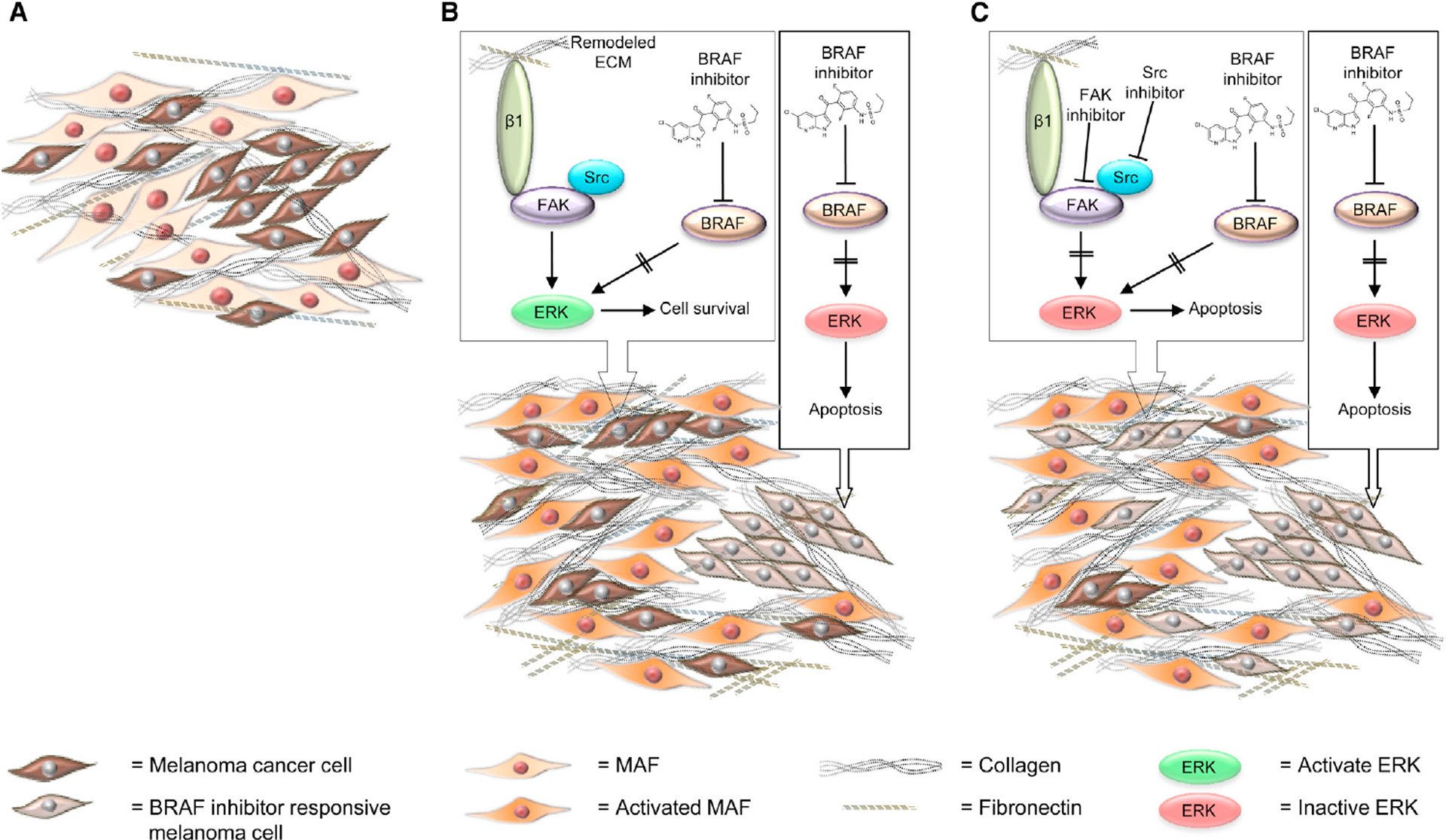
(A) In melanoma, BRAF is commonly mutated (~60% of tumours) and its oncogenic signalling can be blocked with molecularly targeted therapy such as vemurafenib. BRAF inhibitors block mutant BRAF signalling and inhibit the pro-survival signalling via ERK to induce cancer cell apoptosis. (B) In tumour areas with a high stromal density, melanoma cells become rapidly resistant to vemurafenib treatment by reactivating ERK signalling via activation of β1-integrin receptors by the extracellular matrix deposited and remodelled by the activation of melanoma associated fibroblasts (MAFs). Activation of β1-integrin activates focal adhesion kinase (FAK) and SRC which reactivates ERK-dependent pro-survival signalling, bypassing mutant BRAF signalling and mitigating the effect of BRAF inhibitors. (C) BRAF inhibitor resistance in melanoma cells driven by stromal remodelling of the extracellular matrix can be targeted with FAK inhibitors to re-sensitise tumour cells to BRAF inhibitors.
Fig 4.
Fig 4.. FAK mediates protective effects of the tumour immune microenvironment; combination opportunities
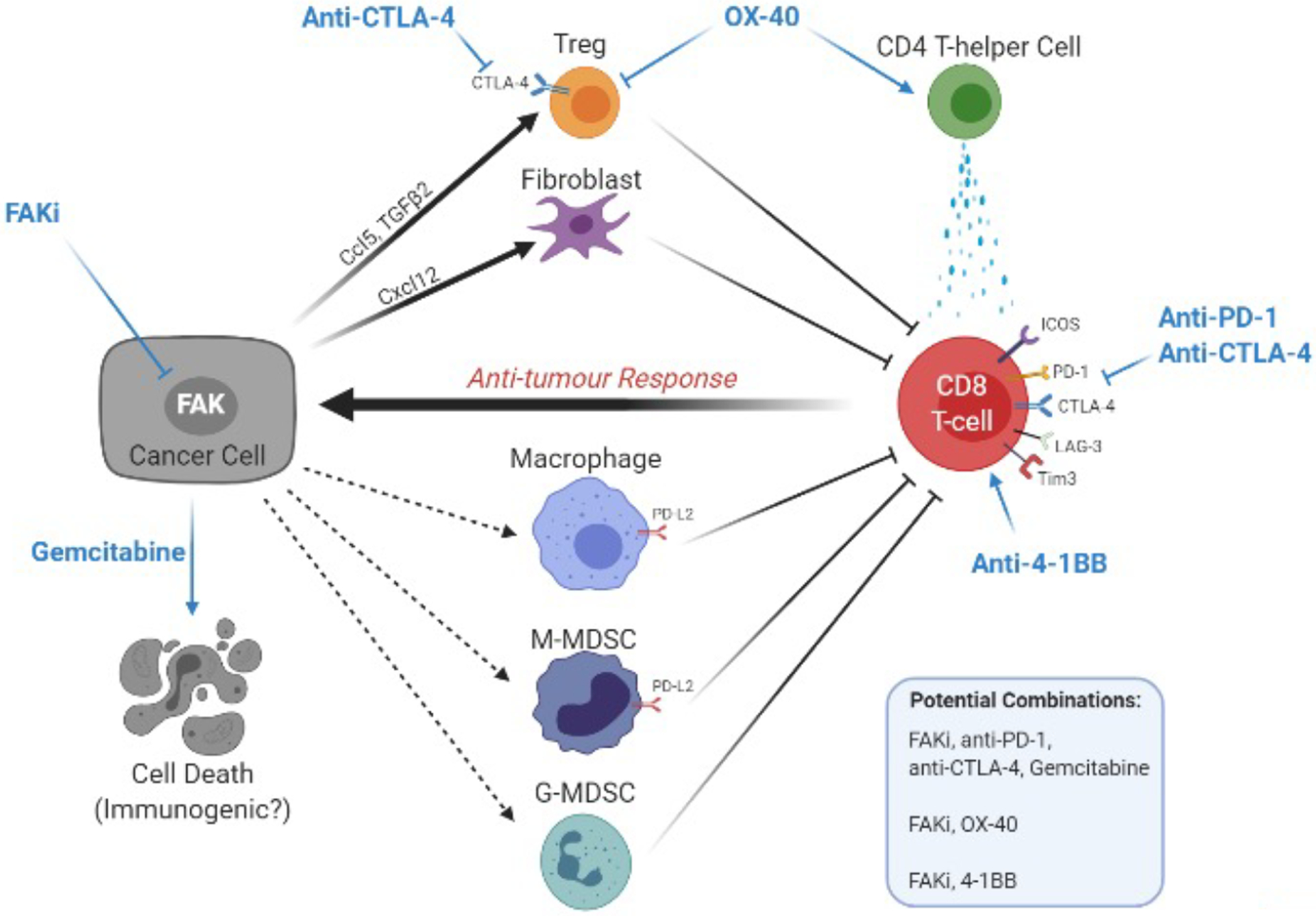
Focal adhesion kinase (FAK) inhibition can modulate the cellular and molecular composition of the immuno-suppressive TME. FAK-dependent expression of Ccl5 and transforming growth factor (TGF)β2 has been shown to impact Treg numbers in squamous cell carcinoma (SCC) tumours, while Cxcl12 has been linked to promoting pancreatic fibroblast proliferation. In some cases, FAK inhibition has also been shown to result in a decrease in macrophages, M-MDSCs and G-MDSCs in tumours,. These cell types can also act to supress anti-tumour CD8+ T-cell activity. Therefore, a decrease in their abundance is likely to contribute to the enhanced anti-tumour activity of FAK inhibitors in combination with immunotherapies. The mechanisms through which FAK inhibition can regulate macrophages, M-MDSCs and G-MDSCs remain to be defined (dashed arrows). For example, it is not known whether FAK-dependent cancer cell paracrine signalling leads to the recruitment of these cell types into tumours, or whether FAK inhibitors can act directly on these cell types to impact abundance / function. FAK inhibition can also lead to a decrease in PD-L2 expression on some of these cell types, the mechanisms for which remain to be defined. FAK inhibition can lead to upregulation of ICOS on CD8 T-cells and reduced co-expression of the exhaustion markers programmed cell death protein 1 (PD-1), LAG-3 and Tim3, likely enhancing the cytolytic activity of CD8 T-cells. Targeting FAK can sensitise mouse pancreatic tumours to a combination of gemcitabine, anti-PD-1 and anti-CTLA-4. Anti-PD-1 and anti-CTLA-4 target mechanisms of T-cell exhaustion, but anti-CTLA-4 can also have effects on Tregs. The role of gemcitabine is less clear; Gemcitabine alone does not drive immunogenic cell death but whether this is altered when used in combination with a FAK inhibitor (such as has been reported with other targeted therapies) is not known. FAK inhibition can enhance the anti-tumour efficacy of either anti-OX-40 or anti-4-1BB antibodies in mouse models of SCC and pancreatic cancer. FAK inhibition can increase expression of ICOS on effector CD8+ T-cells and this plays an important role in the efficacy of a FAK inhibitor in combination with either OX-40 or 4-1BB. FAK inhibition can also result in downregulation of PD-L2 on multiple cell types within the tumour microenvironment and this may further contribute to responses to combination treatment with anti-OX-40. There are four clinical trials testing FAK inhibitor (defactinib) in combination with anti-PD-1 antibody (pembrolizumab) in patients with pancreatic and mesothelioma cancers.

References

    1. Lee BY, Timpson P, Horvath LG & Daly RJ FAK signaling in human cancer as a target for therapeutics. Pharmacol Ther 146, 132–149, doi: 10.1016/j.pharmthera.2014.10.001 (2015). - DOI - PubMed
    1. Sulzmaier FJ, Jean C & Schlaepfer DD FAK in cancer: mechanistic findings and clinical applications. Nat Rev Cancer 14, 598–610, doi: 10.1038/nrc3792 (2014). - DOI - PMC - PubMed
    1. Lietha D et al. Structural basis for the autoinhibition of focal adhesion kinase. Cell 129, 1177–1187, doi: 10.1016/j.cell.2007.05.041 (2007). - DOI - PMC - PubMed
    1. Acebron I et al. Structural basis of Focal Adhesion Kinase activation on lipid membranes. EMBO J, e104743, doi: 10.15252/embj.2020104743 (2020). - DOI - PMC - PubMed
    1. Grossman RL et al. Toward a Shared Vision for Cancer Genomic Data. N Engl J Med 375, 1109–1112, doi: 10.1056/NEJMp1607591 (2016). - DOI - PMC - PubMed

Publication types

MeSH terms

Substances