


Sterilization and disinfection methods for decellularized matrix materials: Review, consideration and proposal
- PMID: 33732964
- PMCID: PMC7930362
- DOI: 10.1016/j.bioactmat.2021.02.010
Sterilization and disinfection methods for decellularized matrix materials: Review, consideration and proposal
Abstract
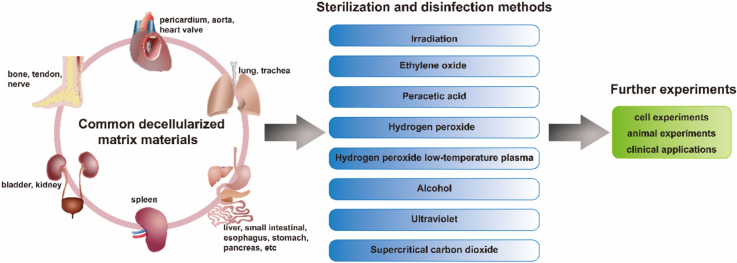
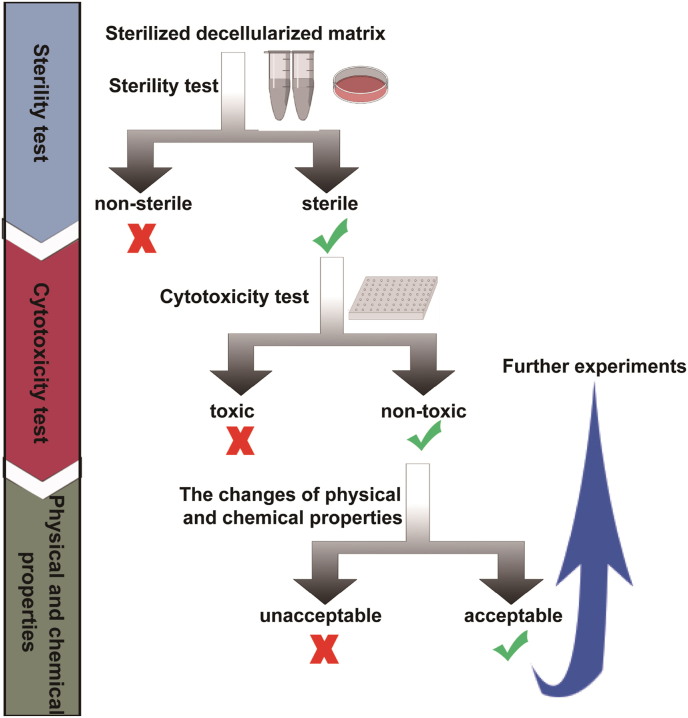
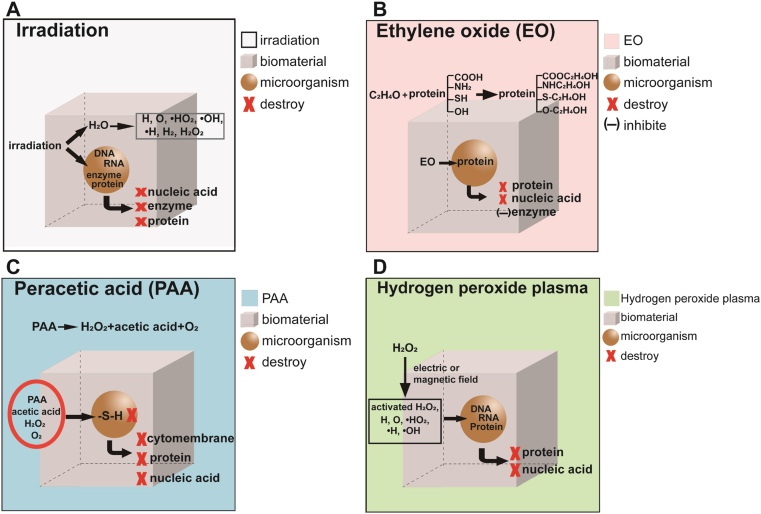
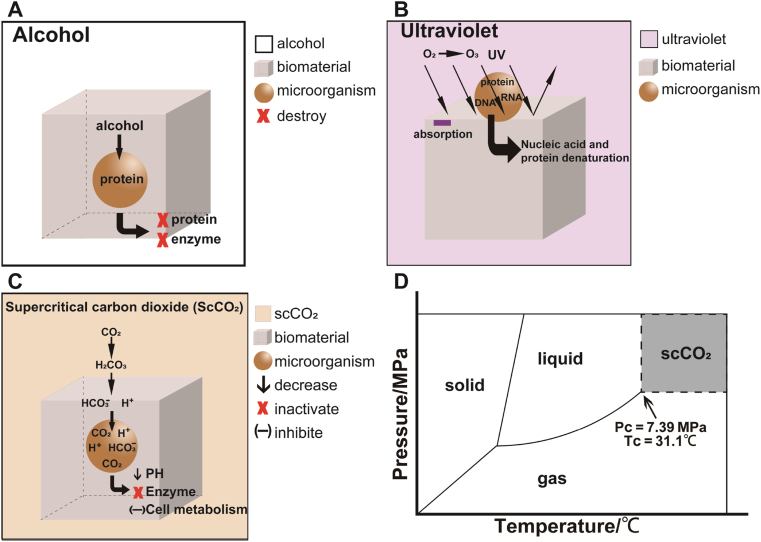
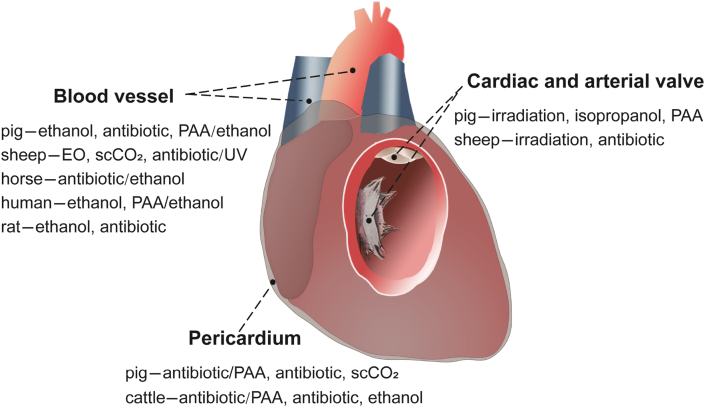
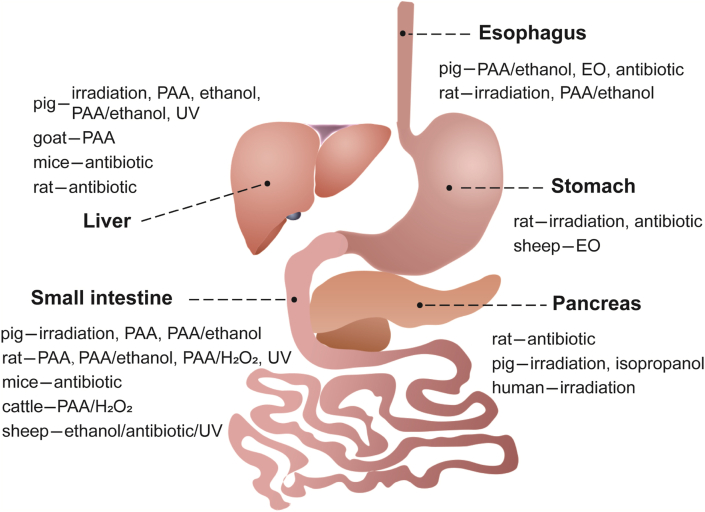
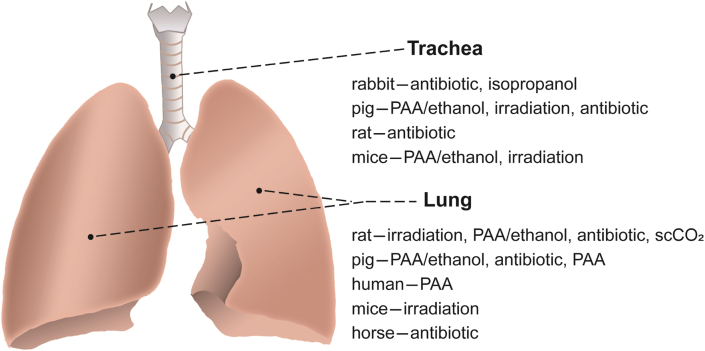
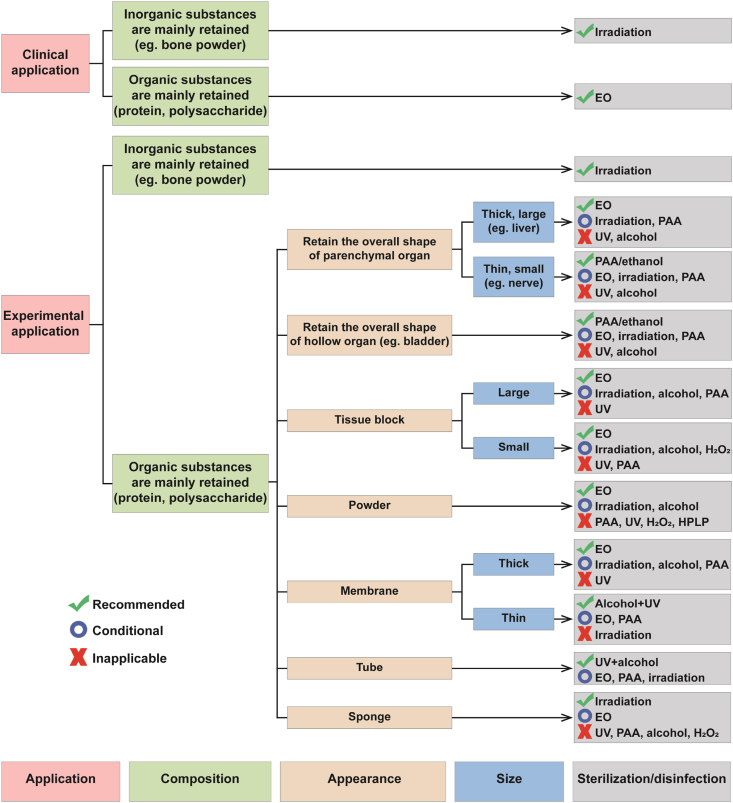
Sterilization is the process of killing all microorganisms, while disinfection is the process of killing or removing all kinds of pathogenic microorganisms except bacterial spores. Biomaterials involved in cell experiments, animal experiments, and clinical applications need to be in the aseptic state, but their physical and chemical properties as well as biological activities can be affected by sterilization or disinfection. Decellularized matrix (dECM) is the low immunogenicity material obtained by removing cells from tissues, which retains many inherent components in tissues such as proteins and proteoglycans. But there are few studies concerning the effects of sterilization or disinfection on dECM, and the systematic introduction of sterilization or disinfection for dECM is even less. Therefore, this review systematically introduces and analyzes the mechanism, advantages, disadvantages, and applications of various sterilization and disinfection methods, discusses the factors influencing the selection of sterilization and disinfection methods, summarizes the sterilization and disinfection methods for various common dECM, and finally proposes a graphical route for selecting an appropriate sterilization or disinfection method for dECM and a technical route for validating the selected method, so as to provide the reference and basis for choosing more appropriate sterilization or disinfection methods of various dECM.
Keywords: Alcohol; Antibiotic; Decellularized matrix; Disinfection; Ethylene oxide; Hydrogen peroxide; Irradiation; Peracetic acid; Sterilization; Supercritical carbon dioxide.
© 2021 [The Author/The Authors].
Conflict of interest statement
The authors declare that they have no known competing financial interests or personal relationships that could have appeared to influence the work reported in this paper.
Figures
References
-
- Zhao Y., Zhu B., Wang Y., Liu C., Shen C. Effect of different sterilization methods on the properties of commercial biodegradable polyesters for single-use, disposable medical devices, Materials science & engineering. C, Materials for biological applications. 2019;105:110041. - PubMed
-
- Xue G. People's Medical Publishing House; 2008. Sterilization, Disinfection, Antisepsis and Preservation; pp. 167–303.
-
- William D.J.W., Rutala A. The healthcare infection control practices advisory committee guideline for disinfection and sterilization in healthcare facilities. 2008. https://www.cdc.gov/infectioncontrol/pdf/guidelines/disinfection-guideli... 2019.
-
- Hussein K.H., Park K.M., Teotia P.K., Hong S.H., Yang S.R., Park S.M., Ahn C., Woo H.M. Sterilization using electrolyzed water highly retains the biological properties in tissue-engineered porcine liver scaffold. Int. J. Artif. Organs. 2013;36(11):781–792. - PubMed
Publication types
LinkOut - more resources
Full Text Sources
Other Literature Sources
