


Stress Related Disorders and the Risk of Kidney Disease
- PMID: 33732985
- PMCID: PMC7938078
- DOI: 10.1016/j.ekir.2020.12.032
Stress Related Disorders and the Risk of Kidney Disease
Abstract
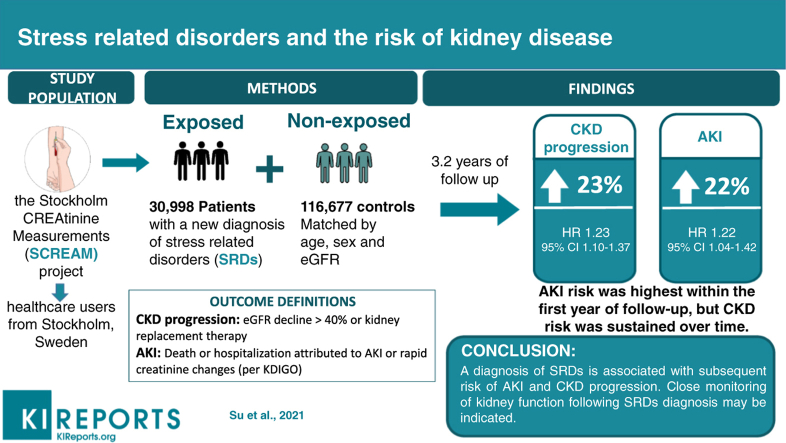
Introduction: Stress related disorders (SRDs, i.e., psychiatric disorders induced by significant life stressors) increase vulnerability to health problems. Whether SRDs associate with risk of acute kidney injury (AKI) and chronic kidney disease (CKD) is unknown.
Methods: A population-matched cohort study in Sweden included 30,998 patients receiving a SRDs diagnosis and 116,677 unexposed patients matched by age, sex and estimated glomerular filtration rates (eGFR). The primary outcome was CKD progression, defined as a sustained relative decline in eGFR of more than 40% or commencement of kidney replacement therapy. The secondary outcome was AKI, defined by death or hospitalization attributed to AKI or rapid creatinine changes (increase ≥ 0.3 mg/d over 48 hours or 1.5x over 7 days). Cox models were used to estimate hazard ratios (HRs) with 95% confidence intervals (CIs).
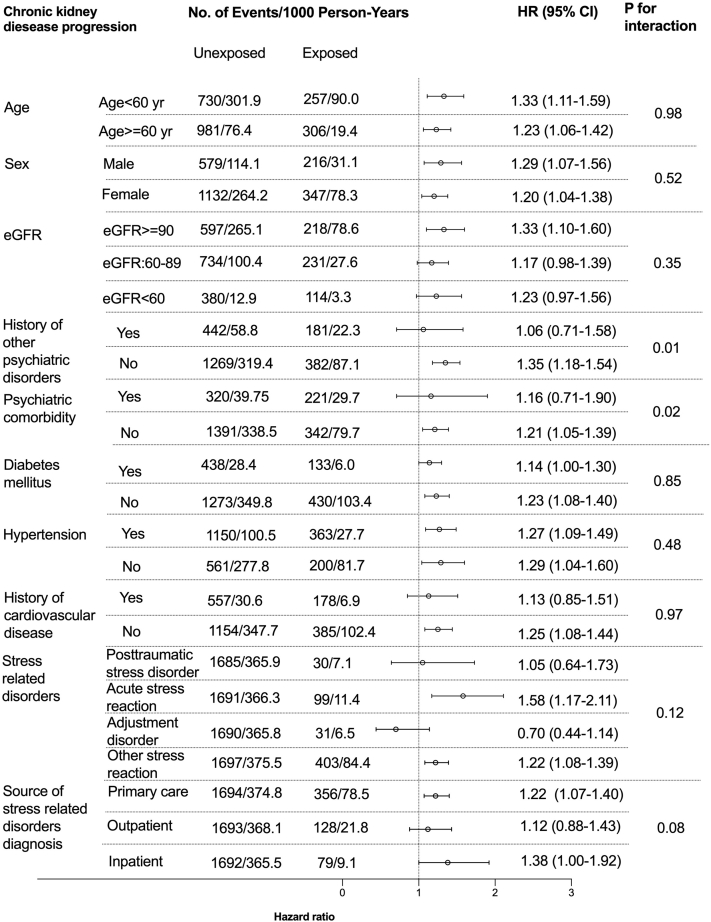
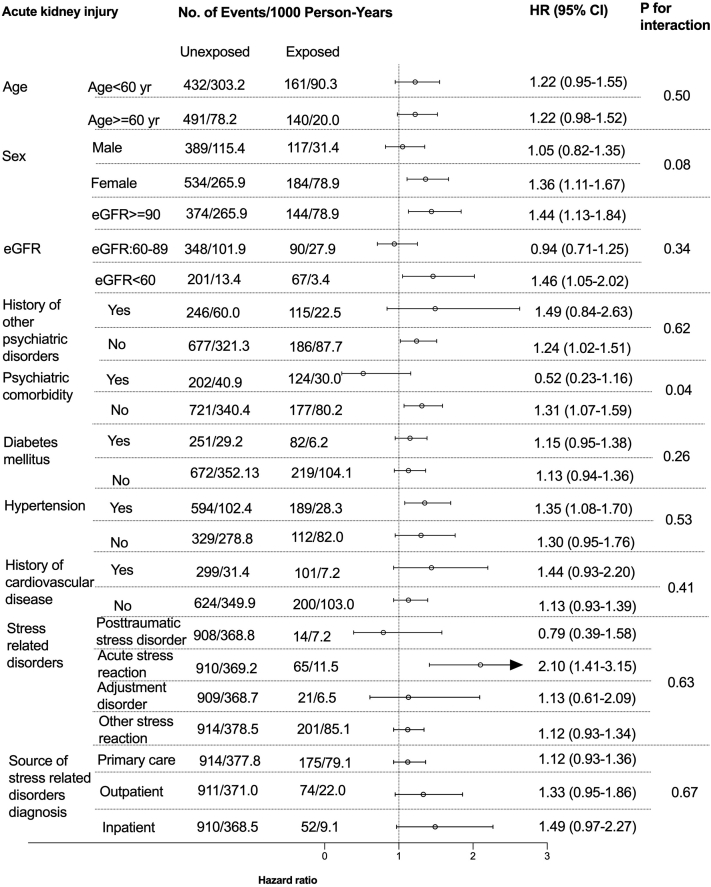
Results: During a medium follow-up of 3.2 years, compared to the unexposed, patients with SRDs (median age 45 years, 71% women), were at increased risk of CKD progression (HR 1.23, 95% CI 1.10-1.37) and AKI (HR 1.22, 95% CI 1.04-1.42). While the HR of CKD progression remained similarly elevated during the entire follow-up period, the association with AKI was only observed during the first year after SRDs diagnosis. Results were consistent in stratified analyses, when only considering AKI-hospitalizations/death, and when disregarding eGFR measurements close to index date.
Conclusions: A diagnosis of SRDs is associated with subsequent risk of AKI and CKD progression. While studies should confirm this observation and characterize underlying mechanisms, close monitoring of kidney function following SRDs diagnosis may be indicated.
Keywords: SCREAM; acute kidney injury; chronic kidney disease; cohort; posttraumatic stress disorder; reaction to severe stress.
© 2021 International Society of Nephrology. Published by Elsevier Inc.
Figures
References
-
- Rosengren A., Hawken S., Ounpuu S. Association of psychosocial risk factors with risk of acute myocardial infarction in 11119 cases and 13648 controls from 52 countries (the INTERHEART study): case-control study. Lancet. 2004;364:953–962. - PubMed
-
- Cohen S., Tyrrell D.A., Smith A.P. Psychological stress and susceptibility to the common cold. N Engl J Med. 1991;325:606–612. - PubMed
LinkOut - more resources
Full Text Sources
Other Literature Sources
Research Materials
Miscellaneous
