Review
. 2021 Feb 19;24(3):102209.
doi: 10.1016/j.isci.2021.102209. eCollection 2021 Mar 19.

Emerging concepts in photocatalytic organic synthesis

Affiliations
Review

Emerging concepts in photocatalytic organic synthesis

Susanne Reischauer et al. iScience. .

Abstract

Visible light photocatalysis has become a powerful tool in organic synthesis that uses photons as traceless, sustainable reagents. Most of the activities in the field focus on the development of new reactions via common photoredox cycles, but recently a number of exciting new concepts and strategies entered less charted territories. We survey approaches that enable the use of longer wavelengths and show that the wavelength and intensity of photons are import parameters that enable tuning of the reactivity of a photocatalyst to control or change the selectivity of chemical reactions. In addition, we discuss recent efforts to substitute strong reductants, such as elemental lithium and sodium, by light and technological advances in the field.

Keywords: catalysis; chemical engineering; chemistry; green chemistry; organic chemistry.


Conflict of interest statement

The authors declare no competing interests.

Figures
None
Graphical abstract
Figure 1
Figure 1
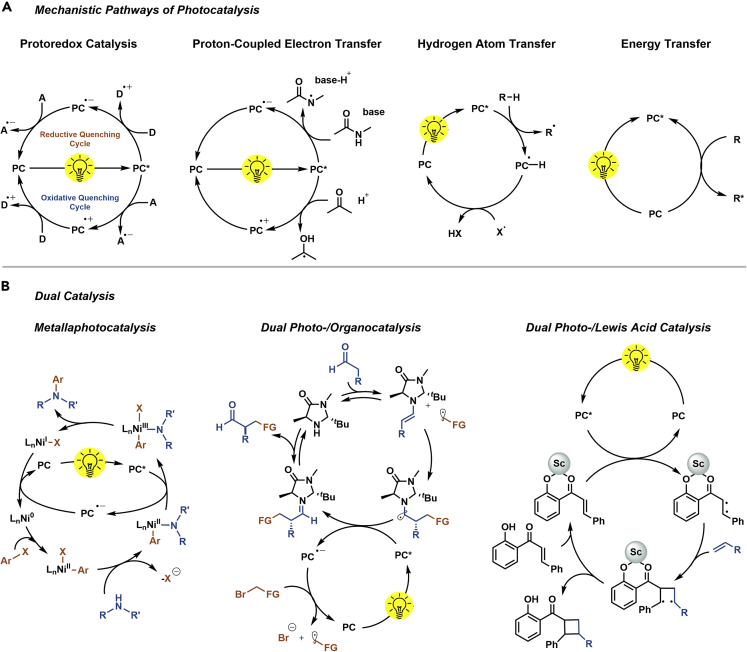
General mechanisms in photocatalytic synthesis (A and B) Different modes of photocatalysis (A) and selected examples for dual catalysis (B).
Figure 2
Figure 2
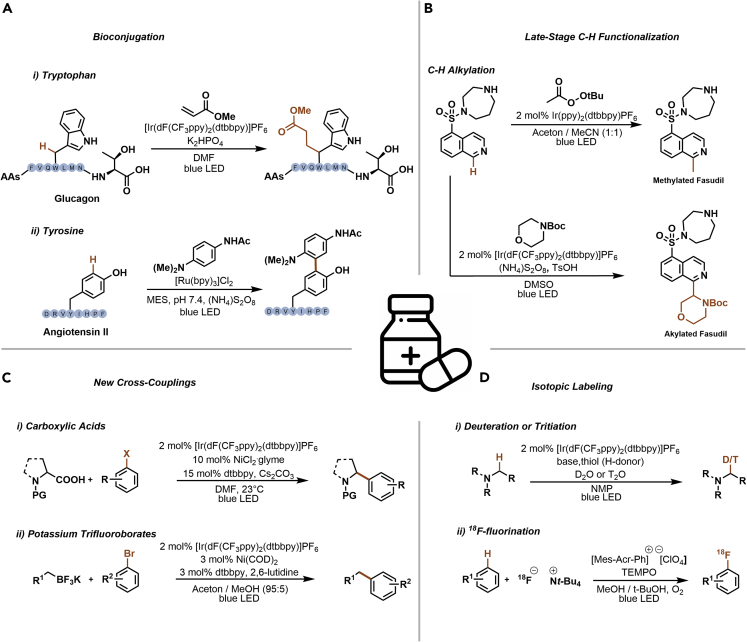
Representative examples of photocatalytic reactions of interest in medicinal chemistry (A–D) Bioconjugations (A), late-stage C-H functionalization (B), Csp3-Csp2 cross-coupling reactions (C), isotopic labeling (D).
Figure 3
Figure 3
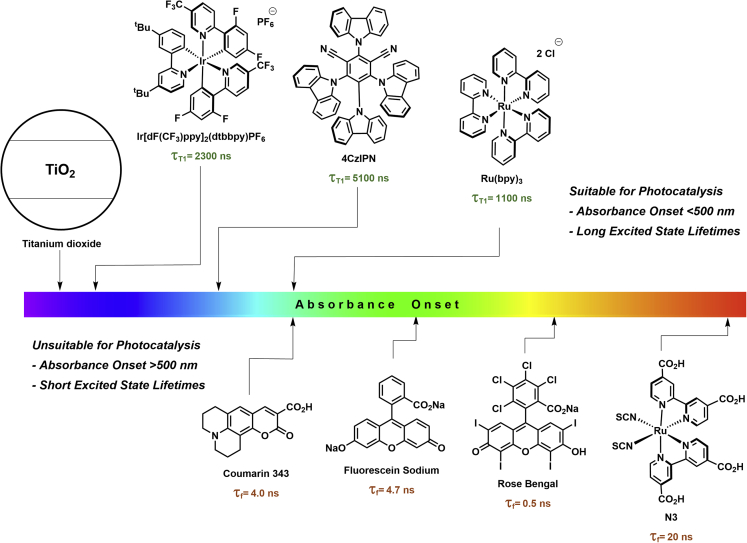
Onset of absorption of selected dyes and semiconductors The suitability for photocatalysis depends on excited state lifetimes.
Figure 4
Figure 4
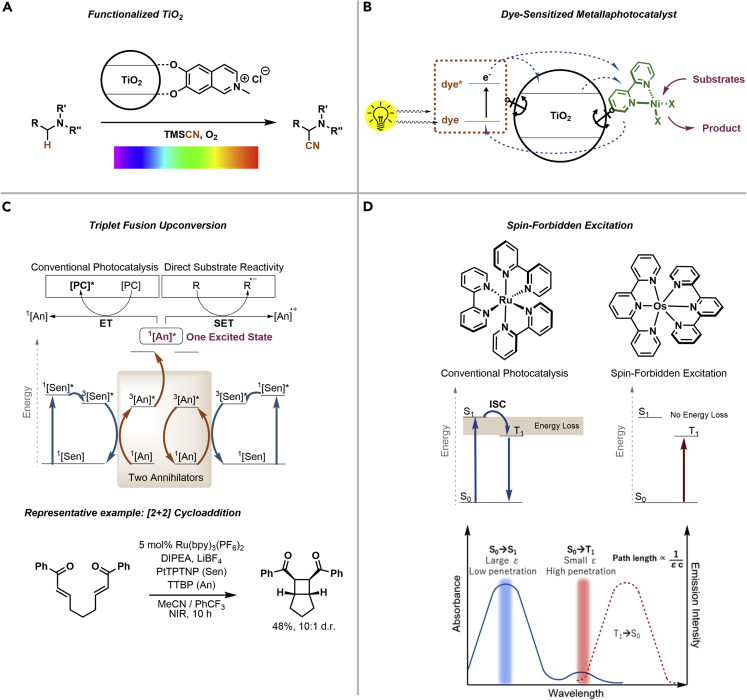
Strategies to access high wavelengths for photocatalytic synthesis (A–D) Functionalized TiO2 with non-innocent ligands (A). Dye-sensitized metallaphotocatalysts (B). Triplet fusion upconversion (C). Spin-forbidden excitation of osmium complexes (D). Reproduced with permission from (Ravetz et al., 2020)
Figure 5
Figure 5
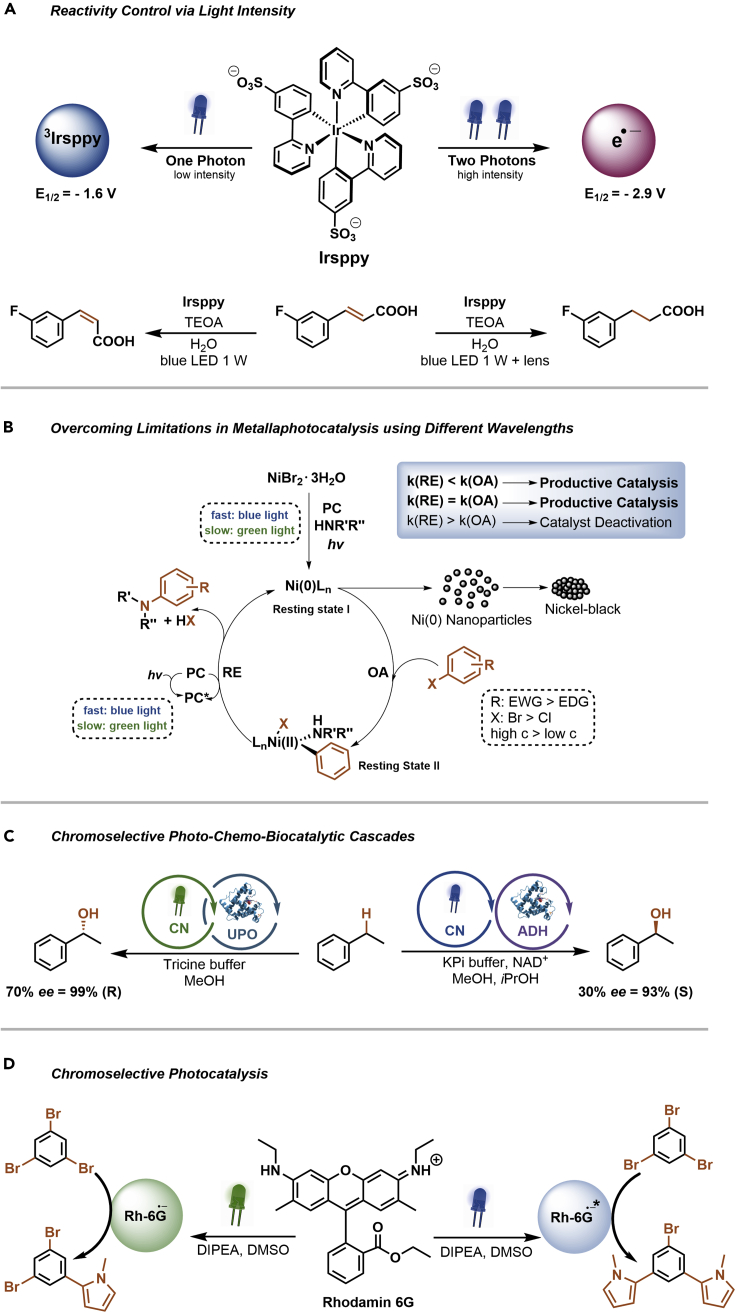
Accessing different photocatalytic activities by controlling the energy and intensity of photons (A–D) Reactivity control of an iridium photocatalyst through the light intensity (A). Overcoming limitations in metallaphotocatalysis using carbon nitride photocatalysis by changing the wavelength (B). Chromoselective photo-chemo-enzymatic cascade reactions with a carbon nitride photocatalyst (C). Chromoselective photocatalysis with Rhodamine 6G (D).
Figure 6
Figure 6
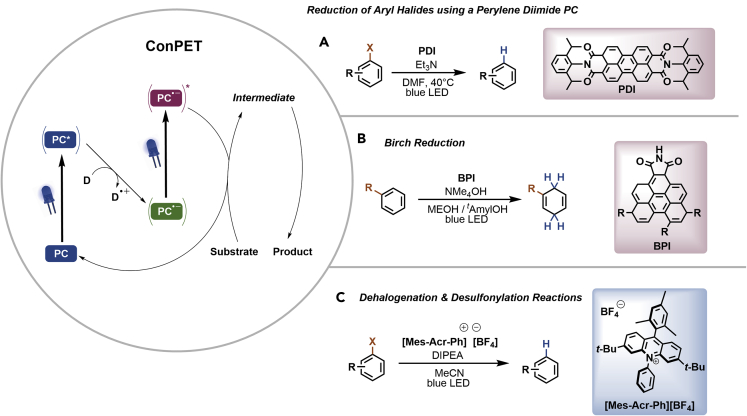
Accessing strong photoreductants via consecutive photoinduced electron transfer (ConPET) (A–C) Reduction of aryl halides using a perylene diimide PC (A). Photocatalytic Birch-type reductions using BPI (B). Dehalogenation using a mesityl acridinium salt (C).
Figure 7
Figure 7
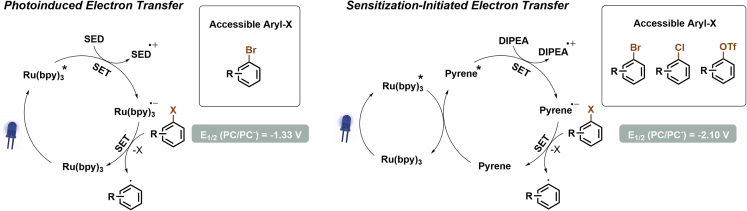
Photoinduced electron transfer (PET) versus sensitization-initiated electron transfer (SenI-ET)
Figure 8
Figure 8
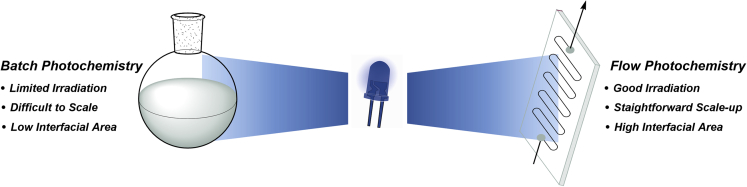
Photochemistry in batch and flow reactors
Figure 9
Figure 9
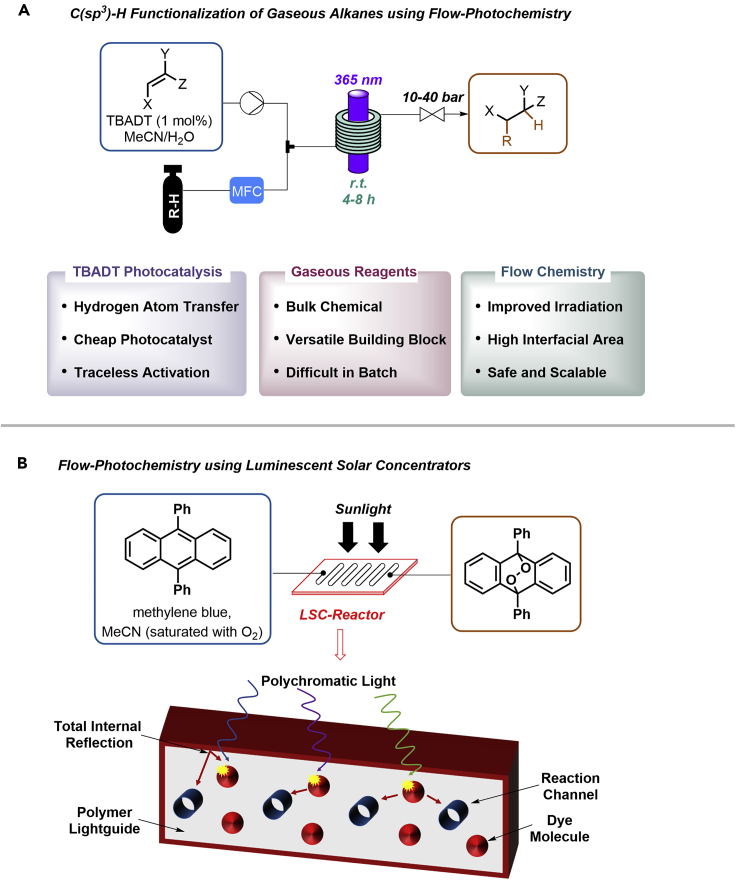
Flow photocatalysis (A and B) C(sp3)-H functionalization of light hydrocarbons using photocatalysis in flow (A). Luminescent solar concentrator for energy-efficient flow chemistry using sunlight (B).
Figure 10
Figure 10
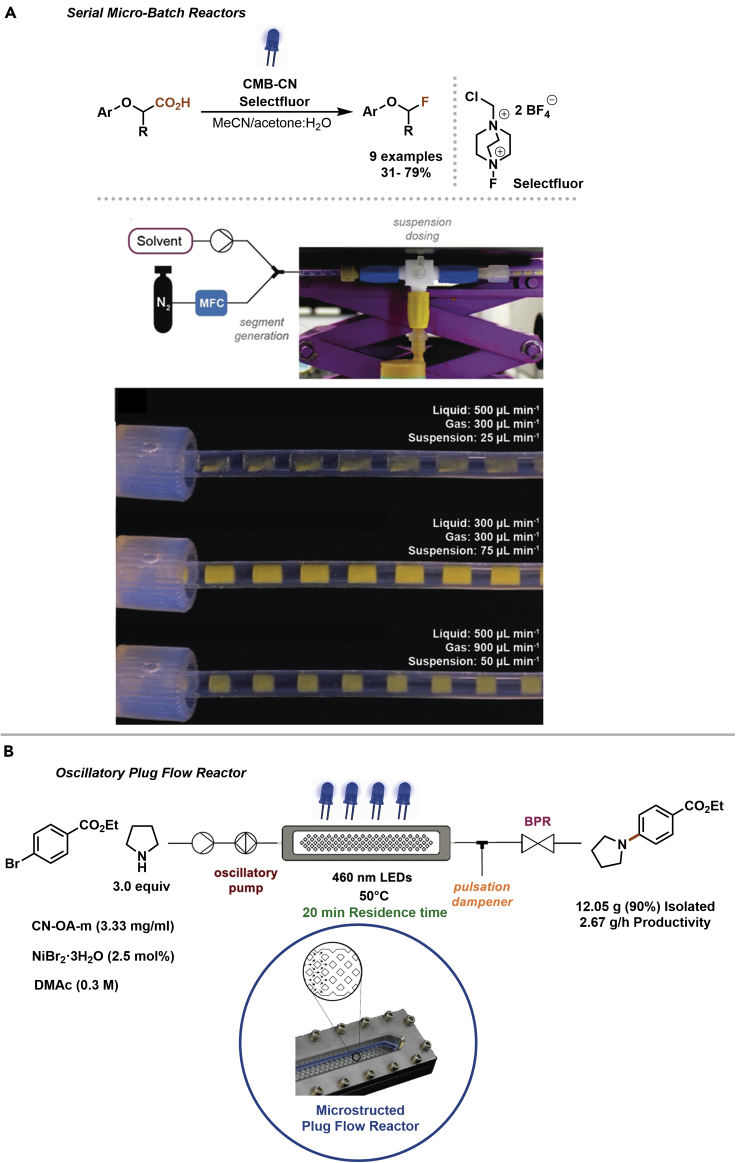
Heterogeneous photocatalyst in flow (A and B) Decarboxylative fluorination of phenoxyacetic acids in flow using serial micro-batch reactors (A). Reproduced with permission from (Pieber et al., 2018). Dual nickel/carbon nitride amination using an oscillatory plug flow reactor (B). Reproduced with permission from (Rosso et al., 2020).
Figure 11
Figure 11
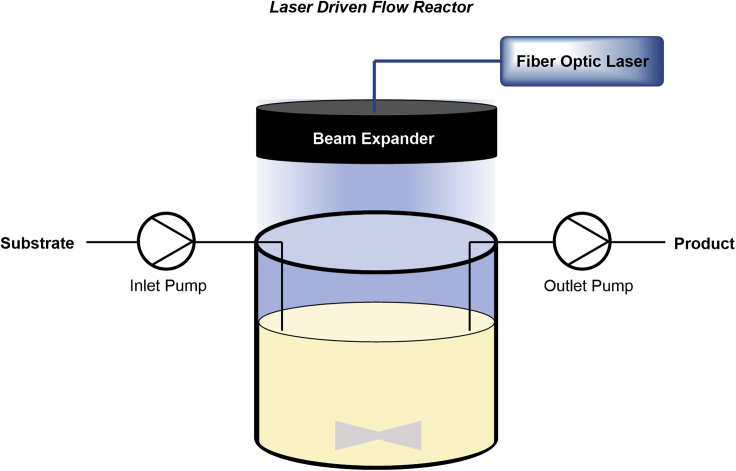
Continuous stirred tank reactor (CSTR) for large-scale laser-driven photocatalysis
Figure 12
Figure 12
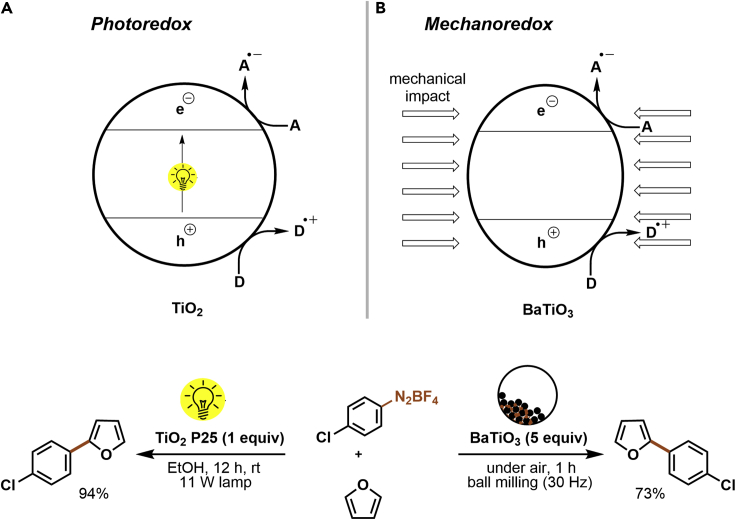
Photon-free photocatalysis Comparison of photoredox catalysis (A) and mechanoredox catalysis (B).

References

    1. Arias-Rotondo D.M., McCusker J.K. The photophysics of photoredox catalysis: a roadmap for catalyst design. Chem. Soc. Rev. 2016;45:5803–5820. - PubMed
    1. Bonfield H.E., Knauber T., Lévesque F., Moschetta E.G., Susanne F., Edwards L.J. Photons as a 21st century reagent. Nat. Commun. 2020;11:804. - PMC - PubMed
    1. Cambié D., Bottecchia C., Straathof N.J.W., Hessel V., Noël T. Applications of continuous-flow photochemistry in organic synthesis, material science, and water treatment. Chem. Rev. 2016;116:10276–10341. - PubMed
    1. Cambié D., Zhao F., Hessel V., Debije M.G., Noël T. A leaf-inspired luminescent solar concentrator for energy-efficient continuous-flow photochemistry. Angew. Chem. Int. Ed. 2017;56:1050–1054. - PubMed
    1. Capaldo L., Quadri L.L., Ravelli D. Photocatalytic hydrogen atom transfer: the philosopher's stone for late-stage functionalization? Green. Chem. 2020;22:3376–3396.

LinkOut - more resources