


Increases in diagnosis and management of obstetric and neonatal complications in district hospitals during a high intensity nurse-mentoring program in Bihar, India
- PMID: 33735280
- PMCID: PMC7971704
- DOI: 10.1371/journal.pone.0247260
Increases in diagnosis and management of obstetric and neonatal complications in district hospitals during a high intensity nurse-mentoring program in Bihar, India
Abstract
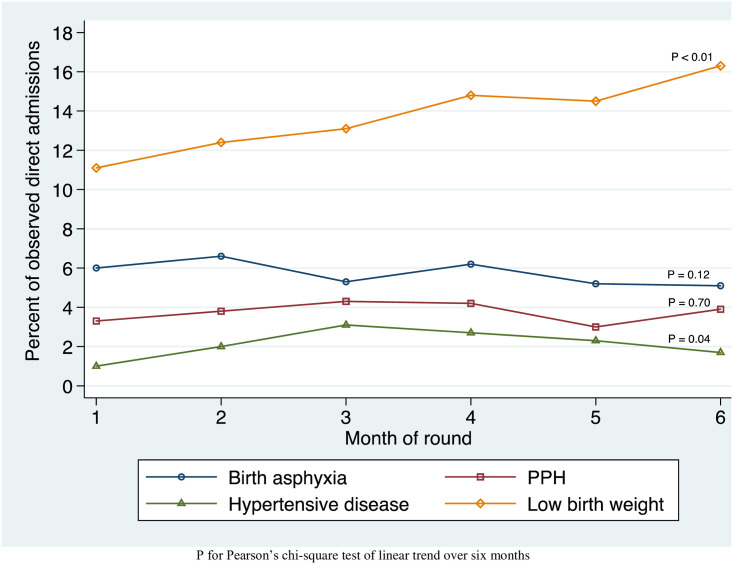
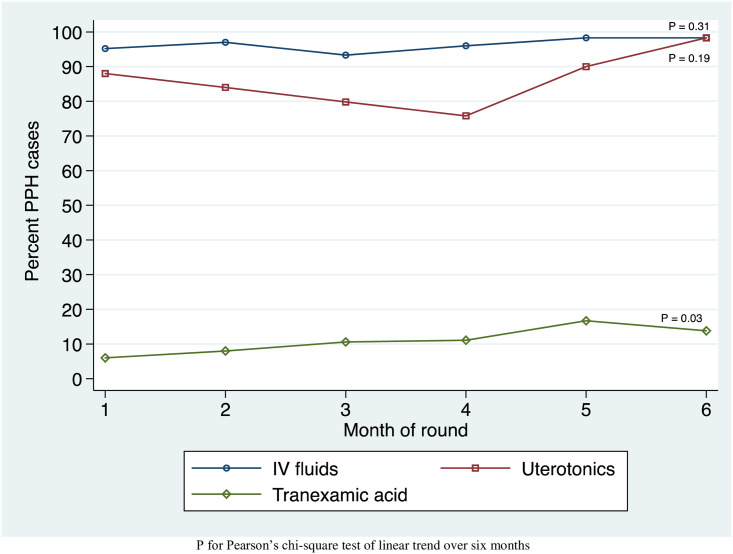
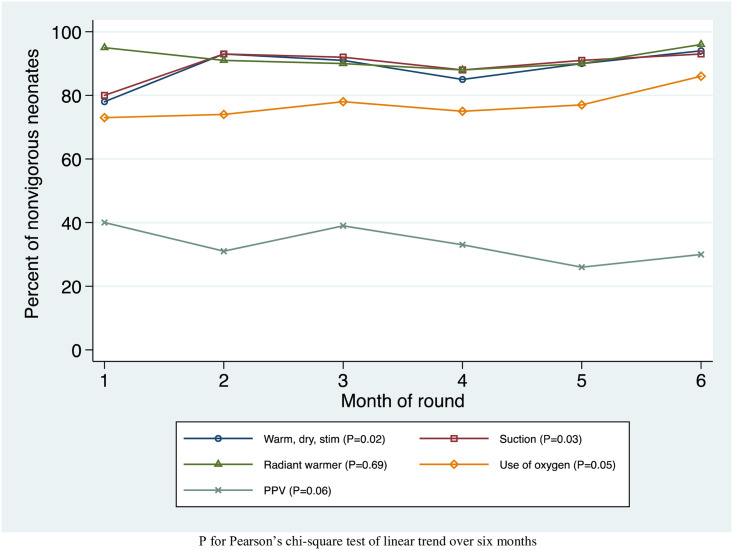
Maternal and neonatal mortality in Bihar, India was far higher than the aspirational levels set out by the Sustainable Development Goals. Provider training programs have been implemented in many low-resource settings to improve obstetric and neonatal outcomes. This longitudinal investigation assessed diagnoses and management of postpartum hemorrhage (PPH), hypertensive disorders of pregnancy, birth asphyxia (BA), and low birth weight (LBW), as part of the CARE's AMANAT program in 22 District Hospitals in Bihar, between 2015 and 2017. Physicians and nurse mentors conducted clinical instruction, simulations and teamwork and communication activities, infrastructure and management support, and data collection for 6 consecutive months. Analysis of diagnosis included 11,259 non-referred and management included 11,800 total (non-referred and referred) admissions that were observed. Data were analyzed using the chi-square test for trend. PPH was diagnosed in 3.7% with no significant trend but diagnosis of hypertensive disorders increased from 1.0% to 1.7%, (ptrend = 0.04), over the 6 months. BA was diagnosed in 5.8% with no significant trend but LBW diagnoses increased from 11% to 16% (ptrend<0.01). Among PPH patients, 96% received fluids, 85% received uterotonics and 11% received Tranexamic Acid (TXA). There was a significant positive trend in the number of patients receiving TXA for PPH (6% to 13.8%, ptrend = 0.03). Of all neonates with BA, there were statistically significant increases in the proportion who were initially warmed, dried, and stimulated (78% to 94%, ptrend = 0.02), received airway suction (80% to 93%, ptrend = 0.03), and supplemental oxygen without positive pressure ventilation (73% to 86%, ptrend = 0.05). Diagnoses of hypertensive disorders and LBW as well as initial management of BA increased during the AMANAT program. However, underdiagnoses of PPH and hypertensive disorders relative to population levels remain critical barriers to improving maternal morbidity and mortality.
Conflict of interest statement
DW is a founding member of PRONTO International and sits on its board of directors. This does not alter our adherence to PLOS ONE policies on sharing data and materials. None of the other authors have potential competing interests.
Figures
References
-
- GBD 2015 Child Mortality Collaborators. Global, regional, national, and selected subnational levels of stillbirths, neonatal, infant, and under-5 mortality, 1980–2015: a systematic analysis for the Global Burden of Disease Study 2015. Lancet. 2016;388(10053):1725–1774. 10.1016/S0140-6736(16)31575-6 - DOI - PMC - PubMed
-
- UNICEF. About Bihar. State Info | UNICEF. http://unicef.in/StateInfo/Bihar/Introduction (Accessed March 13, 2017).
-
- World Bank Open Data | Data. https://data.worldbank.org/. Accessed February 11, 2020.
-
- State Statistics | NITI Aayog. https://niti.gov.in/state-statistics. Accessed September 10, 2019.
Publication types
MeSH terms
LinkOut - more resources
Full Text Sources
Other Literature Sources
Medical
