


Human health risk from consumption of aquatic species in arsenic-contaminated shallow urban lakes
- PMID: 33736365
- PMCID: PMC8032223
- DOI: 10.1016/j.scitotenv.2021.145318
Human health risk from consumption of aquatic species in arsenic-contaminated shallow urban lakes
Abstract
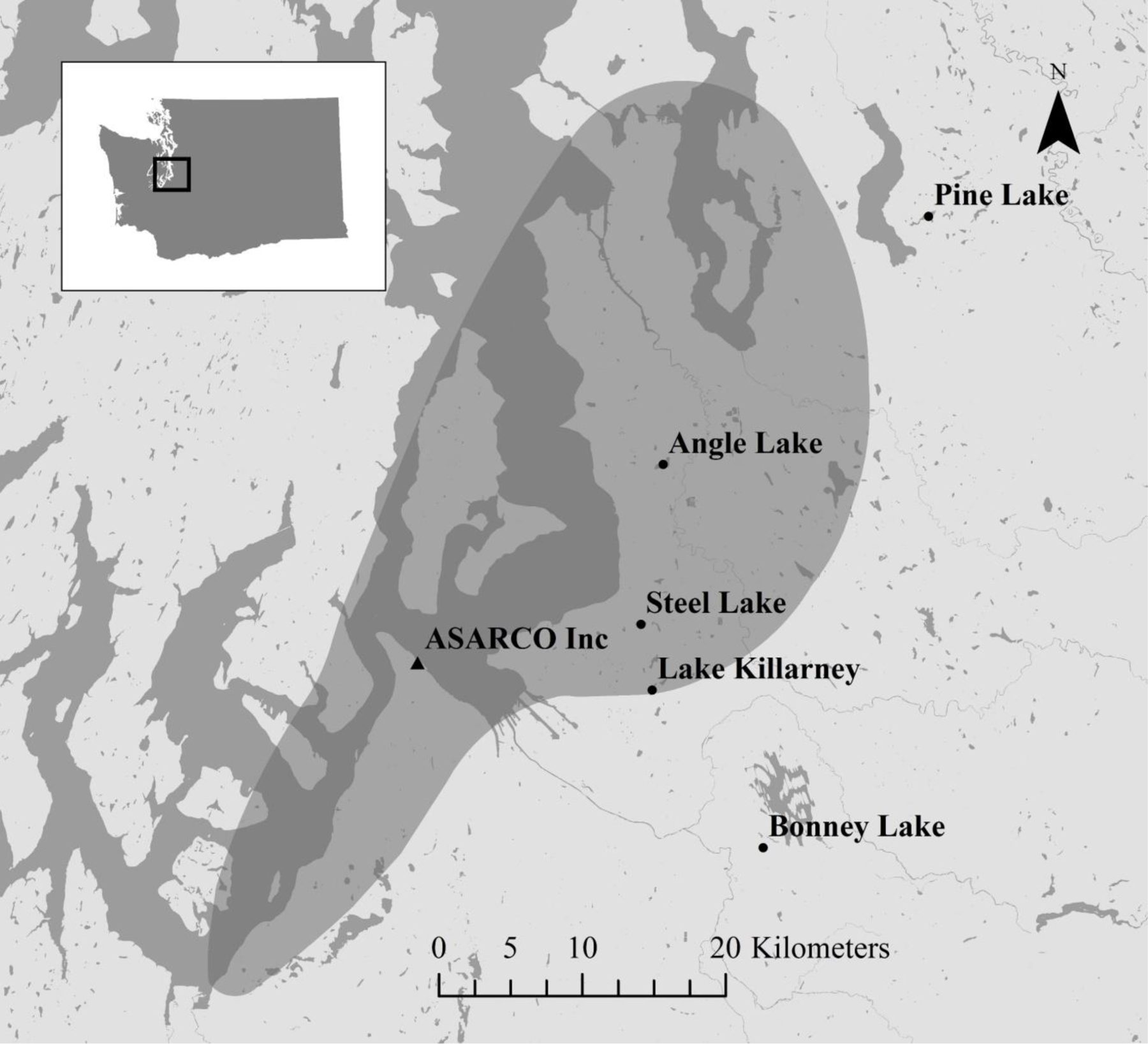
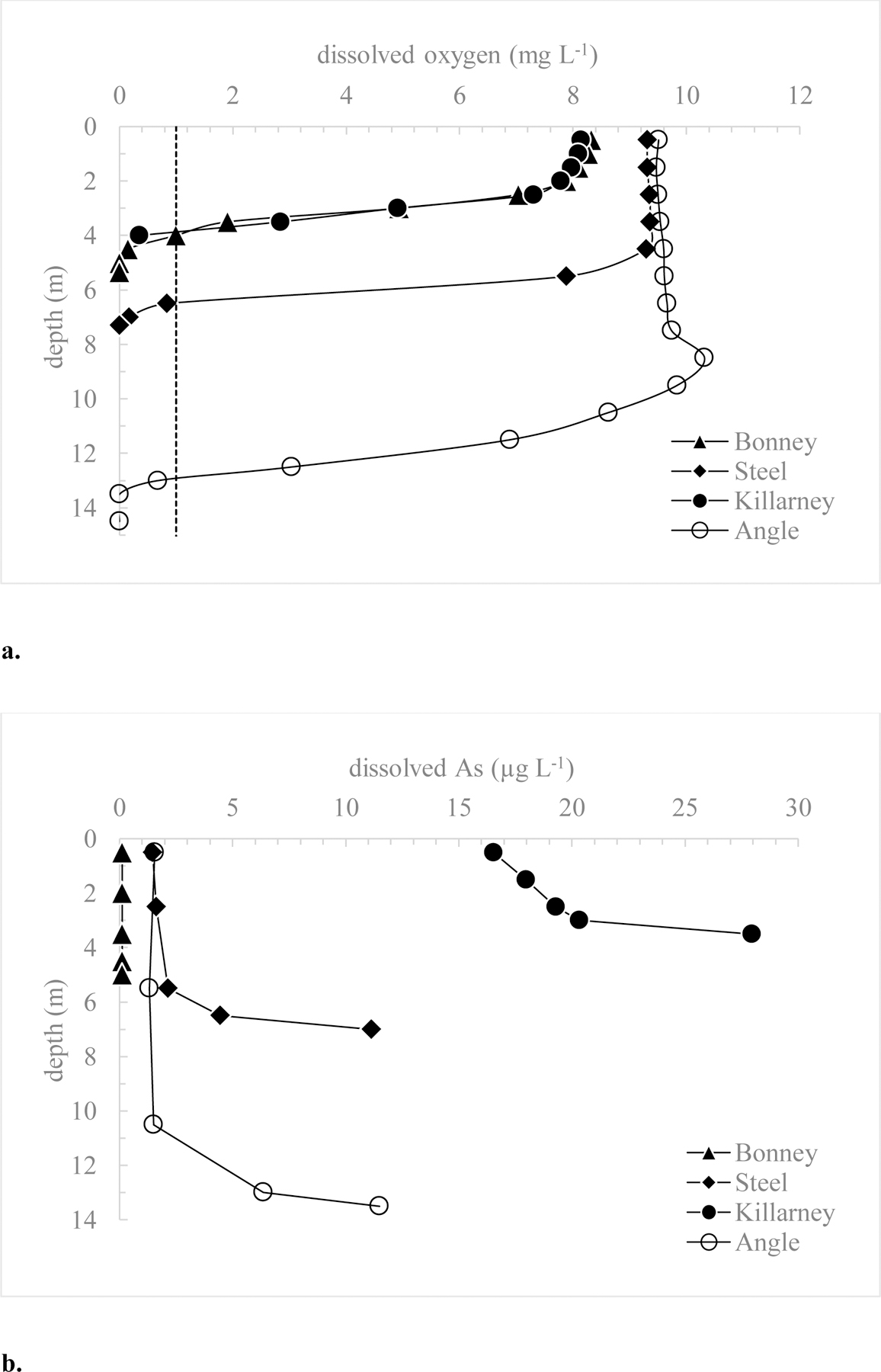
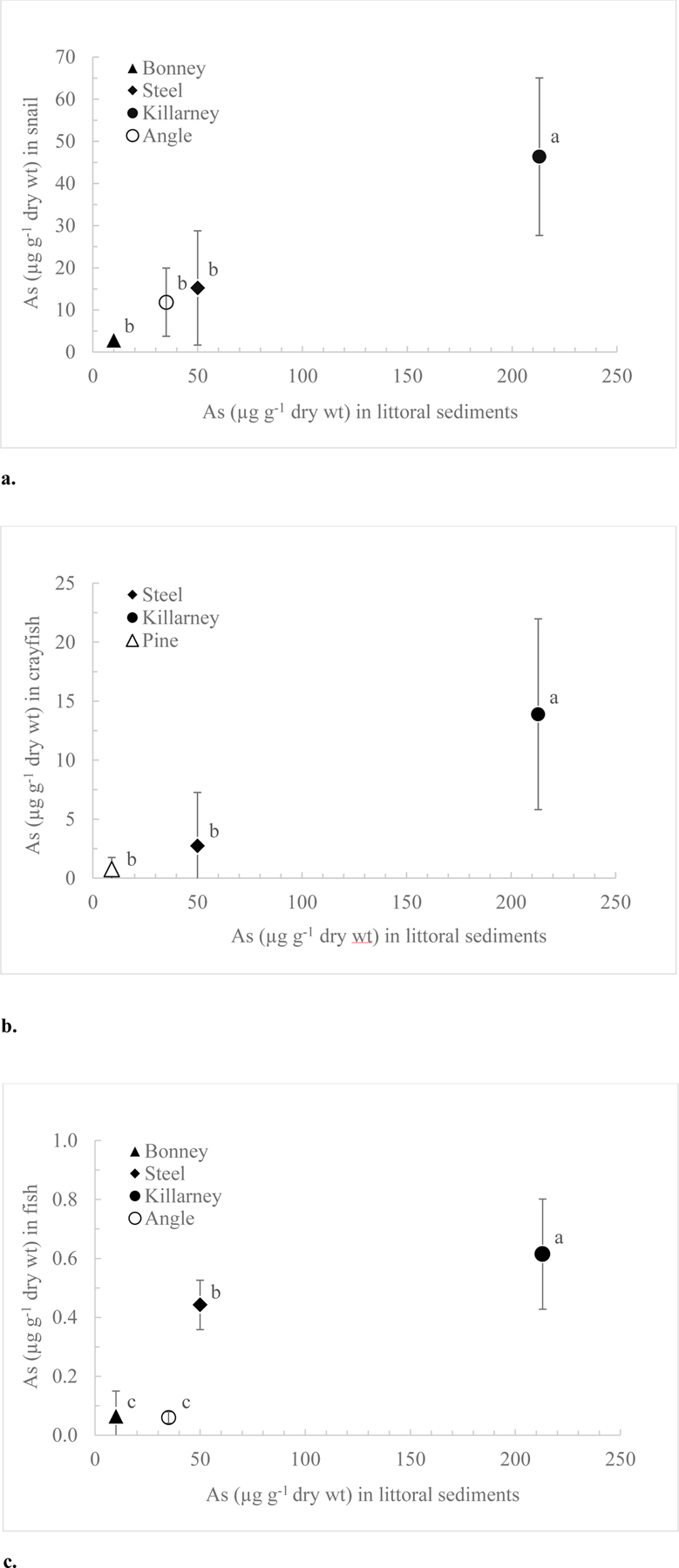
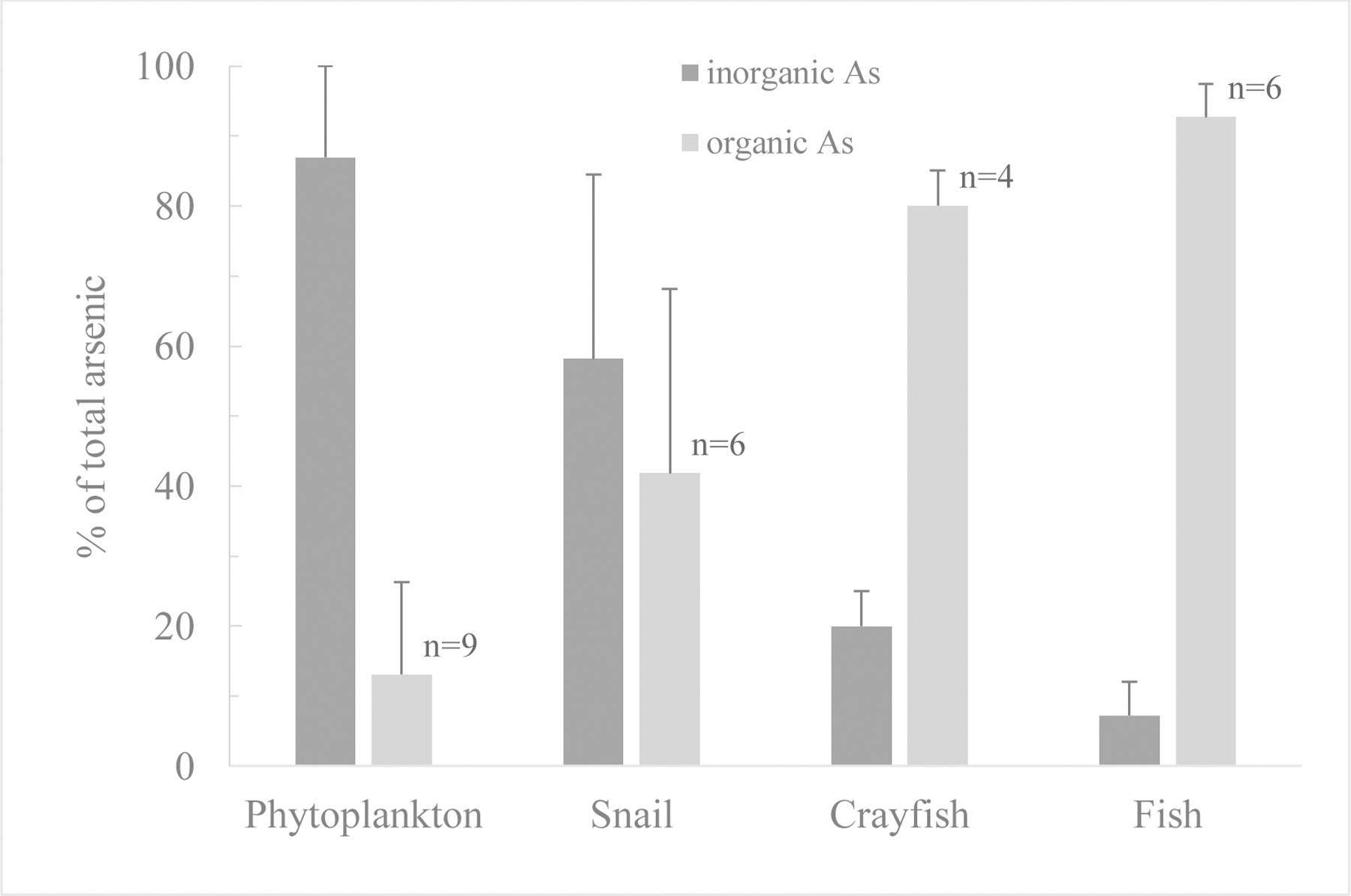
Arsenic (As) causes cancer and non-cancer health effects in humans. Previous research revealed As concentrations over 200 μg g-1 in lake sediments in the south-central Puget Sound region affected by the former ASARCO copper smelter in Ruston, WA, and significant bioaccumulation of As in plankton in shallow lakes. Enhanced uptake occurs during summertime stratification and near-bottom anoxia when As is mobilized from sediments. Periodic mixing events in shallow lakes allow dissolved As to mix into oxygenated waters and littoral zones where biota reside. We quantify As concentrations and associated health risks in human-consumed tissues of sunfish [pumpkinseed (Lepomis gibbosus) and bluegill (Lepomis macrochirus)], crayfish [signal (Pacifastacus leniusculus) and red swamp (Procambarus clarkii)], and snails [Chinese mystery (Bellamya chinensis)] from lakes representing a gradient of As contamination and differing mixing regimes. In three shallow lakes with a range of arsenic in profundal sediments (20 to 206 μg As g-1), mean arsenic concentrations ranged from 2.9 to 46.4 μg g-1 in snails, 2.6 to 13.9 μg g-1 in crayfish, and 0.07 to 0.61 μg g-1 in sunfish. Comparatively, organisms in the deep, contaminated lake (208 μg g-1 in profundal sediments) averaged 11.8 μg g-1 in snails and 0.06 μg g-1 in sunfish. Using inorganic As concentrations, we calculated that consuming aquatic species from the most As-contaminated shallow lake resulted in 4-10 times greater health risks compared to the deep lake with the same arsenic concentrations in profundal sediments. We show that dynamics in shallow, polymictic lakes can result in greater As bioavailability compared to deeper, seasonally stratified lakes. Arsenic in oxygenated waters and littoral sediments was more indicative of exposure to aquatic species than profundal sediments, and therefore we recommend that sampling methods focus on these shallow zones to better indicate the potential for uptake into organisms and human health risk.
Keywords: Crayfish; Fish; Littoral sediment; Polymictic; Snail; Trace metal.
Copyright © 2021 Elsevier B.V. All rights reserved.
Conflict of interest statement
Declaration of competing interest The authors declare that they have no known competing financial interests or personal relationships that could have appeared to influence the work reported in this paper.
Figures
References
-
- Aggett J, Kriegman MR, 1988. The extent of formation of arsenic(III) in sediment interstitial waters and its release to hypolimnetic waters in Lake Ohakuri. Water Res 22, 407–411. 10.1016/0043-1354(88)90034-6 - DOI
-
- Andraso GM, 2005. Summer food habits of pumpkinseeds (Lepomis gibbosus) and bluegills (Lepomis macrochirus) in Presque Isle Bay, Lake Erie. J. Great Lakes Res 31, 397–404. 10.1016/S0380-1330(05)70271-9 - DOI
-
- Area-Wide Soil Contamination Task Force. Area-Wide Soil Contamination Task Force Report Prepared for Washington State Department of Ecology, Olympia, WA; 2003.
MeSH terms
Substances
Grants and funding
LinkOut - more resources
Full Text Sources
Other Literature Sources
Medical
Research Materials
