


Genome-wide association study identifies new loci associated with risk of HBV infection and disease progression
- PMID: 33736632
- PMCID: PMC7977299
- DOI: 10.1186/s12920-021-00907-0
Genome-wide association study identifies new loci associated with risk of HBV infection and disease progression
Abstract
Background: Recent studies have identified susceptibility genes of HBV clearance, chronic hepatitis B, liver cirrhosis, hepatocellular carcinoma, and showed the host genetic factors play an important role in these HBV-related outcomes.
Methods: Collected samples from different outcomes of HBV infection and performed genotyping by Affymetrix 500 k SNP Array. GCTA tool, PLINK, and Bonferroni method were applied for analysis of genotyping and disease progression. ANOVA was used to evaluate the significance of the association between biomarkers and genotypes in healthy controls. PoMo, FST, Vcftools and Rehh package were used for building the racial tree and population analysis. FST statistics accesses 0.15 was used as a threshold to detect the signature of selection.
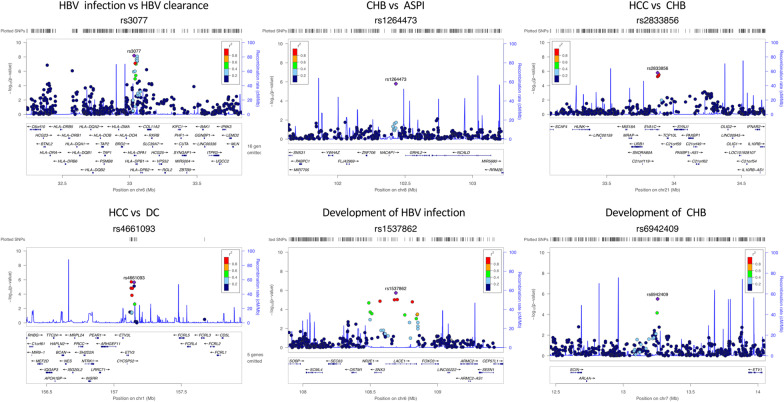
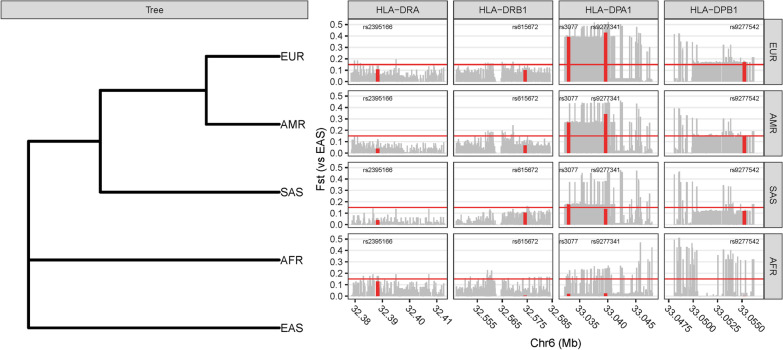
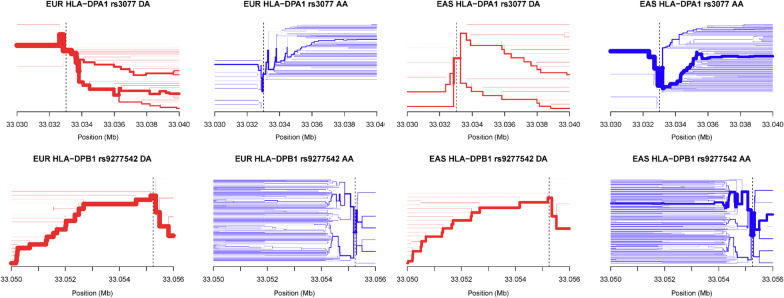
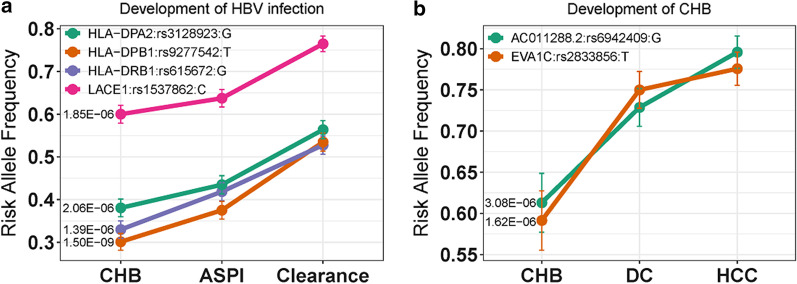
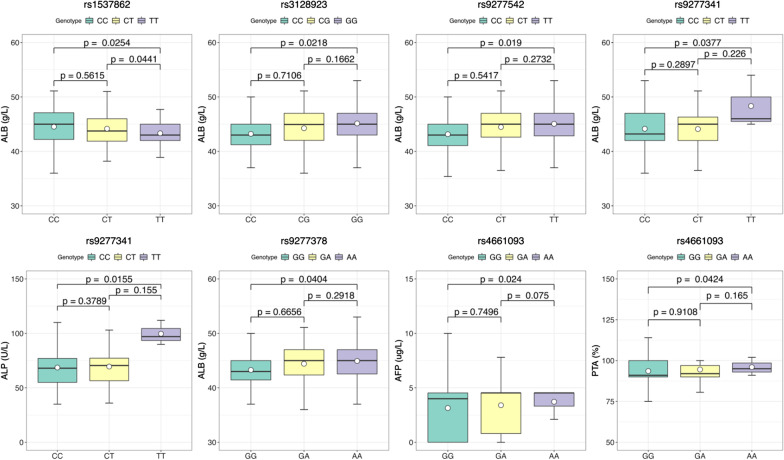
Results: There are 1031 participants passed quality control from 1104 participants, including 275 HBV clearance, 92 asymptomatic persistence infection (ASPI), 93 chronic hepatitis B (CHB), 188 HBV-related decompensated cirrhosis (DC), 214 HBV-related hepatocellular carcinoma (HCC) and 169 healthy controls (HC). In the case-control study, one novel locus significantly associated with CHB (SNP: rs1264473, Gene: GRHL2, P = 1.57 × 10⁻⁶) and HCC (SNP: rs2833856, Gene: EVA1C, P = 1.62 × 10⁻⁶; SNP: rs4661093, Gene: ETV3, P = 2.26 × 10⁻⁶). In the trend study across progressive stages post HBV infection, one novel locus (SNP: rs1537862, Gene: LACE1, P = 1.85 × 10⁻⁶), and three MHC loci (HLA-DRB1, HLA-DPB1, HLA-DPA2) showed significant increased progressive risk from ASPI to CHB. Underlying the evolutionary study of HBV-related genes in public database, the derived allele of two HBV clearance related loci, rs3077 and rs9277542, are under strong selection in European population.
Conclusions: In this study, we identified several novel candidate genes associated with individual HBV infectious outcomes, progressive stages, and liver enzymes. Two SNPs that show selective significance (HLA-DPA1, HLA-DPB1) in non-East Asian (European, American, South Asian) versus East Asian, indicating that host genetic factors contribute to the ethnic disparities of susceptibility of HBV infection. Taken together, these findings provided a new insight into the role of host genetic factors in HBV related outcomes and progression.
Keywords: Disease progression; GWAS; HBV infection; Host genetic factors; SNPs.
Conflict of interest statement
The authors declared that they have no conflict of interest.
Figures
References
-
- Schweitzer A, et al. Estimations of worldwide prevalence of chronic hepatitis B virus infection: a systematic review of data published between 1965 and 2013. The Lancet. 2015;386(10003):1546–1555. - PubMed
-
- Fattovich G, et al. Occurrence of hepatocellular carcinoma and decompensation in western European patients with cirrhosis type B. Hepatology. 1995;21(1):77–82. - PubMed
-
- Liaw Y-F, Chu C-M. Hepatitis B virus infection. The lancet. 2009;373(9663):582–592. - PubMed
-
- Sundaram V, Kowdley K. Management of chronic hepatitis B infection. BMJ. 2015;351:h4263. - PubMed
-
- Kamatani Y, et al. A genome-wide association study identifies variants in the HLA-DP locus associated with chronic hepatitis B in Asians. Nat Genet. 2009;41(5):591. - PubMed
MeSH terms
Substances
Grants and funding
- 61972007/National Natural Science Foundation of China
- 30671855/National Natural Science Foundation of China
- 2014DFR31200/International Science and Technology Cooperation Programme
- JCYJ20170412153248372/Shenzhen Municipal of Government of China
- JCYJ20180507183615145/Shenzhen Municipal of Government of China
LinkOut - more resources
Full Text Sources
Other Literature Sources
Research Materials
Miscellaneous
