. 2021 Mar 18;11(1):6318.
doi: 10.1038/s41598-021-85662-z.

Evaluation of polyhexamethylene guanidine-induced lung injuries by chest CT, pathologic examination, and RNA sequencing in a rat model

Affiliations

Evaluation of polyhexamethylene guanidine-induced lung injuries by chest CT, pathologic examination, and RNA sequencing in a rat model

Cherry Kim et al. Sci Rep. .

Abstract

Our aim was to correlate chest CT and pathologic findings of polyhexamethylene guanidine phosphate (PHMG)-induced lung injuries in a rat model, to determine whether PHMG exposure causes lung tumors, and to explore genetic alterations according to PHMG exposure under the guidance of CT. A PHMG solution was intratracheally administrated to 40 male rats. Chest CT was carried out in all rats and both lungs were collected for histopathologic evaluation. At 4- and 8-weeks post-instillation, one lobe of the right lung from 3 rats was subjected to RNA sequencing. At least one abnormal CT finding was found in all rats at all weeks. The major CT findings were inflammation, fibrosis, and tumors in the pathologic analysis, where significant changes were observed over time. The lung lesions remained persistent after 8 weeks of PHMG exposure. In the pathologic analysis, the extent/severity of inflammation did not show statistically significant changes over time, whereas the extent/severity of fibrosis increased continuously up to 6 weeks after PHMG exposure and then decreased significantly at 8 weeks. Bronchiolar-alveolar adenomas which have malignant potential were found in 50% of rats at 6 and 8 weeks after PHMG exposure. Also, several genes associated with lung cancer, acute lung injury, and pulmonary fibrosis were detected. Our study revealed that PHMG-induced lung injury and its changes according to the number of weeks after exposure were demonstrated using chest CT and pathologic evaluation. In addition, we showed that PHMG exposure caused lung tumors and genetic alterations according to PHMG exposure under the guidance of CT.


Conflict of interest statement

The authors declare no competing interests.

Figures
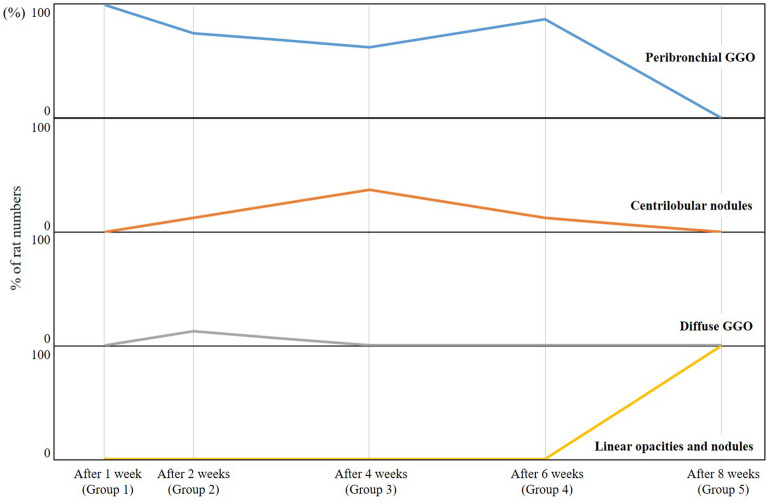
Figure 1
Figure 1
Changes of the CT findings according to the groups. Peribronchial GGO was observed in all rats 1 week after PHMG exposure, then slightly decreased through 2 weeks to 6 weeks after PHMG exposure, and disappeared at 8 weeks after PHMG exposure. Centrilobular nodules peaked at 4 weeks (3 of 8 rats, 37.5%) and then decreased. Linear densities and nodules were observed at 8 weeks (8 of 8 rats, 100%).
Figure 2
Figure 2
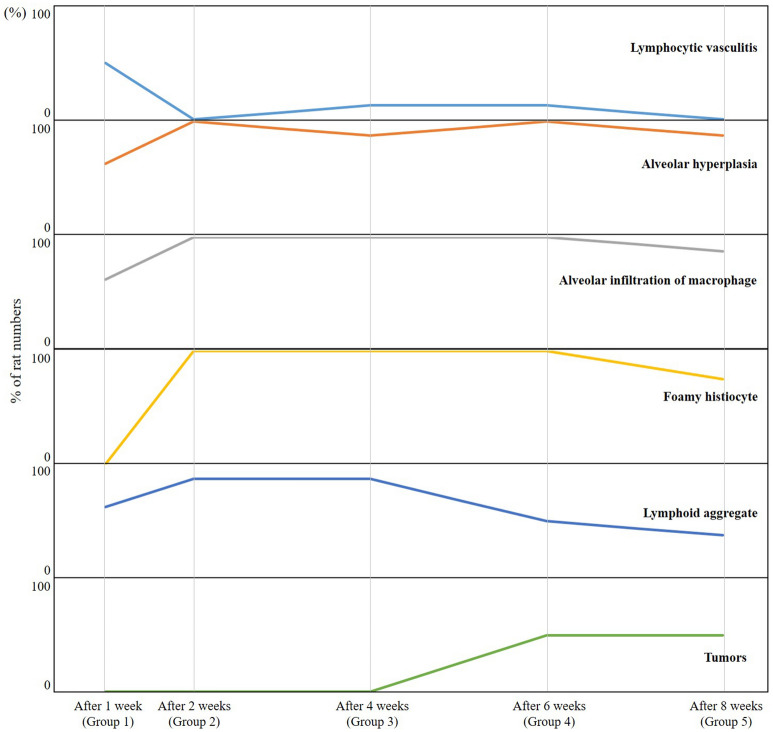
Changes in the pathologic findings according to group. Lymphocytic vasculitis was prominent 1 week after PHMG exposure and then decreased (p = 0.057, P-value for trend = 0.028). Alveolar hyperplasia peaked at 6 weeks after PHMG exposure and then decreased (p = 0.001, P-value for trend = 0.034). Alveolar infiltration of macrophages was observed continuously over all weeks (p = 0.078, P-value for trend = 0.884). Foamy histiocyte and lymphoid aggregate peaked at 4 weeks after PHMG exposure and then decreased (all p < 0.05, all P-value for trend > 0.05). Tumors were found in 50% of rats (4 of 8 rats) at 6 weeks and 50% of rats (4 of 8 rats) at 8 weeks after PHMG exposure (all p < 0.001, all P-value for trend < 0.001).
Figure 3
Figure 3
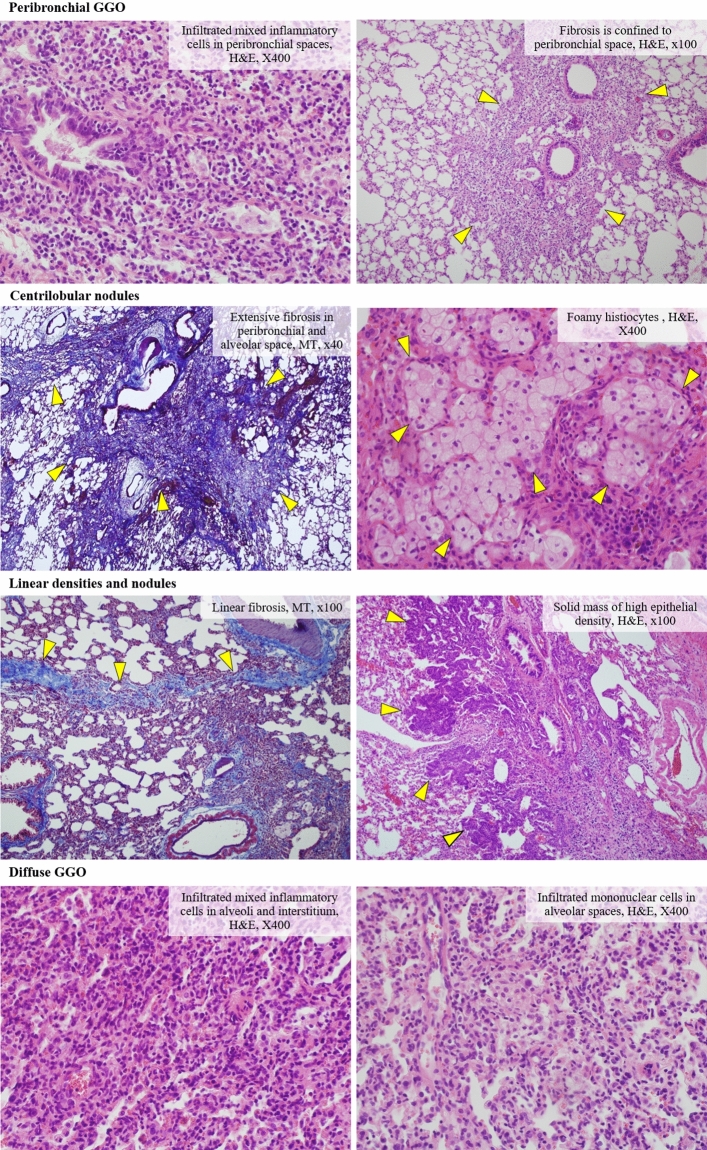
Four major CT findings and matched major histologic findings. Through radiologic-histologic correlation, 84.6% of peribronchial GGOs were inflammation and the rest were fibrosis. Centrilobular nodules were 60% fibrosis and the rest were inflammation. Linear densities and nodules were 62.5% inflammation, 25% fibrosis, and 12.5% tumors, and diffuse GGO was inflammation (100%).
Figure 4
Figure 4
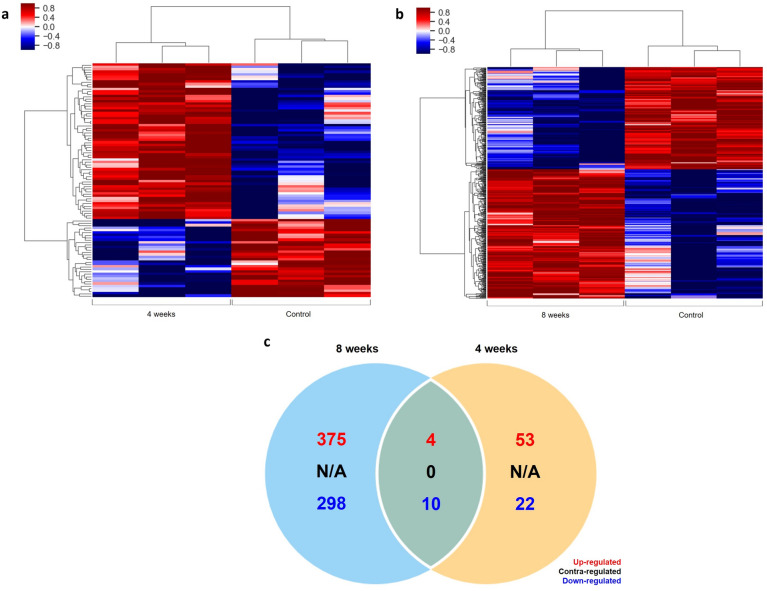
Analysis of PHMG-regulated gene expression in rat lung tissue. Heatmaps of PHMG regulated genes at 4 and 8 weeks post-PHMG exposure (frames a and b). A Venn diagram shows the numbers of genes that were up-regulated, contra-regulated, and down-regulated between 4 and 8 weeks after PHMG exposure (frame c).
Figure 5
Figure 5
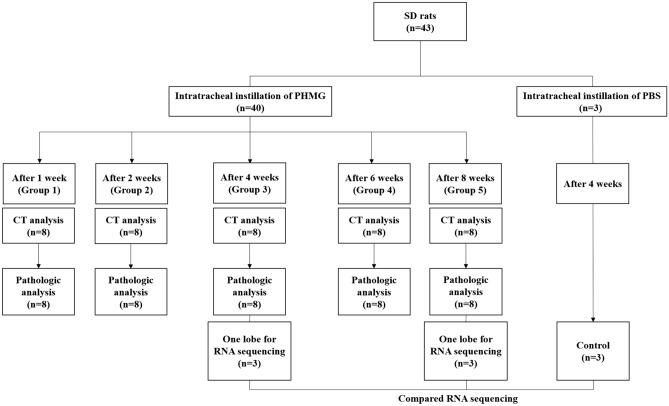
The experimental design. 1, 2, 4, 6, and 8 weeks after instillation (Groups 1 to 5), chest CT examination was conducted in all rats under anesthesia. Subsequently, the animals were sacrificed and both lungs were collected for histopathologic evaluation. In Group 3 and 5 (4 and 8 weeks after instillation), one lobe of the right lung from 3 randomly chosen rats were used for RNA sequencing and the other lobes of those 3 rats were used for histopathologic evaluation. The lung tissue from control animals (n = 3) was also extracted 4 weeks after the instillation of sterile saline instead of PHMG for RNA sequencing.
Figure 6
Figure 6
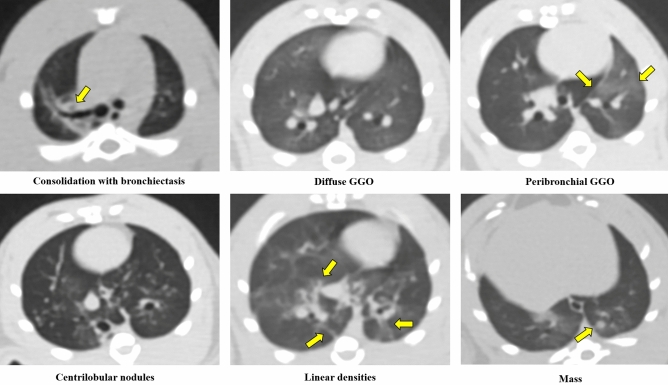
Examples of CT findings. Consolidation, ground-glass opacity (GGO), nodules, masses, centrilobular nodules, bronchiectasis, and linear atelectasis were followed or modified the glossary of radiologic terms suggested by the Fleishner Society.

References

    1. Park, Y. J., Jeong, M. H., Bang, I. J., Kim, H. R. & Chung, K. H. Guanidine-based disinfectants, polyhexamethylene guanidine-phosphate (PHMG-P), polyhexamethylene biguanide (PHMB), and oligo(2-(2-ethoxy)ethoxyethyl guanidinium chloride (PGH) induced epithelial-mesenchymal transition in A549 alveolar epithelial cells. Inhalation Toxicol., 1–6, doi:10.1080/08958378.2019.1624896 (2019). - PubMed
    1. Lee MS, Kim HJ. Epidemiologic research on lung damage caused by humidifier disinfectants. Epidemiol Health. 2016;38:e2016031. doi: 10.4178/epih.e2016031. - DOI - PMC - PubMed
    1. Park JH, et al. Humidifier disinfectants are a cause of lung injury among adults in south korea: a community-based case-control study. PLoS ONE. 2016;11:e0151849. doi: 10.1371/journal.pone.0151849. - DOI - PMC - PubMed
    1. Yoon J, et al. Rate of humidifier and humidifier disinfectant usage in Korean children: a nationwide epidemiologic study. Environ. Res. 2017;155:60–63. doi: 10.1016/j.envres.2017.01.030. - DOI - PubMed
    1. Koo HJ, et al. Humidifier disinfectant-associated lung injury in adults: prognostic factors in predicting short-term outcome. Eur. Radiol. 2017;27:203–211. doi: 10.1007/s00330-016-4367-6. - DOI - PubMed

Publication types

MeSH terms