


Microsomic and macrosomic body structure in children and adolescents affected by syndromes or diseases associated with neurodysfunction
- PMID: 33737592
- PMCID: PMC7973426
- DOI: 10.1038/s41598-021-85587-7
Microsomic and macrosomic body structure in children and adolescents affected by syndromes or diseases associated with neurodysfunction
Abstract
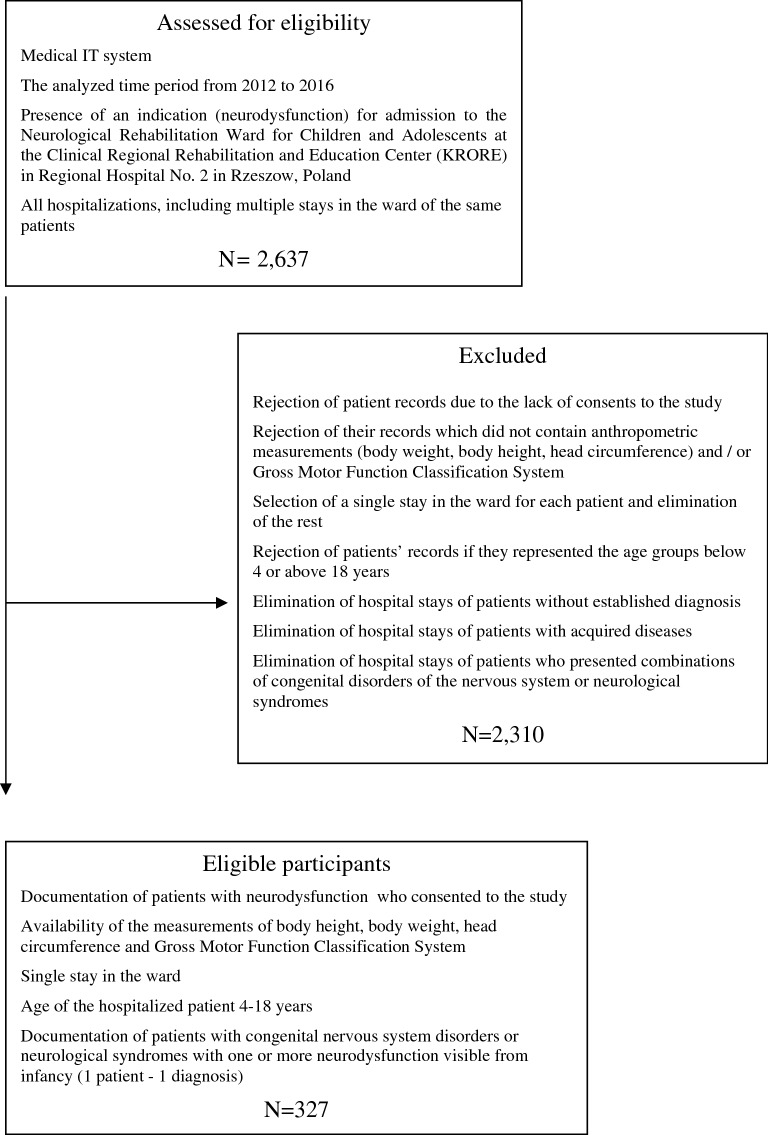
In Poland the issue of microsomic body structure (micro-SBS) and macrosomic body structure (macro-SBS) has so far been overlooked. Up until now only a small amount of data have been published, most often as an overview of the problem. The current study was designed to investigate the co-occurrence of microsomic/macrosomic body structure (micro/macro-SBS) and congenital nervous system disorders or neurological syndromes with symptoms visible from infancy, based on essential data acquired during admission procedures at a neurological rehabilitation ward for children and adolescents. The study applied a retrospective analysis of data collected during hospitalization of 327 children and adolescents, aged 4-18 years who had been affected since infancy by congenital disorders of the nervous system and/or neurological syndromes associated with a minimum of one neurodysfunction. To identify subjects with microsomic or macrosomic body structure in the group of children and adolescents, the adopted criteria took into account z-score values for body height (z-score Ht), body weight (z-score Wt), head circumference (z-score HC), BMI (z-score BMI) and head circumference index (z-score HCI). The rates of micro/macro-SBS in the study group amounted to 7.3% and 0.6%, respectively. The findings show a more frequent co-occurrence of, as well as statistically significant correlations between, micro/macro-SBS and type of spasticity (cerebral palsy) (p = 0.024) as well as hydrocephalus not treated surgically (p < 0.001). Macro-SBS was found to more frequently co-occur with hemiplegia and hydrocephalus not treated surgically.
Conflict of interest statement
The authors declare no competing interests.
Figures
References
-
- Jasińska EA, Wasiluk A. Intrauterine growth restriction as a clinical problem. Perinatol. Neonatol. Ginekol. 2010;3(4):255–261.
-
- Mishra S, Ghatak S, Agrawal D, Singh P, Garg PK. Estimation of fetal weight: An ultrasonography study in Indian population. Mymensingh. Med. 2020;29(1):215–221. - PubMed
-
- Mumdzhiev H, Slancheva B. Intrauterine hypotrophy and programming the health status. Late problems in newborns with intrauterine hypotrophy. Akush. Ginekol. 2013;52(2):40–47. - PubMed
MeSH terms
LinkOut - more resources
Full Text Sources
Other Literature Sources
Medical
Research Materials
