


Occupational stress and associated factors among health care professionals in Ethiopia: a systematic review and meta-analysis
- PMID: 33740920
- PMCID: PMC7980550
- DOI: 10.1186/s12889-021-10579-1
Occupational stress and associated factors among health care professionals in Ethiopia: a systematic review and meta-analysis
Abstract
Background: Occupational stress is a global health problem which affects employed personals especially health professionals. The burden of stress is not limited at individual level, but also affects the organizations productivity, the quality of care and country in large. In Ethiopia, little concern is given to this problem and individual studies conducted among health care professionals also showed inconsistent result. Therefore, the aim of this study was to assess the pooled prevalence of occupational stress and its associated factors among health care professionals in Ethiopia.
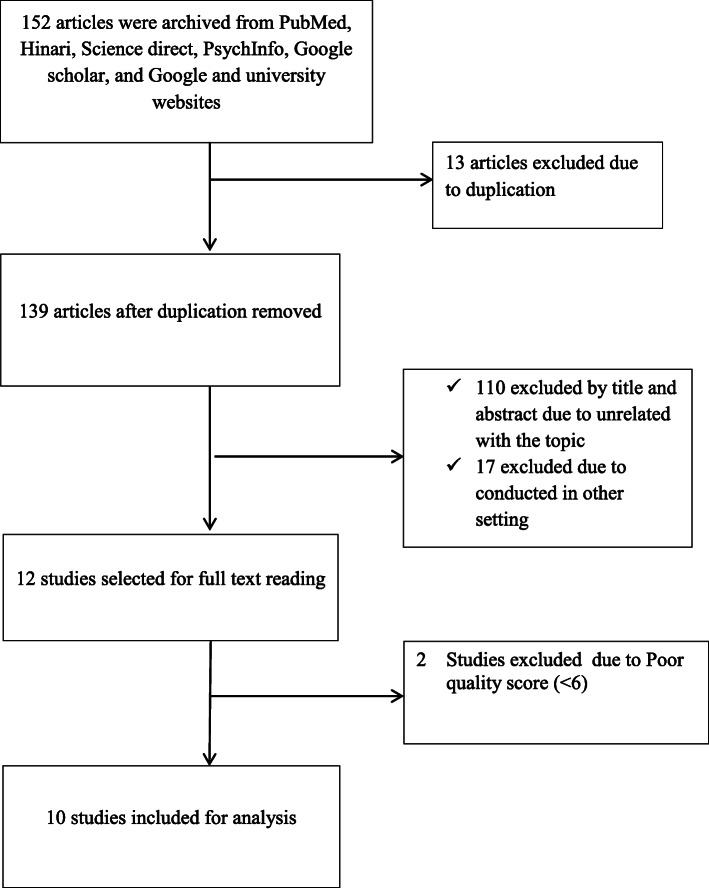
Methods: Articles were searched from PubMed, Hinari, PsychInfo, Science direct databases, Google and Google scholar. A total of 10 studies were included in this review and meta-analysis. We used a standardized format for data extraction and STATA software version 13 for analysis. A random effect meta-analysis model was used to determine the pooled prevalence of occupational stress and I2 was used to check heterogeneity. Begg's and Egger's tests were conducted to detect publication bias. Furthermore, sensitivity and subgroup analysis was also conducted. Association was expressed by pooled odd ratio with corresponding 95% CI.
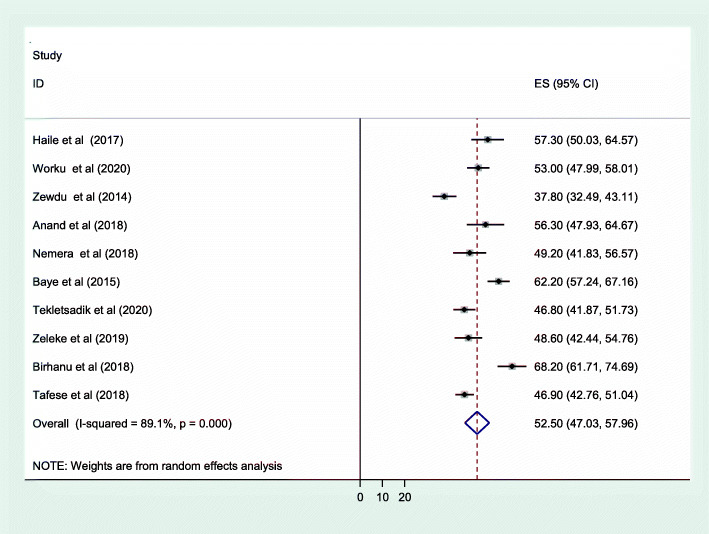
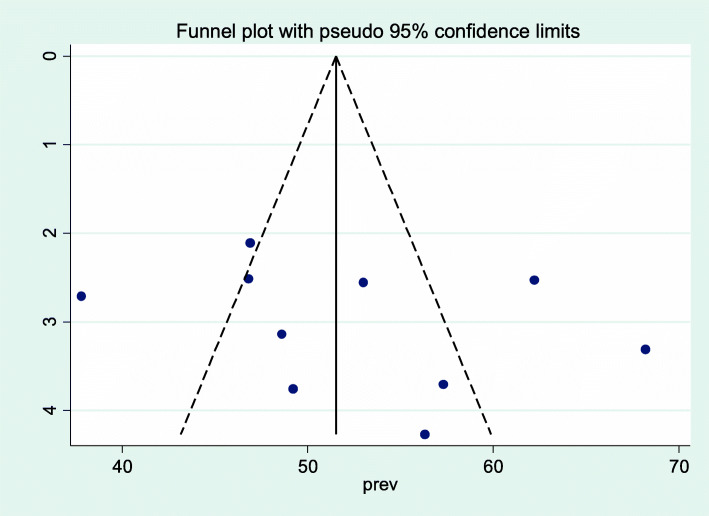
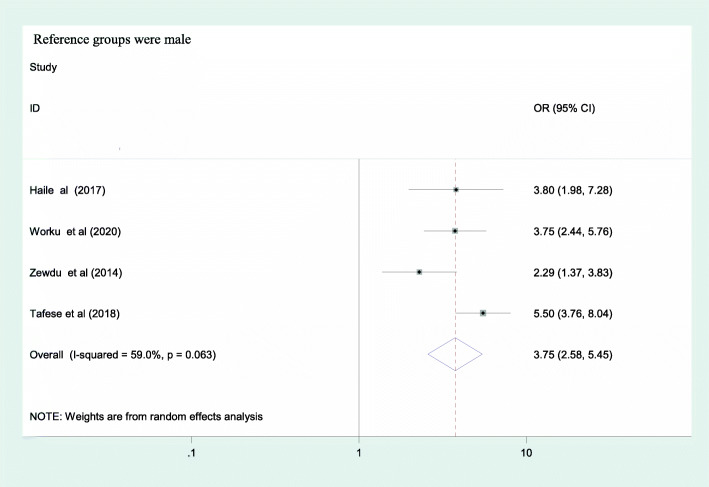
Results: The pooled prevalence of occupational stress was 52.5 [95% CI: (47.03, 57.96)]. The heterogeneity test was I2 = 89.1% & P < 0.001. The result of the publication bias detection (Begg's and Egger's) tests were p = 0.283 and p = 0.369 respectively. Female sex was identified as a significant predictor for occupational stress with a pooled effect of 3.75 [95% CI: (2.58, 5.45)].
Conclusions: Above half of health care professionals had occupational stress. Being female was significantly associated factor in this review and meta-analysis. Therefore, introduction of policies supporting health care professionals well-being at work in Ethiopia are advisable.
Keywords: Ethiopia; Health care professionals; Meta-analysis; Occupational stress.
Conflict of interest statement
All authors declare that they have no competing interests.
Figures
References
-
- NIOSH C: Exposure to Stress: Occupational Hazards in Hospitals. Department of Health and Human Services centers for Disease Control and Prevention National Institute DHHS (NIOSH) Publication 2008(2008–136): 2136.
-
- Ismail A, Yao A, Yeo E, Lai-Kuan K, Soon-Yew J. Occupational stress features, emotional intelligence and job satisfaction: an empirical study in private institutions of higher learning. Negotium. 2010;6(16):5–33.
-
- Shinde M, Patel S. Co-relation between problematic internet use and mental health in professional education students. Int J Sci Res. 2014;3(2):194–202.
-
- Beh L-S, Loo L-H. Job stress and coping mechanisms among nursing staff in public health services. Int J Acad Res Bus Soc Sci. 2012;2(7):131.
-
- Sharifah Zainiyah S, Afiq I, Chow C, Siti Sara D. Stress and its associated factors amongst ward nurses in a public hospital Kuala Lumpur. Malaysian J Public Health Med. 2011;11:1.
Publication types
MeSH terms
LinkOut - more resources
Full Text Sources
Other Literature Sources
Medical
