Time trends in the incidence of clinically diagnosed type 2 diabetes and pre-diabetes in the UK 2009-2018: a retrospective cohort study
- PMID: 33741554
- PMCID: PMC7986873
- DOI: 10.1136/bmjdrc-2020-001989
Time trends in the incidence of clinically diagnosed type 2 diabetes and pre-diabetes in the UK 2009-2018: a retrospective cohort study
Abstract
Introduction: To describe recent trends in the incidence of clinically diagnosed type 2 diabetes and pre-diabetes in people seen in UK general practice.
Research design and methods: A retrospective cohort study using IQVIA Medical Research Data looking at people newly diagnosed with type 2 diabetes and pre-diabetes through primary care registers in the UK between 1 January 2009 and 31 December 2018.
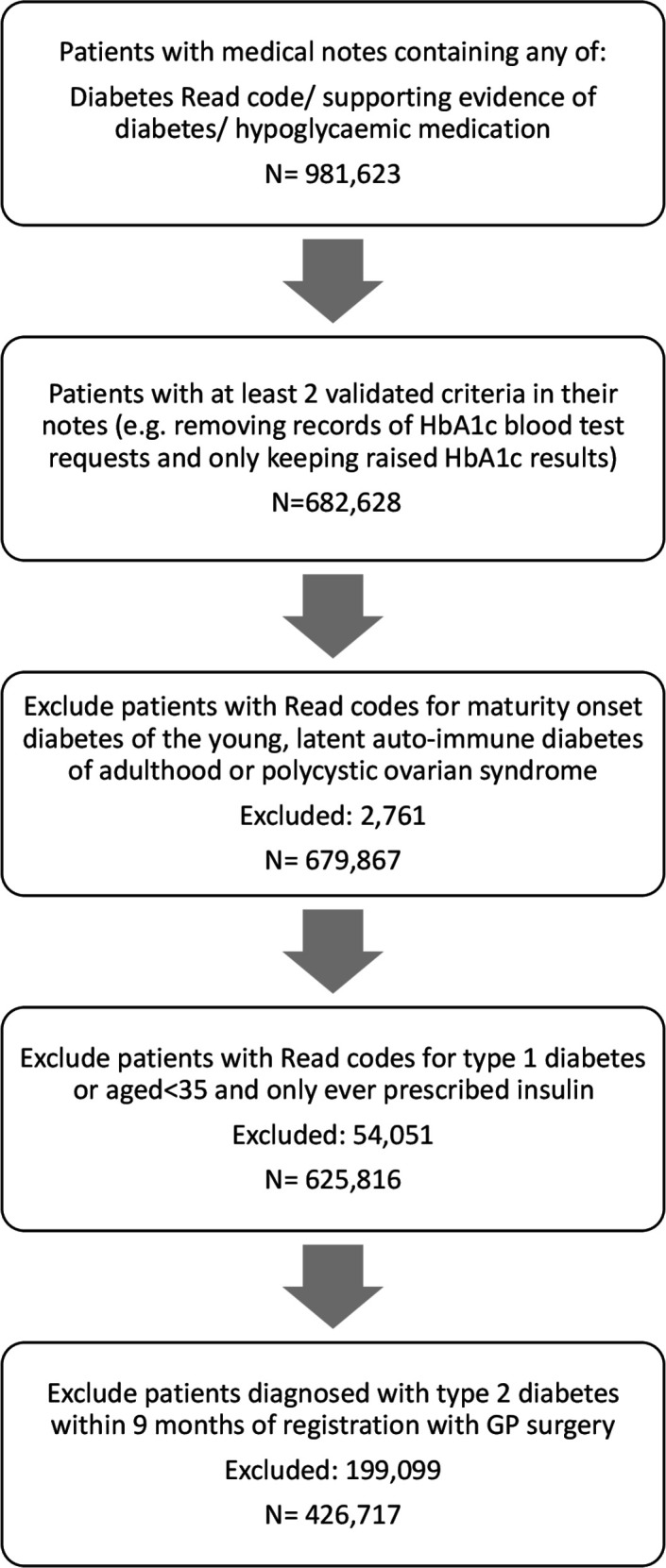
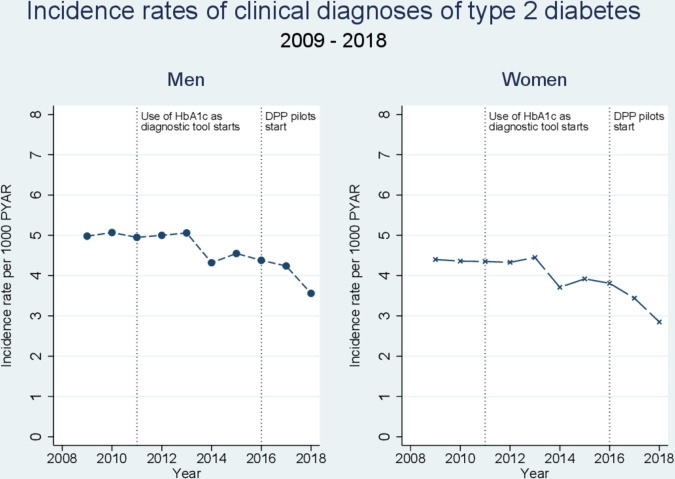
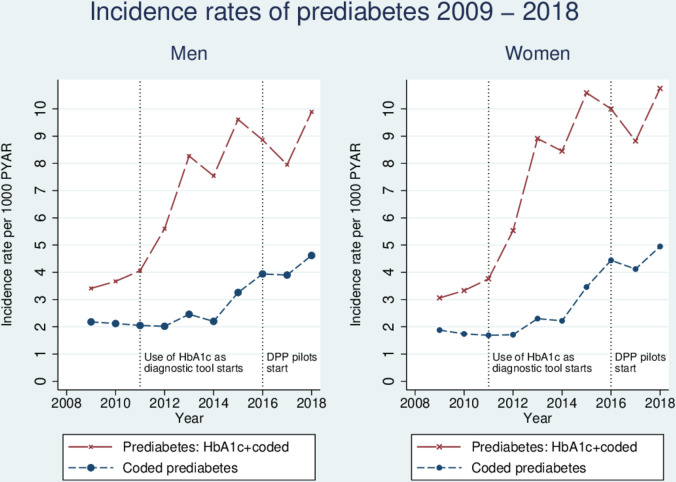
Results: A cohort of 426 717 people were clinically diagnosed with type 2 diabetes and 418 656 people met the criteria for a diagnosis of pre-diabetes in that time period. The incidence of clinically diagnosed type 2 diabetes per 1000 person years at risk (PYAR) in men decreased from a peak of 5.06 per 1000 PYAR (95% CI 4.97 to 5.15) in 2013 to 3.56 per 1000 PYAR (95% CI 3.46 to 3.66) by 2018. For women, the incidence of clinically diagnosed type 2 diabetes per 1000 PYAR decreased from 4.45 (95% CI 4.37 to 4.54) in 2013 to 2.85 (2.76 to 2.93) in 2018. The incidence rate of pre-diabetes tripled by the end of the same study period in men and women.
Conclusions: Between 2009 and 2018, the incidence rate of new clinical diagnoses of type 2 diabetes recorded in a UK primary care database decreased by a third from its peak in 2013-2014, while the incidence of pre-diabetes has tripled. The implications of this on timely treatment, complication rates and mortality need further longer term exploration.
Keywords: Type 2; diabetes mellitus; epidemiology; prediabetic state.
© Author(s) (or their employer(s)) 2021. Re-use permitted under CC BY-NC. No commercial re-use. See rights and permissions. Published by BMJ.
Conflict of interest statement
Competing interests: None declared.
Figures
References
-
- National Collaborating Centre for Chronic Conditions . Type 2 diabetes national clinical guideline for management in primary and secondary care (update). London: Royal College of Physicians, 2008. - PubMed
-
- Diabetes UK . DIABETES: FACTS AND STATS [Internet]. Diabetes UK, 2014. Available: http://www.diabetes.org.uk/Documents/About%20Us/Statistics/Diabetes-key-...
Publication types
MeSH terms
Grants and funding
LinkOut - more resources
Full Text Sources
Other Literature Sources
Medical
Miscellaneous