


A chain mediation model on COVID-19 symptoms and mental health outcomes in Americans, Asians and Europeans
- PMID: 33742072
- PMCID: PMC7979938
- DOI: 10.1038/s41598-021-85943-7
A chain mediation model on COVID-19 symptoms and mental health outcomes in Americans, Asians and Europeans
Abstract
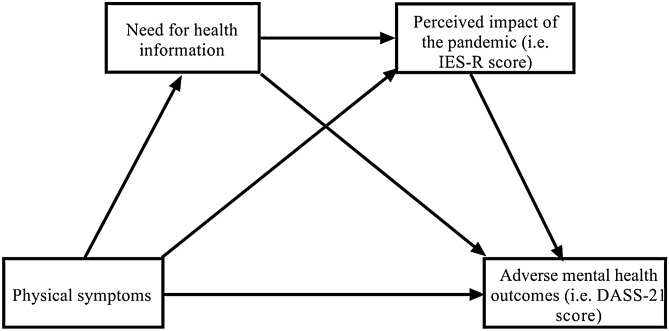
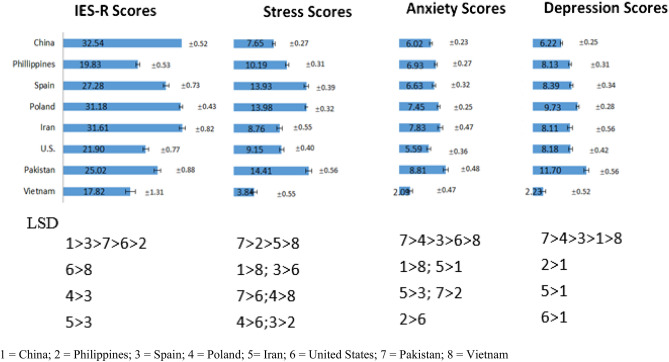
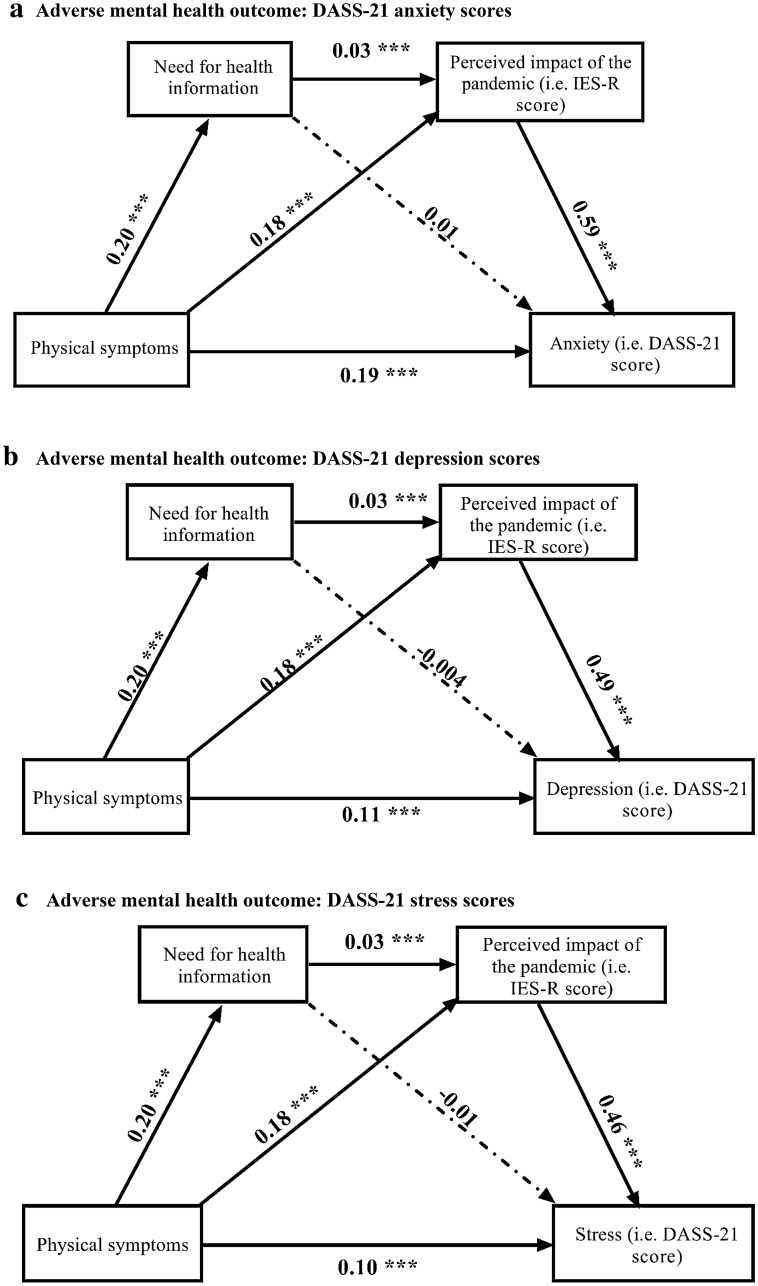
The novel Coronavirus-2019 (COVID-19) was declared a pandemic by the World Health Organization (WHO) in March 2020, impacting the lifestyles, economy, physical and mental health of individuals globally. This study aimed to test the model triggered by physical symptoms resembling COVID-19 infection, in which the need for health information and perceived impact of the pandemic mediated the path sequentially, leading to adverse mental health outcomes. A cross-sectional research design with chain mediation model involving 4612 participants from participating 8 countries selected via a respondent-driven sampling strategy was used. Participants completed online questionnaires on physical symptoms, the need for health information, the Impact of Event Scale-Revised (IES-R) questionnaire and Depression, Anxiety and Stress Scale (DASS-21). The results showed that Poland and the Philippines were the two countries with the highest levels of anxiety, depression and stress; conversely, Vietnam had the lowest mean scores in these areas. Chain mediation model showed the need for health information, and the perceived impact of the pandemic were sequential mediators between physical symptoms resembling COVID-19 infection (predictor) and consequent mental health status (outcome). Excessive and contradictory health information might increase the perceived impact of the pandemic. Rapid COVID-19 testing should be implemented to minimize the psychological burden associated with physical symptoms, whilst public mental health interventions could target adverse mental outcomes associated with the pandemic.
Conflict of interest statement
The authors declare no competing interests.
Figures
References
-
- Worldmeters. COVID-19 Coronavirus Pandemic. (2020). https://www.worldometers.info/coronavirus/. Accessed 4 Dec 2020.
-
- Chirico F, Magnavita N. COVID-19 infection in Italy: An occupational injury. S. Afr. Med. J. 2020;110(6):12944. - PubMed
-
- Chirico, F.N.G. Tribute to healthcare operators threatened by COVID-19 pandemic. J. Health Soc. Sci.5(2), 65–168 (2020).
Publication types
MeSH terms
Grants and funding
- 012 / RID / 2018/19/Ministerstwo Nauki i Szkolnictwa Wyższego
- 012 / RID / 2018/19/Ministerstwo Nauki i Szkolnictwa Wyższego
- 012 / RID / 2018/19/Ministerstwo Nauki i Szkolnictwa Wyższego
- 012 / RID / 2018/19/Ministerstwo Nauki i Szkolnictwa Wyższego
- VINIF.2020.Covid19.DA07/Quỹ Đổi mới sáng tạo Vingroup
- VINIF.2020.Covid19.DA07/Quỹ Đổi mới sáng tạo Vingroup
- VINIF.2020.Covid19.DA07/Quỹ Đổi mới sáng tạo Vingroup
- VINIF.2020.Covid19.DA07/Quỹ Đổi mới sáng tạo Vingroup
- VINIF.2020.Covid19.DA07/Quỹ Đổi mới sáng tạo Vingroup
- R-722-000-004-731/National University of Singapore
- R-722-000-004-731/National University of Singapore
LinkOut - more resources
Full Text Sources
Other Literature Sources
Medical
