


The potential of artificial intelligence to improve patient safety: a scoping review
- PMID: 33742085
- PMCID: PMC7979747
- DOI: 10.1038/s41746-021-00423-6
The potential of artificial intelligence to improve patient safety: a scoping review
Abstract
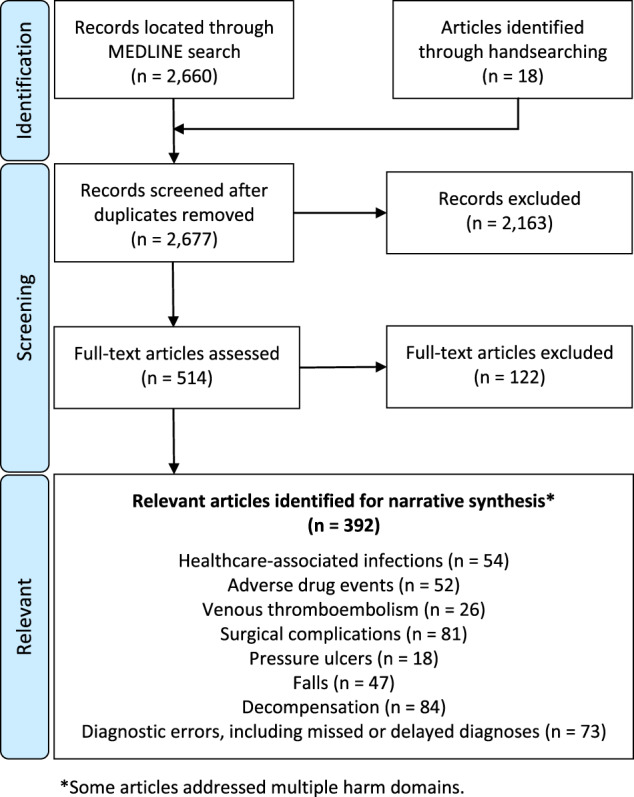
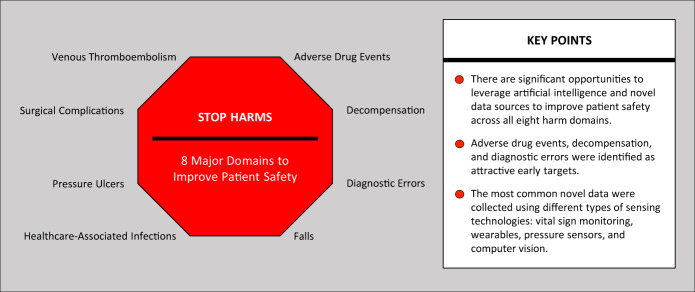
Artificial intelligence (AI) represents a valuable tool that could be used to improve the safety of care. Major adverse events in healthcare include: healthcare-associated infections, adverse drug events, venous thromboembolism, surgical complications, pressure ulcers, falls, decompensation, and diagnostic errors. The objective of this scoping review was to summarize the relevant literature and evaluate the potential of AI to improve patient safety in these eight harm domains. A structured search was used to query MEDLINE for relevant articles. The scoping review identified studies that described the application of AI for prediction, prevention, or early detection of adverse events in each of the harm domains. The AI literature was narratively synthesized for each domain, and findings were considered in the context of incidence, cost, and preventability to make projections about the likelihood of AI improving safety. Three-hundred and ninety-two studies were included in the scoping review. The literature provided numerous examples of how AI has been applied within each of the eight harm domains using various techniques. The most common novel data were collected using different types of sensing technologies: vital sign monitoring, wearables, pressure sensors, and computer vision. There are significant opportunities to leverage AI and novel data sources to reduce the frequency of harm across all domains. We expect AI to have the greatest impact in areas where current strategies are not effective, and integration and complex analysis of novel, unstructured data are necessary to make accurate predictions; this applies specifically to adverse drug events, decompensation, and diagnostic errors.
Conflict of interest statement
Dr. Bates consults for EarlySense, which makes patient safety monitoring systems. He receives cash compensation from CDI (Negev), Ltd, which is a not-for-profit incubator for health IT startups. He receives equity from ValeraHealth, which makes software to help patients with chronic diseases. He receives equity from Clew, which makes software to support clinical decision-making in intensive care. He receives equity from MDClone, which takes clinical data and produces deidentified versions of it. He receives equity from AESOP, which makes software to reduce medication error rates. Drs. Craig, Jackson, and Rhee are all employed by IBM Watson Health. The other coauthors have no disclosures.
Figures
References
-
- Kohn, L., Corrigan, J. & Donaldson, M. To Err Is Human (National Academies Press, 2000). - PubMed
Publication types
LinkOut - more resources
Full Text Sources
Other Literature Sources
