


doi: 10.1055/s-0041-1725137.
Epub 2021 Mar 19.
Brain-Computer Interfaces in Neurorecovery and Neurorehabilitation
Affiliations
- PMID: 33742433
- PMCID: PMC8768507
- DOI: 10.1055/s-0041-1725137
Item in Clipboard
Brain-Computer Interfaces in Neurorecovery and Neurorehabilitation
Semin Neurol.
2021 Apr.
Abstract
Recent advances in brain-computer interface technology to restore and rehabilitate neurologic function aim to enable persons with disabling neurologic conditions to communicate, interact with the environment, and achieve other key activities of daily living and personal goals. Here we evaluate the principles, benefits, challenges, and future directions of brain-computer interfaces in the context of neurorehabilitation. We then explore the clinical translation of these technologies and propose an approach to facilitate implementation of brain-computer interfaces for persons with neurologic disease.
Thieme. All rights reserved.
Conflict of interest statement
Disclosure The authors report no conflicts of interest in this work.
Figures

Lifecycle of BCI Development
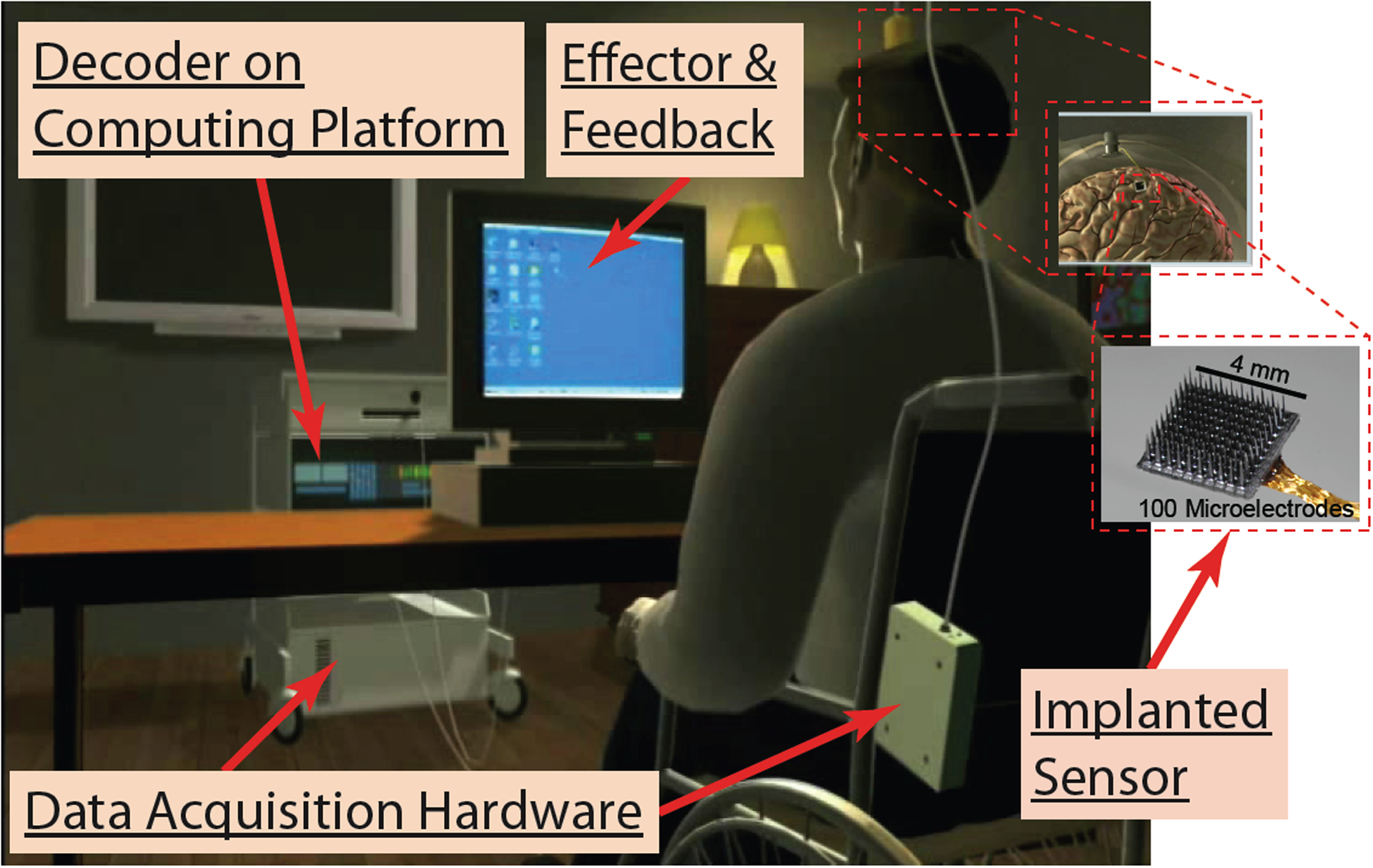
Schematic of BrainGate BCI Setup. This figure depicts the percutaneous and cable-connected system used currently. Percutaneous wireless systems are in clinical testing, and fully implanted systems are in development.
References
-
- Anderson KD. Targeting recovery: priorities of the spinal cord-injured population. J Neurotrauma. 2004;21(10):1371–1383. - PubMed
-
- Bockbrader MA, Francisco G, Lee R, Olson J, Solinsky R, Boninger ML. Brain Computer Interfaces in Rehabilitation Medicine. PM R. 2018;10(9S2):S233–S243. - PubMed
-
- Lee MB, Kramer DR, Peng T, et al. Brain-Computer Interfaces in Quadriplegic Patients. Neurosurg Clin N Am. 2019;30(2):275–281. - PubMed
-
- Coenen A, Fine E, Zayachkivska O. Adolf Beck: a forgotten pioneer in electroencephalography. J Hist Neurosci. 2014;23(3):276–286. - PubMed
Publication types
MeSH terms
Grants and funding
LinkOut - more resources
Full Text Sources
Other Literature Sources
