


Partitioned glioma heritability shows subtype-specific enrichment in immune cells
- PMID: 33743008
- PMCID: PMC8328033
- DOI: 10.1093/neuonc/noab072
Partitioned glioma heritability shows subtype-specific enrichment in immune cells
Abstract
Background: Epidemiological studies of adult glioma have identified genetic syndromes and 25 heritable risk loci that modify individual risk for glioma, as well increased risk in association with exposure to ionizing radiation and decreased risk in association with allergies. In this analysis, we assess whether there is a shared genome-wide genetic architecture between glioma and atopic/autoimmune diseases.
Methods: Using summary statistics from a glioma genome-wide association studies (GWAS) meta-analysis, we identified significant enrichment for risk variants associated with gene expression changes in immune cell populations. We also estimated genetic correlations between glioma and autoimmune, atopic, and hematologic traits using linkage disequilibrium score regression (LDSC), which leverages genome-wide single-nucleotide polymorphism (SNP) associations and patterns of linkage disequilibrium.
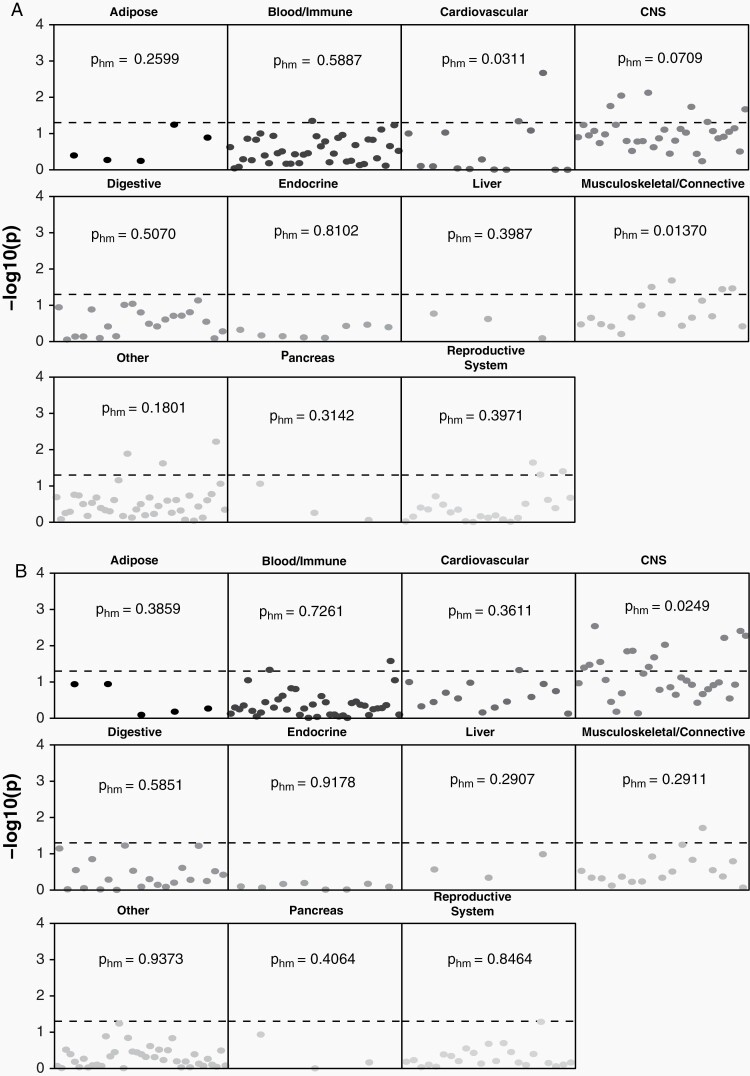
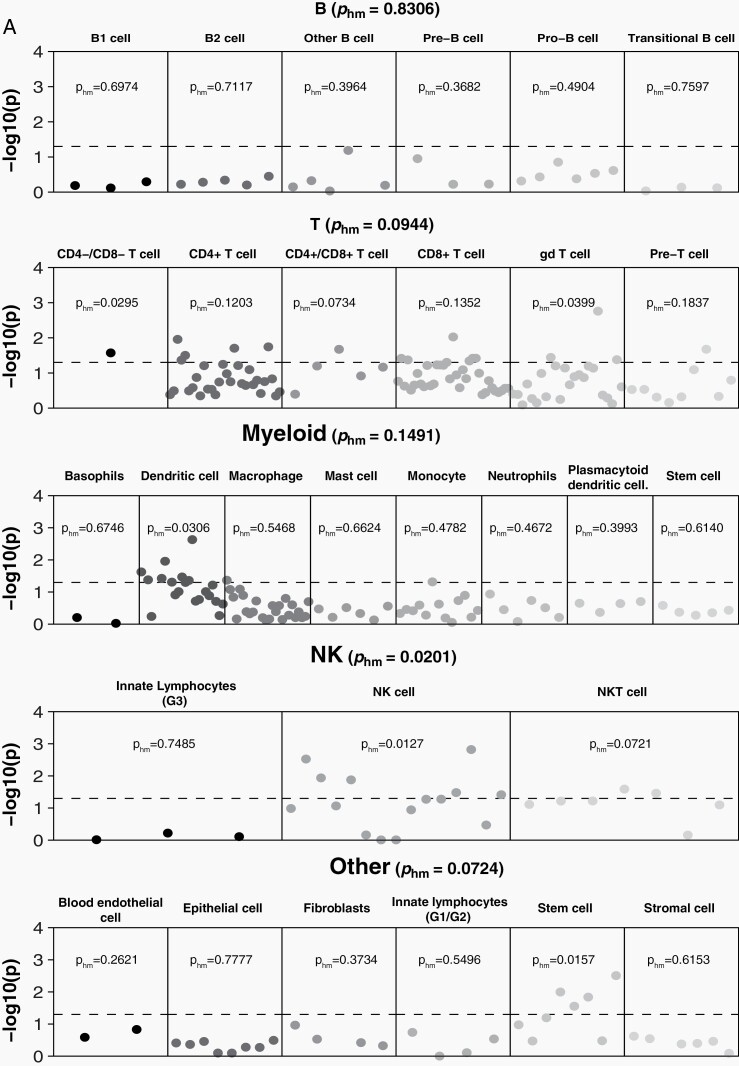
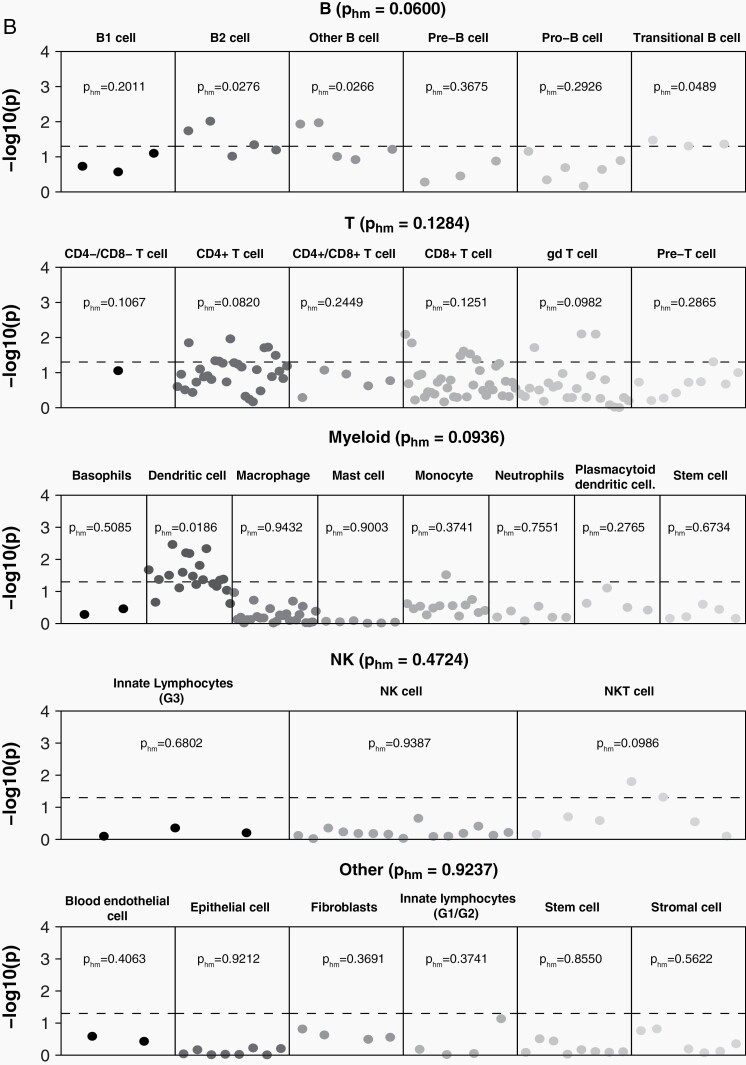
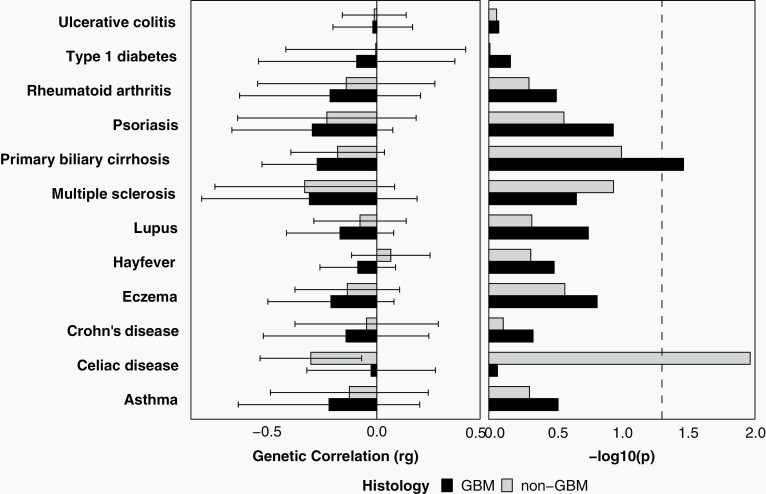
Results: Nominally significant negative correlations were observed for glioblastoma (GB) and primary biliary cirrhosis (rg = -0.26, P = .0228), and for non-GB gliomas and celiac disease (rg = -0.32, P = .0109). Our analyses implicate dendritic cells (GB pHM = 0.0306 and non-GB pHM = 0.0186) in mediating both GB and non-GB genetic predisposition, with GB-specific associations identified in natural killer (NK) cells (pHM = 0.0201) and stem cells (pHM = 0.0265).
Conclusions: This analysis identifies putative new associations between glioma and autoimmune conditions with genomic architecture that is inversely correlated with that of glioma and that T cells, NK cells, and myeloid cells are involved in mediating glioma predisposition. This provides further evidence that increased activation of the acquired immune system may modify individual susceptibility to glioma.
Keywords: allergies; autoimmune disease; genetic architecture; glioma; heritability.
© The Author(s) 2021. Published by Oxford University Press on behalf of the Society for Neuro-Oncology. All rights reserved. For permissions, please e-mail: journals.permissions@oup.com.
Figures
References
-
- Wrensch M, Lee M, Miike R, et al. Familial and personal medical history of cancer and nervous system conditions among adults with glioma and controls. Am J Epidemiol. 1997;145(7):581–593. - PubMed
-
- Zhao H, Cai W, Su S, Zhi D, Lu J, Liu S. Allergic conditions reduce the risk of glioma: a meta-analysis based on 128,936 subjects. Tumour Biol. 2014;35(4):3875–3880. - PubMed
Publication types
MeSH terms
Grants and funding
LinkOut - more resources
Full Text Sources
Other Literature Sources
