


The effect of interleukin-17F on vasculogenic mimicry in oral tongue squamous cell carcinoma
- PMID: 33743555
- PMCID: PMC8177764
- DOI: 10.1111/cas.14894
The effect of interleukin-17F on vasculogenic mimicry in oral tongue squamous cell carcinoma
Abstract
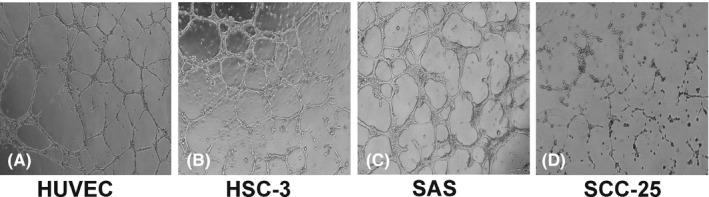
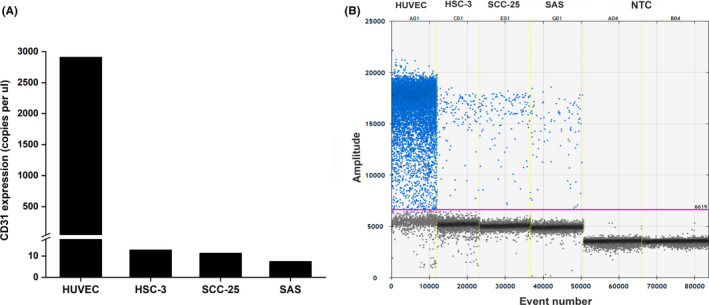
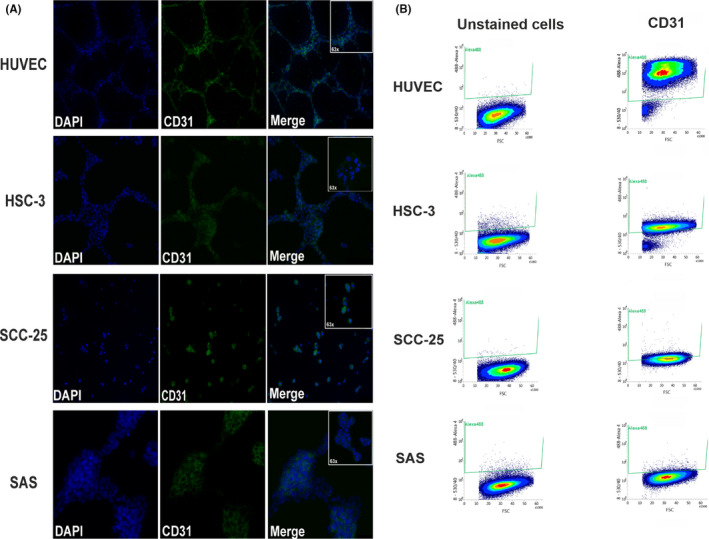
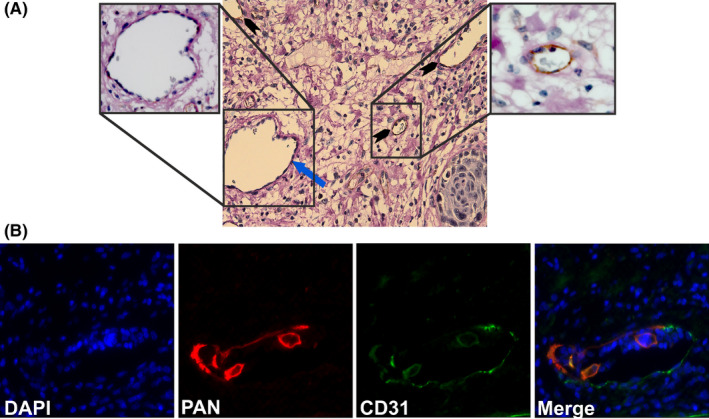
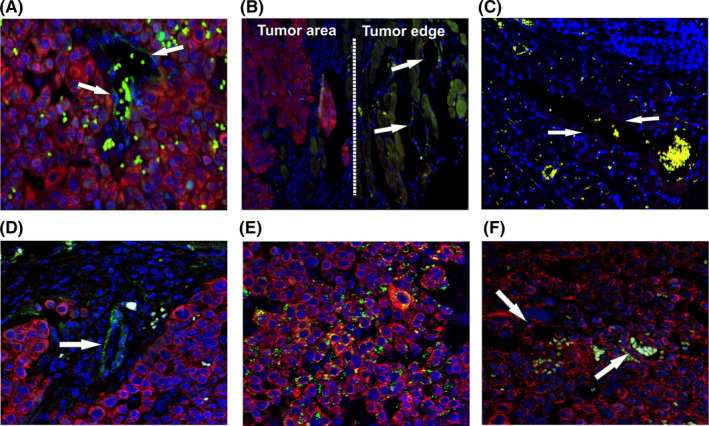
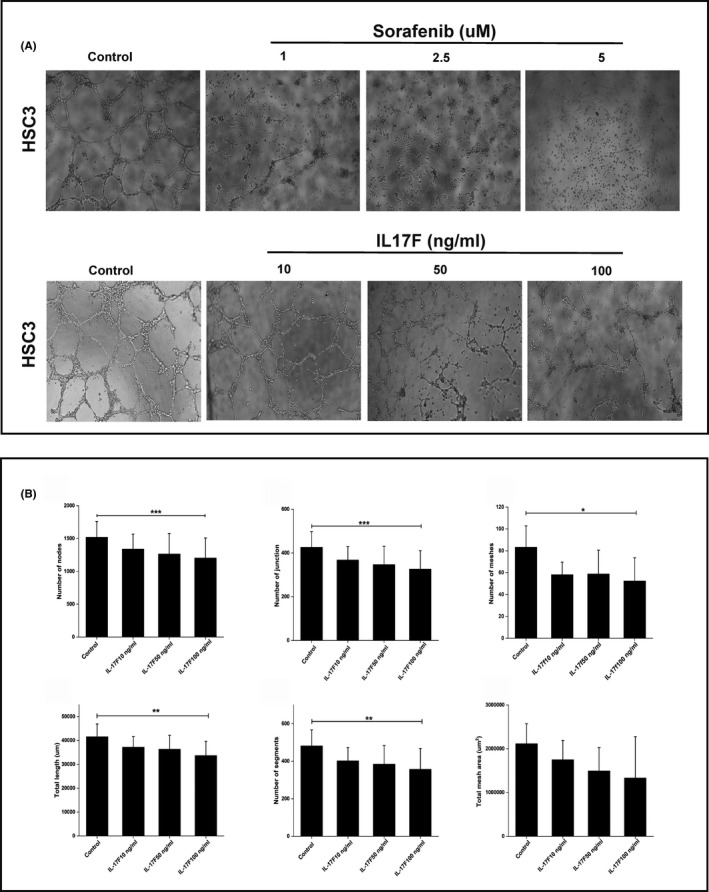
Oral tongue squamous cell carcinoma (OTSCC) is one of the most common cancers worldwide and is characterized by early metastasis and poor prognosis. Recently, we reported that extracellular interleukin-17F (IL-17F) correlates with better disease-specific survival in OTSCC patients and has promising anticancer effects in vitro. Vasculogenic mimicry (VM) is the formation of an alternative vasculogenic system by aggressive tumor cells, which is implicated in treatment failure and poor survival of cancer patients. We sought to confirm the formation of VM in OTSCC and to investigate the effect of IL-17F on VM formation. Here, we showed that highly invasive OTSCC cells (HSC-3 and SAS) form tube-like VM on Matrigel similar to those formed by human umbilical vein endothelial cells. Interestingly, the less invasive cells (SCC-25) did not form any VM structures. Droplet-digital PCR, FACS, and immunofluorescence staining revealed the presence of CD31 mRNA and protein in OTSCC cells. Additionally, in a mouse orthotopic model, HSC-3 cells expressed VE-cadherin (CD144) but lacked Von Willebrand Factor. We identified different patterns of VM structures in patient samples and in an orthotopic OTSCC mouse model. Similar to the effect produced by the antiangiogenic drug sorafenib, IL-17F inhibited the formation of VM structures in vitro by HSC-3 and reduced almost all VM-related parameters. In conclusion, our findings indicate the presence of VM in OTSCC and the antitumorigenic effect of IL-17F through its effect on the VM. Therefore, targeting IL-17F or its regulatory pathways may lead to promising therapeutic strategies in patients with OTSCC.
Keywords: Angiogenesis; CD31; Interleukin-17F; Oral tongue squamous cell carcinoma; Vasculogenic mimicry.
© 2021 The Authors. Cancer Science published by John Wiley & Sons Australia, Ltd on behalf of Japanese Cancer Association.
Conflict of interest statement
The authors have no conflict of interest.
Figures
References
-
- Ng JH, Iyer NG, Tan MH, Edgren G. Changing epidemiology of oral squamous cell carcinoma of the tongue: a global study. Head Neck. 2016;39:297‐304. - PubMed
-
- Van Dijk BA, Brands MT, Geurts SM, Merkx MA, Roodenburg JL. Trends in oral cavity cancer incidence, mortality, survival and treatment in the Netherlands. Int J Cancer. 2016;139:574‐583. - PubMed
MeSH terms
Substances
Grants and funding
LinkOut - more resources
Full Text Sources
Other Literature Sources
Research Materials
Miscellaneous
