


The effect of age on the incidence of COVID-19 complications: a systematic review and meta-analysis
- PMID: 33743821
- PMCID: PMC7980104
- DOI: 10.1186/s13643-021-01636-2
The effect of age on the incidence of COVID-19 complications: a systematic review and meta-analysis
Abstract
Background: The coronavirus (COVID-19) pandemic was reported from Wuhan, China, on December 31, 2019, and the pandemic was spread to more than 212 countries in the globe. This meta-analysis aimed to assess the pooled incidence of COVID-19 complications and to identify the association between the incidence of complications and age.
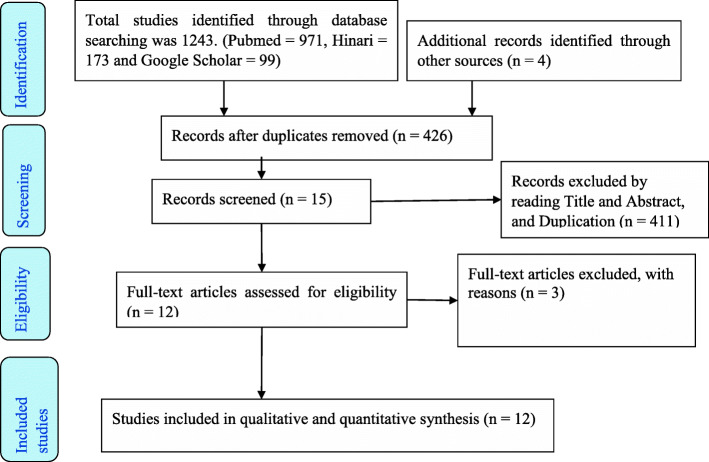
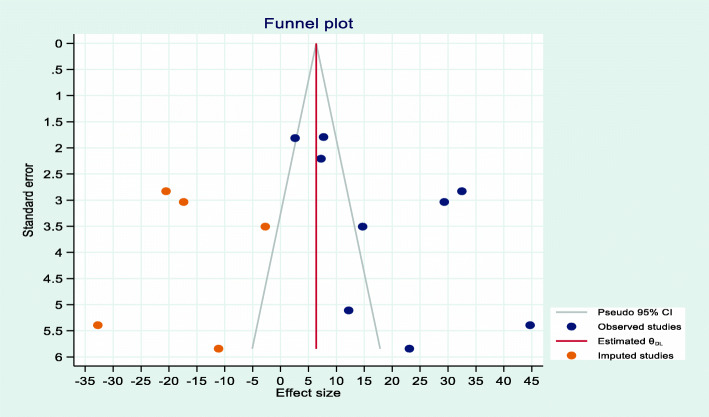
Methods: Comprehensive databases, PubMed, Hinari, and Google Scholar, were used to locate potential articles for this review. Data were extracted using Microsoft Excel and imported to the STATA/MP version 16.0 software for analysis. Heterogeneity between studies was assessed using the Cochrane Q test statistics and I2 test, and small study effect was checked using Egger's statistical test at 5% significant level. Sensitivity analysis was checked. A random-effects model was conducted to estimate the pooled incidence of COVID-19 complications. Univariate meta-regression was conducted to identify the association between the mean ages with each complication.
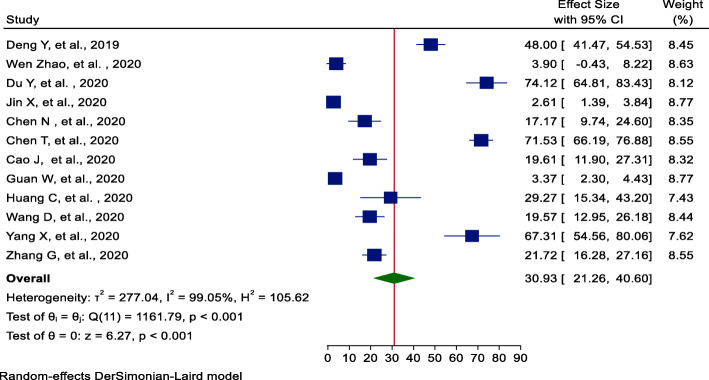
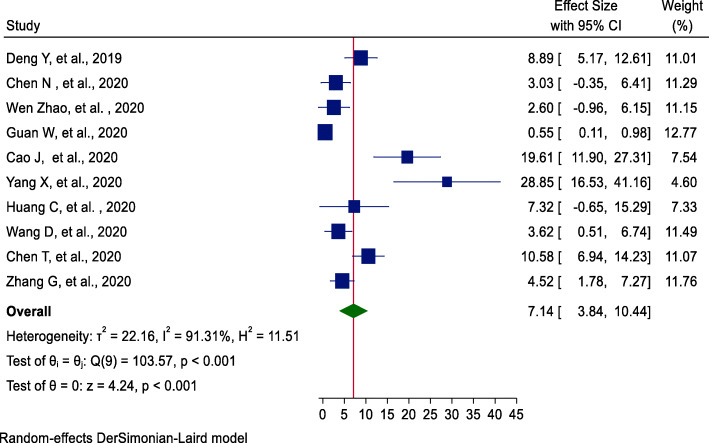
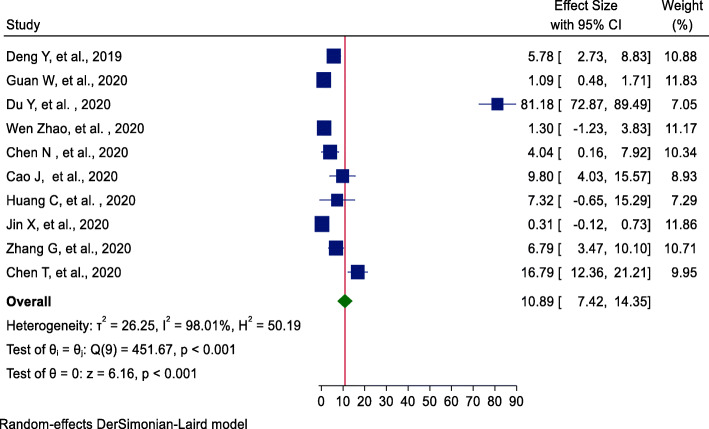
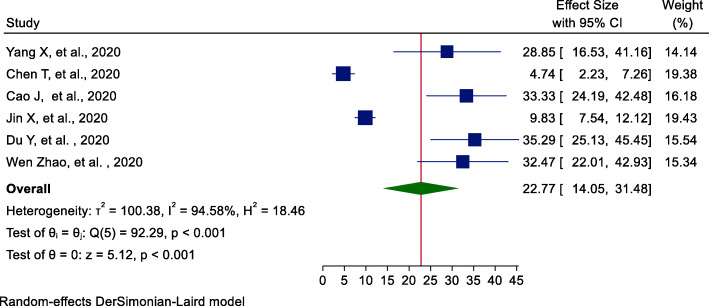
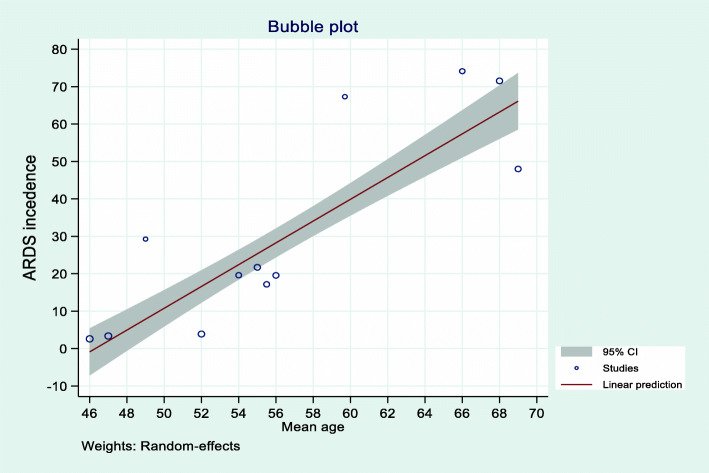
Results: From the total of 1237 studies, 12 studies were included with a total of 3064 COVID-19 patients. The most complications were acute respiratory distress syndrome (30.93%, 95%CI 21.3-40.6%) followed by acute liver injury (22.8%, 95%CI 14-31.5%), shock (10.9%, 95%CI 7.4-14.4%), acute kidney injury (7%, 95%CI 3.8-10.4%), and acute cardiac injury (6.4%, 95%CI 2.8-15.6%). Univariate meta-regression revealed that as the mean age increased by 1 year, the incidence of acute respiratory distress syndrome, acute kidney injury, acute cardiac injury, and shock increased by a factor of 2.9 (β = 2.9, 95%CI 2.4-3.4, adjusted R2 = 88), 0.4 (β = 0.4, 95%CI 0.04-0.72, adjusted R2 = 54), 1.6 (β = 1.6, 95%CI 1.1-2.1, adjusted R2 = 85), and 1.1 (β = 1.1, 95%CI 0.8-1.5, adjusted R2 = 26) times respectively.
Conclusion: Significant complications of COVID-19 viral infections were reported. Older populations were a high-risk group of developing adverse complications as compared to their counterparts. Health care professionals should give primary attention to those risk group individuals.
Keywords: Acute cardiac injury; Acute kidney injury; Acute respiratory distress syndrome; Age; COVID-19; Meta-analysis; Shock.
Conflict of interest statement
The authors declare that they have no competing interests.
Figures
References
-
- Coronaviruses NI. National Institute of Allergy and Infectious Diseases. NIH Natl. Institue Allergy Infect. Dis. NIAID https://www.niaid.nih.gov/diseases-conditions/coronaviruses. Accessed 23 Jul 2020.
-
- Guan W, Ni Z, Hu Y, Liang W, Ou C, He J, Liu L, Shan H, Lei CL, Hui DSC, du B, Li LJ, Zeng G, Yuen KY, Chen RC, Tang CL, Wang T, Chen PY, Xiang J, Li SY, Wang JL, Liang ZJ, Peng YX, Wei L, Liu Y, Hu YH, Peng P, Wang JM, Liu JY, Chen Z, Li G, Zheng ZJ, Qiu SQ, Luo J, Ye CJ, Zhu SY, Zhong NS, China Medical Treatment Expert Group for Covid-19 Clinical characteristics of coronavirus disease 2019 in China. N Engl J Med. 2020;382(18):1708–1720. doi: 10.1056/NEJMoa2002032. - DOI - PMC - PubMed
Publication types
MeSH terms
LinkOut - more resources
Full Text Sources
Other Literature Sources
Medical
