


How and Why Are Irritability and Depression Linked?
- PMID: 33743947
- PMCID: PMC7988746
- DOI: 10.1016/j.chc.2020.10.009
How and Why Are Irritability and Depression Linked?
Abstract
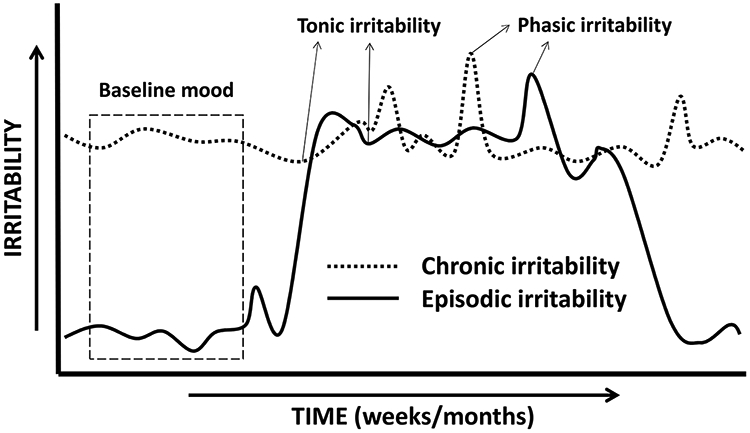
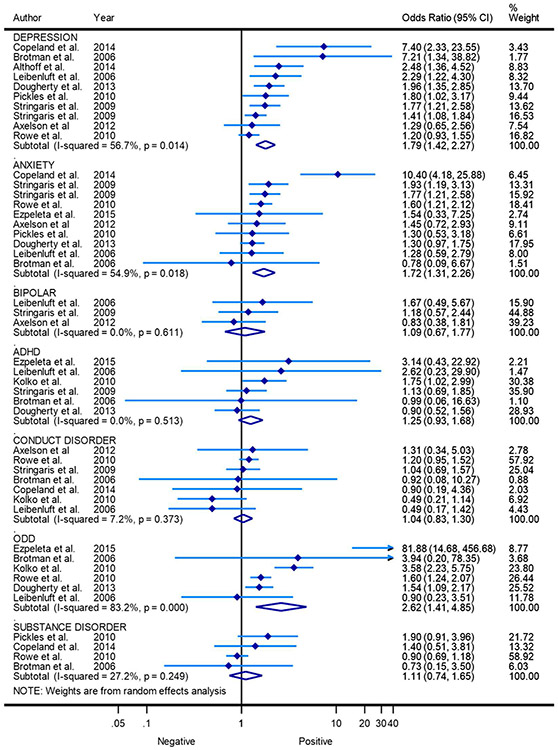
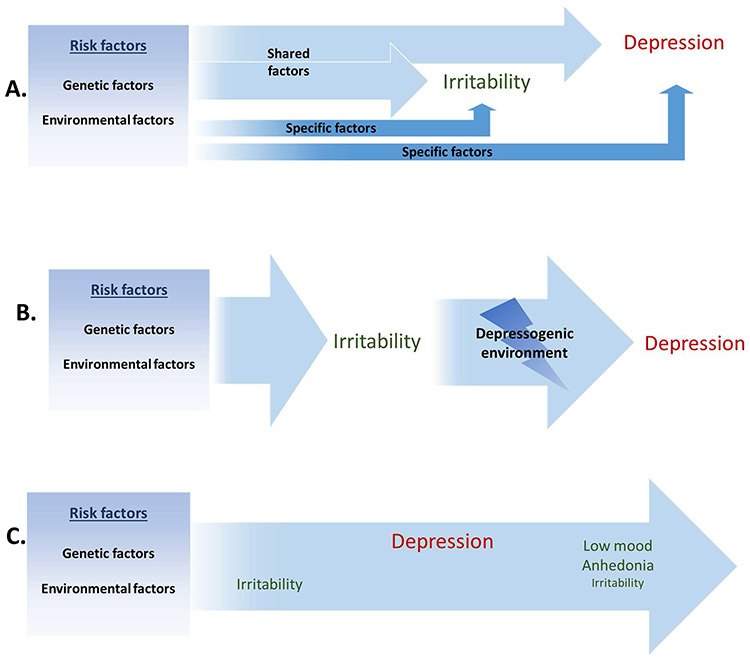
Based on its course over time, irritability is linked to depression cross-sectionally and longitudinally. Cross-sectionally, irritability takes an episodic form as a symptom in pediatric depression; yet, irritability in the absence of depressed mood or anhedonia is rare. Longitudinally, chronic irritability has been shown to predict depression rather than bipolar disorder or externalizing disorders. Evidence suggests that the link between irritability and depression is explained mostly by shared genetic risk. Both conditions are also associated with higher rates of family history of depression, childhood temperaments and personality styles, and negative parenting styles. The treatment implications are discussed.
Keywords: Depression; Genetics; Irritability; Prospective; Risk.
Published by Elsevier Inc.
Conflict of interest statement
Disclosure Dr. Stringaris receives grant from National Institute of Mental Health Intramural Research Program Project ZIA-MH002957
Figures
References
-
- Brotman MA, et al. , Irritability in Youths: A Translational Model. Am J Psychiatry, 2017: p. appiajp201616070839. - PubMed
-
- Leibenluft E, et al. , Chronic versus episodic irritability in youth: a community-based, longitudinal study of clinical and diagnostic associations. J Child Adolesc Psychopharmacol, 2006. 16(4): p. 456–66. - PubMed
-
- Leibenluft E, et al. , Defining clinical phenotypes of juvenile mania. Am J Psychiatry, 2003. 160(3): p. 430–7. - PubMed
-
- APA, Diagnostic and Statistical Manual of Mental Disorders (5th ed.). 5th ed. 2013, Washington, DC.
-
- Avenevoli S, Blader JC, and Leibenluft E, Irritability in Youth: An Update. J Am Acad Child Adolesc Psychiatry, 2015. 54(11): p. 881–3. - PubMed
Publication types
MeSH terms
Grants and funding
LinkOut - more resources
Full Text Sources
Other Literature Sources
Medical
