


Diabetic ketoacidosis at type 1 diabetes diagnosis in children during the COVID-19 pandemic
- PMID: 33745226
- PMCID: PMC8251027
- DOI: 10.1111/pedi.13205
Diabetic ketoacidosis at type 1 diabetes diagnosis in children during the COVID-19 pandemic
Abstract
Objective: The COVID-19 pandemic has led to significant public health measures that have resulted in decreased acute pediatric care utilization. We evaluated whether the rate of severe presentations of new onset type 1 diabetes (DM1), such as, diabetic ketoacidosis (DKA) has changed since the COVID-19 public health measures were enacted.
Research design and methods: A retrospective chart review of children less than 18 years of age presenting with new onset DM1 during the pandemic period of March 17, 2020 to August 31, 2020 was conducted at two tertiary care pediatric hospitals in Alberta, Canada. Rates of DKA and severe DKA were compared to the same time period in the year 2019 (pre-pandemic control).
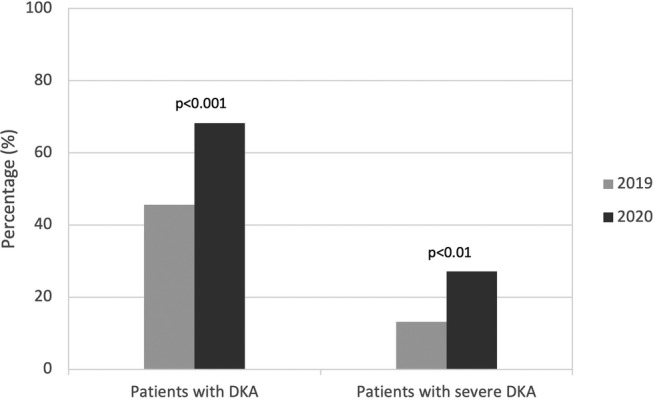
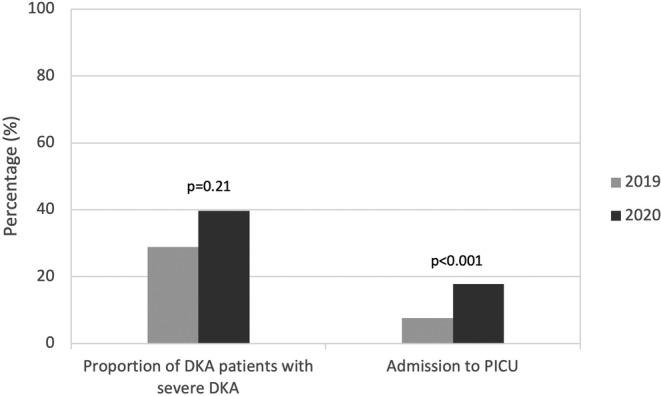
Results: The number of children presenting with newly diagnosed DM1 was similar during the pandemic year of 2020 compared with 2019 (107 children in 2020 vs. 114 in 2019). The frequency of DKA at DM1 onset was significantly higher in the pandemic period (68.2% vs 45.6%; p < 0.001) and incidence of severe DKA was also higher (27.1% in 2020 vs 13.2% in 2019; p = 0.01).
Conclusions: There was a significant increase in DKA and severe DKA in children presenting with new onset DM1 during the COVID-19 pandemic period. This emphasizes the need for educating health care professionals and families to be aware of the symptoms of hyperglycemia and the importance of early diagnosis and treatment even during public health measures for COVID-19.
Keywords: COVID-19; Children; diabetes; diabetic ketoacidosis; pandemic.
© 2021 John Wiley & Sons A/S . Published by John Wiley & Sons Ltd.
Conflict of interest statement
The authors declare no potential conflict of interest.
Figures
References
-
- World Health Organization. WHO Director‐General's opening remarks at the media briefing on COVID‐19‐ 11 March. Accessed October 20. 2020.
-
- Government of Alberta. COVID‐19 orders and legislation Mar 16. Accessed October 20, 2020.
-
- Isba R, Edge R, Jenner R, Broughton E, Francis N, Butler J. Where have all the children gone? Decreases in paediatric emergency department attendances at the start of the COVID‐19 pandemic of 2020. Arch Dis Child. 2020;105(7):704. - PubMed
Publication types
MeSH terms
LinkOut - more resources
Full Text Sources
Other Literature Sources
Medical
