


IL-6 inhibition in the treatment of COVID-19: A meta-analysis and meta-regression
- PMID: 33745918
- PMCID: PMC7970418
- DOI: 10.1016/j.jinf.2021.03.008
IL-6 inhibition in the treatment of COVID-19: A meta-analysis and meta-regression
Abstract
Objectives: Multiple RCTs of interleukin-6 (IL-6) inhibitors in COVID-19 have been published, with conflicting conclusions. We performed a meta-analysis to assess the impact of IL-6 inhibition on mortality from COVID-19, utilising meta-regression to explore differences in study results.
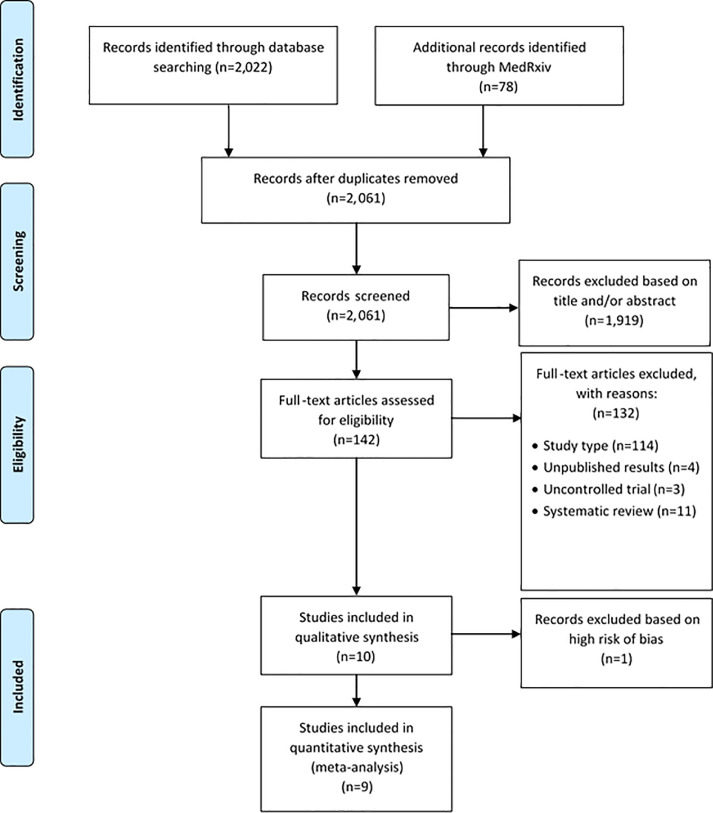
Methods: Systematic database searches were performed to identify RCTs comparing IL-6 inhibitors (tocilizumab and sarilumab) to placebo or standard of care in adults with COVID-19. Meta-analysis was used to estimate the relative risk of mortality at 28 days between arms, expressed as a risk ratio. Within-study mortality rates were compared, and meta-regression was used to investigate treatment effect modification.
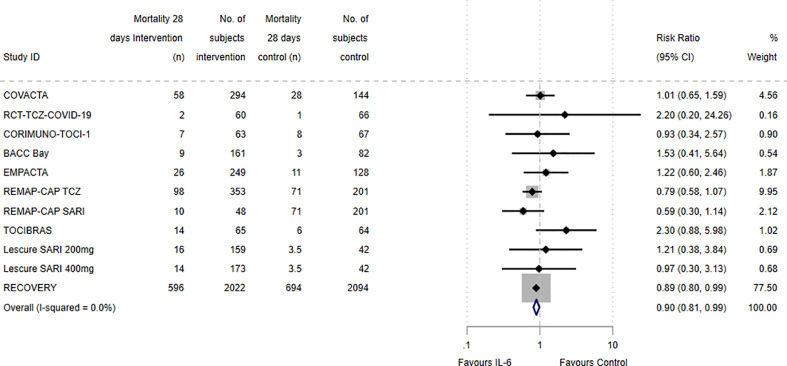
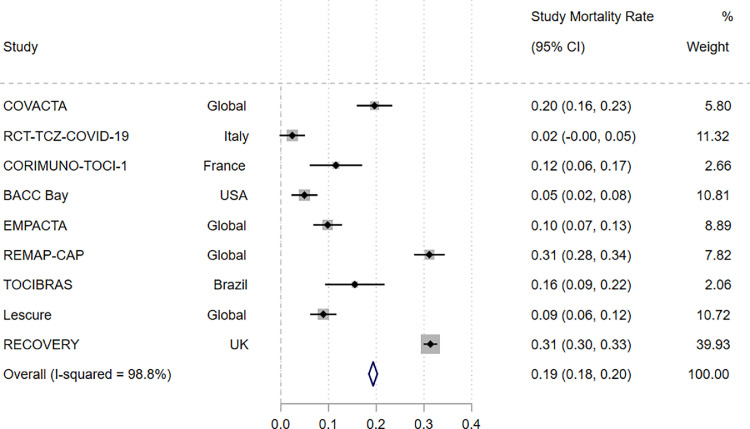
Results: Data from nine RCTs were included. The combined mortality rate across studies was 19% (95% CI: 18, 20%), ranging from 2% to 31%. The overall risk ratio for 28-day mortality was 0.90 (95% CI: 0.81, 0.99), in favour of benefit for IL-6 inhibition over placebo or standard of care, with low treatment effect heterogeneity: I2 0% (95% CI: 0, 53%). Meta-regression showed no evidence of treatment effect modification by patient characteristics. Trial-specific mortality rates were explained by known patient-level predictors of COVID-19 outcome (male sex, CRP, hypertension), and country-level COVID-19 incidence.
Conclusions: IL-6 inhibition is associated with clinically meaningful improvements in outcomes for patients admitted with COVID-19. Long-term benefits of IL-6 inhibition, its effectiveness across healthcare systems, and implications for differing standards of care are currently unknown.
Keywords: COVID-19; IL-6; Meta-analysis; Sarilumab; Tocilizumab.
Copyright © 2021 The British Infection Association. Published by Elsevier Ltd. All rights reserved.
Conflict of interest statement
Declaration of Competing Interest JG receives speaker fees from Abbvie, Biovitrum, BMS, Celgene, Chugai, Gilead, Janssen, Lilly, Novartis, Pfizer, Roche, Sanofi, Sobi and UCB. MDR has received honoraria from Pfizer and UCB. BDC has received honoraria from Abbvie. MY has received honoraria from Abbvie and UCB. All other authors have nothing to declare. JG, MDR, BDC, KB, MY, DN, ADB, JRH were investigators for the RECOVERY trial.
Figures
Comment in
-
Secukinumab in severe COVID-19 pneumonia: Does it have a clinical impact?J Infect. 2021 Jul;83(1):e11-e13. doi: 10.1016/j.jinf.2021.05.011. Epub 2021 May 21. J Infect. 2021. PMID: 34029628 Free PMC article. No abstract available.
References
-
- Aziz M., Haghbin H., Abu Sitta E., Nawras Y., Fatima R., Sharma S. Efficacy of tocilizumab in COVID-19: a systematic review and meta-analysis. J Med Virol. 2021;93(3):1620–1630. - PubMed
-
- Wiersinga W.J., Rhodes A., Cheng A.C., Peacock S.J., Prescott HC. Pathophysiology, transmission, diagnosis, and treatment of coronavirus disease 2019 (COVID-19): a review. JAMA. 2020;324(8):782–793. - PubMed
-
- Rose-John S., Winthrop K., Calabrese L. The role of IL-6 in host defence against infections: immunobiology and clinical implications. Nat Rev Rheumatol. 2017;13(7):399–409. - PubMed
Publication types
MeSH terms
Substances
LinkOut - more resources
Full Text Sources
Other Literature Sources
Medical
Research Materials
Miscellaneous
