


Molecular detection and characterization of Sarcoptes scabiei var canis using skin scrapings and skin biopsies
- PMID: 33746412
- PMCID: PMC7921259
- DOI: 10.1007/s12639-020-01304-7
Molecular detection and characterization of Sarcoptes scabiei var canis using skin scrapings and skin biopsies
Abstract
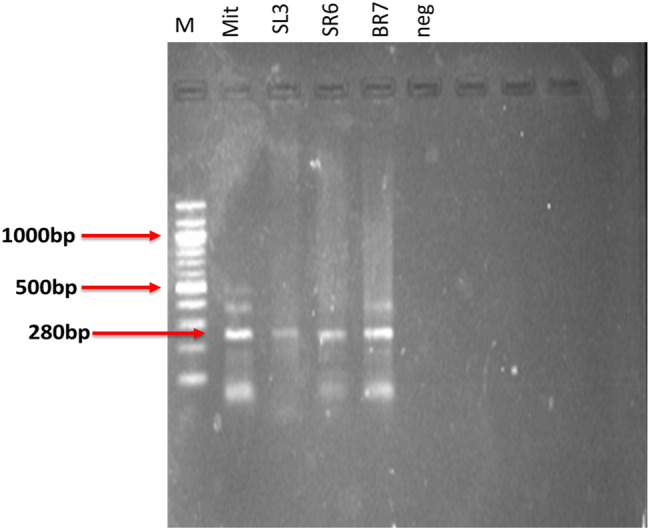
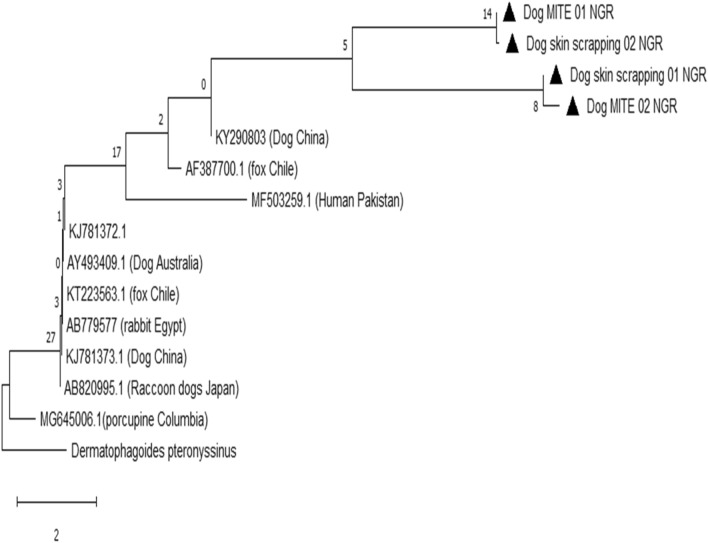
Canine sarcopticosis is a highly infectious and debilitating parasitic skin disease of dogs. Its diagnosis stands challenging as the golden standard of diagnosis; skin scraping microscopy is characterized by several diagnostic variations. Study thus employed several alternate diagnostic approaches using Polymerase Chain Reaction (PCR) on skin scrapings and skin biopsies. Whole Sarcoptes scabiei var canis mites, thirty six "3 cm × 3cm" skin scrapings and 3 mm punch biopsies from six different lesioned sites per infested dog were all obtained from six severely sarcoptes ridden dogs. Samples were mechanically disrupted for DNA extraction and amplification. Positive samples were further commercially sequenced. Amongst the thirty six (36) skin biopsy and scraping samples processed, PCR detected the DNA of Sarcoptes scabiei var canis in thirty two (32) skin biopsy samples with a sensitivity of 88.88%. Twenty five (25) skin scraping samples were also positive for scabies with a sensitivity of 69.44%. The Phylogenetic analysis revealed a relationship between the Sarcoptes scabiei var canis mites from Nigeria and Sarcoptes scabiei of humans, raccoon dogs and rabbits in Pakistan, Japan and Egypt. The diagnostic errors and false negatives accompanying the skin microscopy diagnostic technique can best be limited with the use of PCR diagnosis on skin scrapings and skin biopsies most especially. This highly sensitive diagnostic tool would certainly and effectively control the menace of sarcopticosis in dogs.
Keywords: Biopsy; Diagnosis; Mite; PCR; Scraping; Skin.
© Indian Society for Parasitology 2020.
Conflict of interest statement
Conflict of interestAll authors hereby declare no financial, academic, commercial, political or personal conflict of interest.
Figures
References
-
- Alasaad S, Soglia D, Spalenza V, Maione S, Soriguer RC, Pérez JM, Rasero R, Degiorgis MP, Nimmervoll H, Zhu XQ, Rossi L. Is ITS-2 rDNA suitable marker for genetic characterization of Sarcoptes mites from different wild animals in different geographic areas? Vet Parasitol. 2009;159:181–185. doi: 10.1016/j.vetpar.2008.10.001. - DOI - PubMed
-
- Arlian LG. Biology, host relations and epidemiology of Sarcoptes scabiei. Ann Rev Entomol. 1989;34(139-161):1989. - PubMed
LinkOut - more resources
Full Text Sources