The Association between Obesity and Severity in Patients with Coronavirus Disease 2019: a Retrospective, Single-center Study, Wuhan
- PMID: 33746594
- PMCID: PMC7976577
- DOI: 10.7150/ijms.54655
The Association between Obesity and Severity in Patients with Coronavirus Disease 2019: a Retrospective, Single-center Study, Wuhan
Abstract
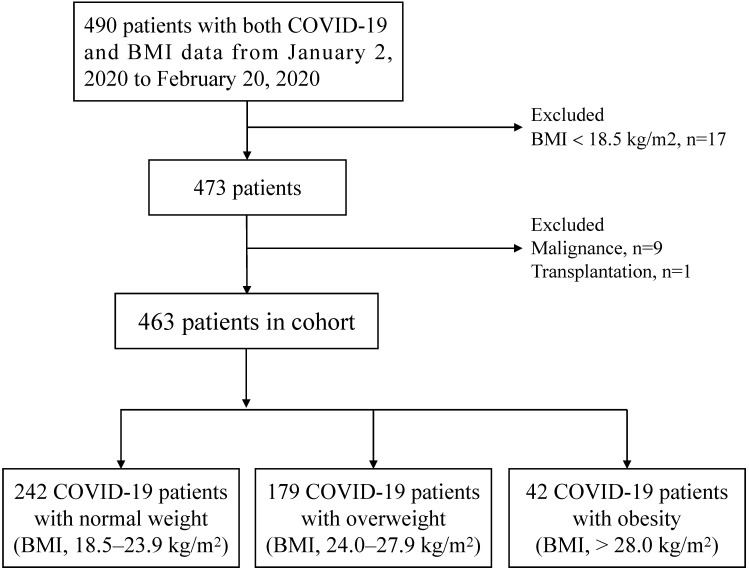
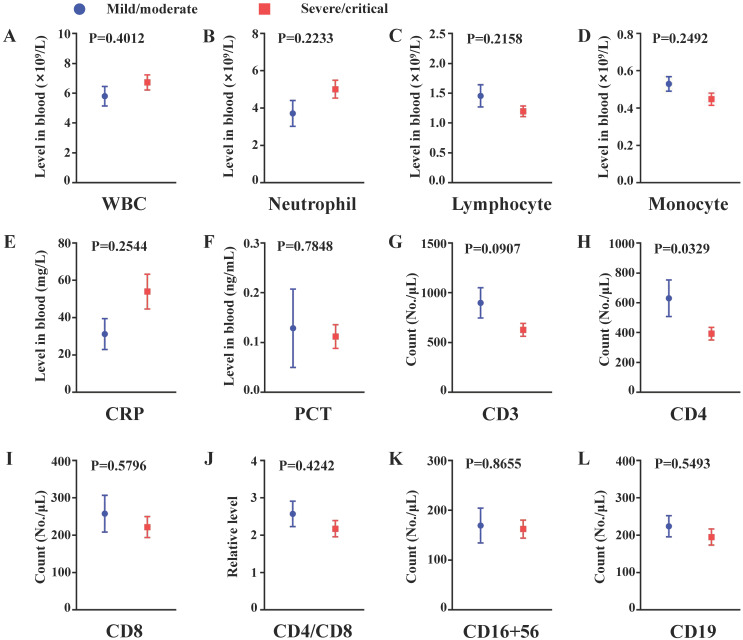
Aim: In other respiratory infectious diseases, obesity may be associated with a poor outcome. For coronavirus disease 2019 (COVID-19), the association between obesity and severity or prognosis requires further analysis. Methods: This was a retrospective, single-center study. Hospitalized patients were recruited in Renmin Hospital of Wuhan University from January 2, 2020 to February 20, 2020. The data of body mass index (BMI) was obtained from follow-up of surviving patients. According to BMI, normal weight was defined as 18.5-23.9 kg/m2, overweight as 24.0-27.9 kg/m2 and obesity as > 28.0 kg/m2. Results: A total of 463 patients were enrolled, of which 242 (52.3%) patients were in the normal weight group; 179 (38.7%) were in the overweight group; and 42 (9.1%) were in the obesity group. Compared to the normal group, obese patients were more likely to have a higher heart rate; lower finger oxygen saturation; higher levels of white blood cells, neutrophil counts, basophil counts, intravenous glucose, triacylglycerol, uric acid, alanine aminotransferase, creatine kinase-MB, CD19+ cell counts and percentage; and lower levels of monocyte percentage, high density lipoprotein and CD3+ cell percentage. In addition, the proportions of hypertension (21.5% vs. 42.6%) and severe+critical illness (47.8 vs. 81.0 %) were significantly higher in the obesity group than those in normal group. However, no significant differences were observed between the normal and obesity groups in critical illness, organ damage and defined endpoint (mechanical ventilation or intensive care unit). Multiple logistic regression showed that obesity increased the risk of developing severe+critical illness (Odd ratio 3.586, 95% CI 1.550-8.298, P=0.003) in patients with COVID-19, and did not affect the risk of critical illness, organ damage and endpoints. Overweight did not affect the risk of severity, organ damage or endpoint in patients with COVID-19. Conclusion: Obesity may be a risk factor for developing severity in patients with COVID-19.
Keywords: body mass index; coronavirus disease 2019; obesity; severity..
© The author(s).
Conflict of interest statement
Competing Interests: The authors have declared that no competing interest exists.
Figures
References
MeSH terms
LinkOut - more resources
Full Text Sources
Other Literature Sources
Medical
Miscellaneous