


Exercise, CaMKII, and type 2 diabetes
- PMID: 33746668
- PMCID: PMC7975583
- DOI: 10.17179/excli2020-3317
Exercise, CaMKII, and type 2 diabetes
Abstract
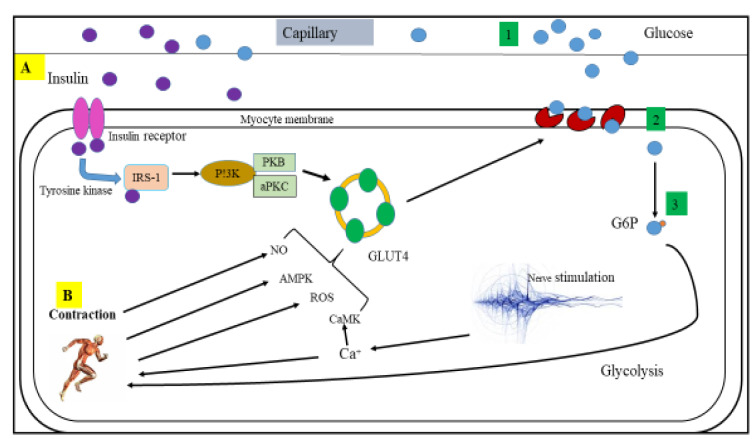
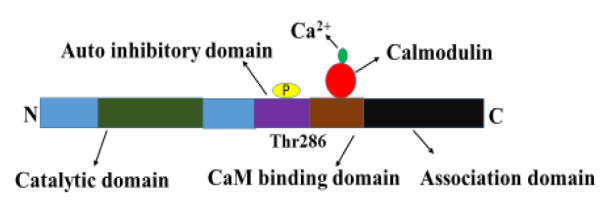
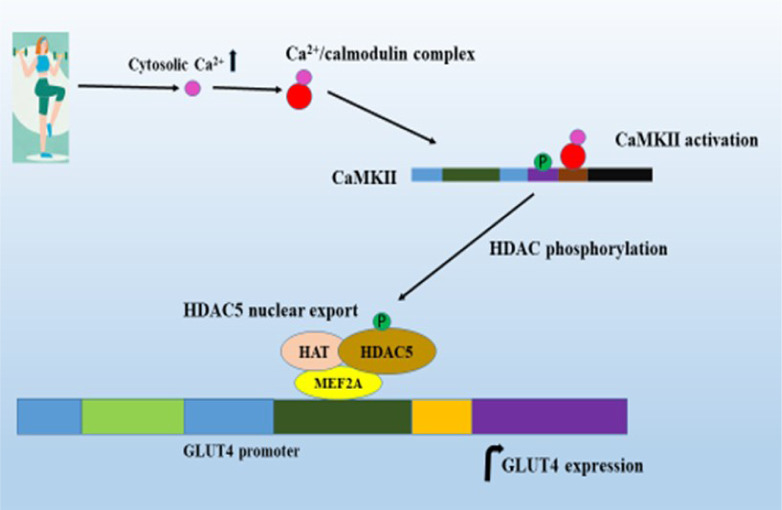
Individuals who exercise regularly are protected from type 2 diabetes and other metabolic syndromes, in part by enhanced gene transcription and induction of many signaling pathways crucial in correcting impaired metabolic pathways associated with a sedentary lifestyle. Exercise activates Calmodulin-dependent protein kinase (CaMK)II, resulting in increased mitochondrial oxidative capacity and glucose transport. CaMKII regulates many health beneficial cellular functions in individuals who exercise compared with those who do not exercise. The role of exercise in the regulation of carbohydrate, lipid metabolism, and insulin signaling pathways are explained at the onset. Followed by the role of exercise in the regulation of glucose transporter (GLUT)4 expression and mitochondrial biogenesis are explained. Next, the main functions of Calmodulin-dependent protein kinase and the mechanism to activate it are illustrated, finally, an overview of the role of CaMKII in regulating GLUT4 expression, mitochondrial biogenesis, and histone modification are discussed.
Keywords: CaMKII; GLUT4; Type 2 diabetes; exercise; insulin resistance; mitochondrial biogenesis.
Copyright © 2021 Joseph et al.
Figures
References
-
- Araki E, Lipes MA, Pattti ME, Khan CR. Alternative pathway of insulin signaling in mice with targeted disruption of the IRS- gene. Nature. 1994;372:186–190. - PubMed
-
- Baron AD, Brechtel G, Wallace P, Edelman SV. Rates and tissue sites of non-insulin and insulin mediated glucose uptake in humans. Am J Physiol. 1988;255:E769–E774. - PubMed
Publication types
LinkOut - more resources
Full Text Sources