


Cytokine Imbalance in Schizophrenia. From Research to Clinic: Potential Implications for Treatment
- PMID: 33746786
- PMCID: PMC7973221
- DOI: 10.3389/fpsyt.2021.536257
Cytokine Imbalance in Schizophrenia. From Research to Clinic: Potential Implications for Treatment
Abstract
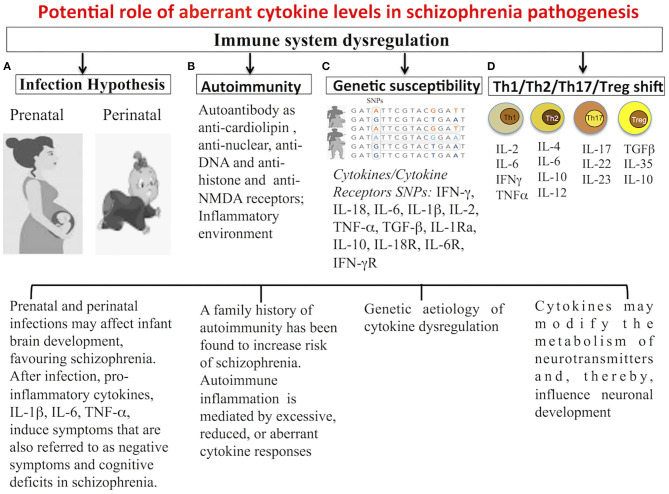
Cytokines are one of the most important components of the immune system. They orchestrate the brain's response to infectious and other exogenous insults and are crucial mediators of the cross-talk between the nervous and immune systems. Epidemiological studies have demonstrated that severe infections and autoimmune disorders, in addition to genetic predisposition, are risk factors for schizophrenia. Furthermore, maternal infection during pregnancy appears to increase the risk of schizophrenia, and proinflammatory cytokines may be negatively involved in the neurodevelopmental process. A cytokine imbalance has been described in the blood and cerebrospinal fluid of schizophrenia patients, particularly in the T helper type 1 [Th1] and type 2 [Th2] cytokines, albeit the results of such studies appear to be contradictory. Chronic stress, likewise, appears to contribute to a lasting proinflammatory state and likely also promotes the disorder. The aim of this mini-review is to investigate the roles of different cytokines in the pathophysiology of schizophrenia and define how cytokines may represent key molecular targets to regulate for the prevention and treatment of schizophrenia. How current antipsychotic drugs impact cytokine networks is also evaluated. In this context, we propose to change the focus of schizophrenia from a traditionally defined brain disorder, to one that is substantially impacted by the periphery and immune system.
Keywords: CNS and Immune system cross-talk; T helper type 1; inflammatory cytokines; molecular targets; serum molecular target.
Copyright © 2021 Reale, Costantini and Greig.
Conflict of interest statement
The authors declare that the research was conducted in the absence of any commercial or financial relationships that could be construed as a potential conflict of interest.
Figures
References
-
- American Psychiatric Association . Diagnostic and Statistical Manual of Mental Disorders. 5th ed. Arlington, VA: American Psychiatric Publishing; (2013). 10.1176/appi.books.9780890425596 - DOI
Publication types
LinkOut - more resources
Full Text Sources
Other Literature Sources
