


Meteorological Variables and Suicidal Behavior: Air Pollution and Apparent Temperature Are Associated With High-Lethality Suicide Attempts and Male Gender
- PMID: 33746805
- PMCID: PMC7973231
- DOI: 10.3389/fpsyt.2021.653390
Meteorological Variables and Suicidal Behavior: Air Pollution and Apparent Temperature Are Associated With High-Lethality Suicide Attempts and Male Gender
Abstract
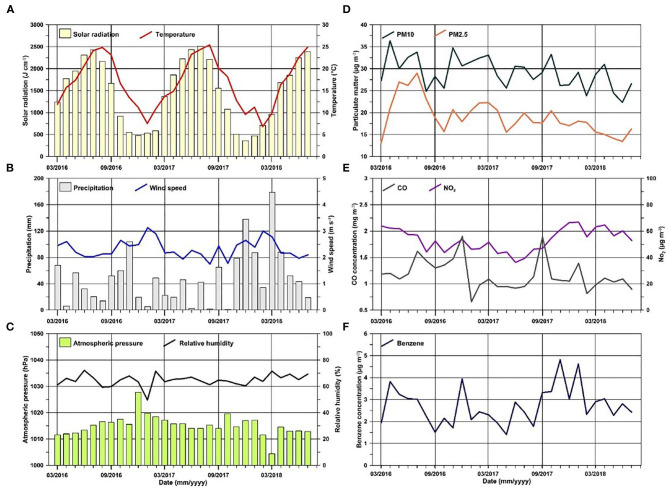
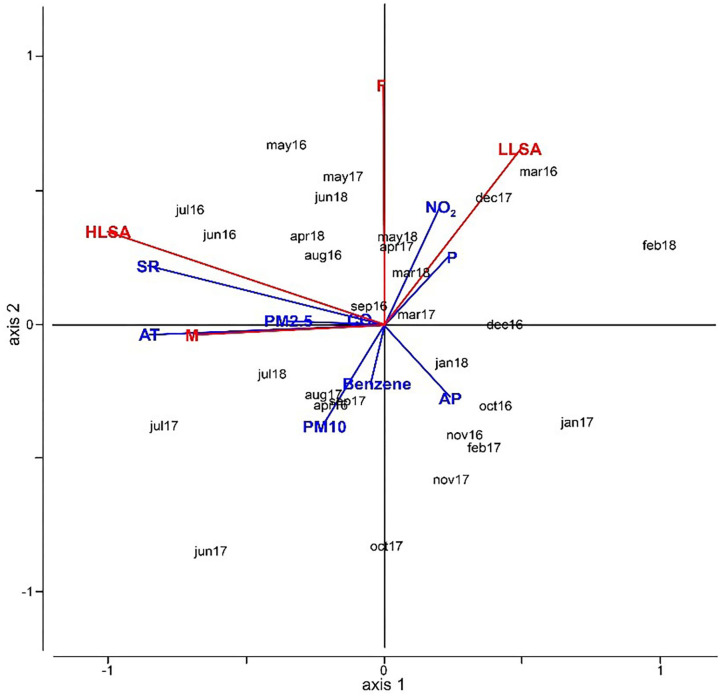
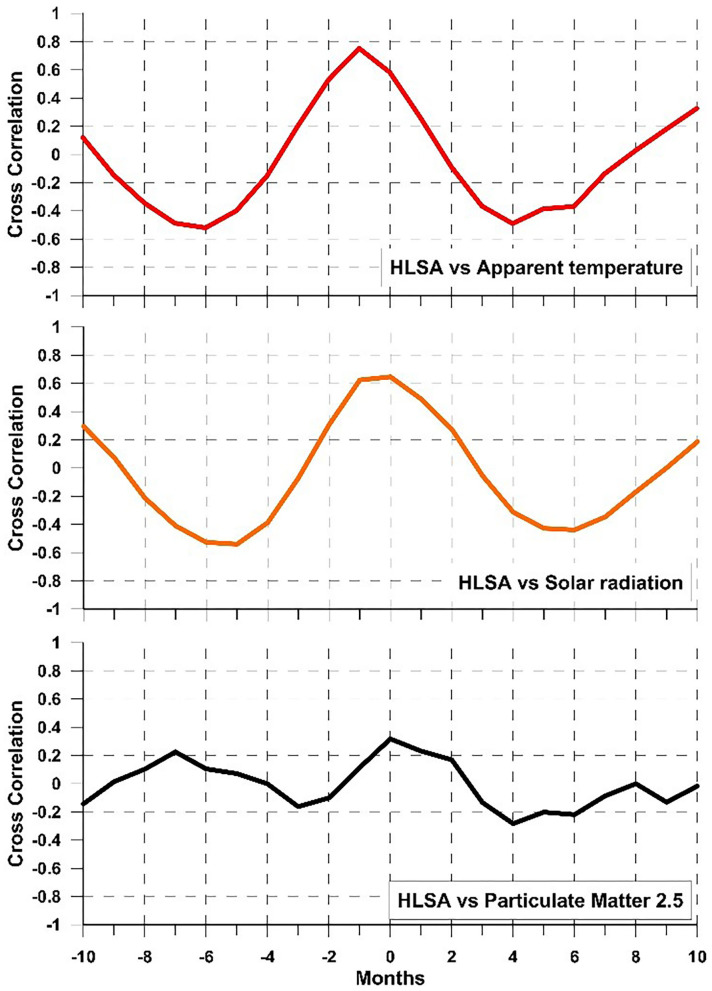
This study analyzed the impact of meteorological variables and high-lethality suicide attempts (HLSA) to assess a potential time shift of HLSA affected by climate evolution to predict the suicide attempt cases over different periods of the year. After attempting suicide, 225 subjects were admitted to the emergency ward of the IRCCS Ospedale Policlinico San Martino and later to the psychiatric unit from March 2016 to July 2018. Socio-demographic and clinical characteristics as well as the meteorological variables were collected. The Mann-Kendall test as well as redundancy and cross-correlation analyses were performed to analyze the trends, statistically correlations, and correspondence of the trends, respectively between suicidal behaviors and climatic factors. Sixty-seven (29.8%) committed a HLSA. Our findings indicate a significant association between HLSA and male gender and apparent temperature with a strong correlation of 75% with a phase shift of -1 month. Solar radiation and air pollution (PM2.5) have a positive correlation of 65 and 32%, respectively, with a zero-time lag. Limitations include that the data are limited to a single hospital; psychological factors, or other clinical variables that could be ruled out as a trigger have not been considered. Meteorological variables may not mirror the temperature that the patient is exposed to due to the air conditioning systems. Exploring those environmental factors associated with HLSA in a more detailed manner could lead to early intervention and prevention strategies for such distressing admissions.
Keywords: air pollution; apparent temperature; environmental parameters; hospitalization; suicidal behavior; suicide; suicide attempt.
Copyright © 2021 Aguglia, Giacomini, Montagna, Amerio, Escelsior, Capello, Cutroneo, Ferretti, Scafidi, Costanza, Serafini and Amore.
Conflict of interest statement
The authors declare that the research was conducted in the absence of any commercial or financial relationships that could be construed as a potential conflict of interest.
Figures
References
-
- World Health Organization . Suicide Data. Available online at: https://www.who.int/mental_health/prevention/suicide/suicideprevent/en (accessed 23 August, 2019).
LinkOut - more resources
Full Text Sources
Other Literature Sources
