


An Increased Adverse Fetal Outcome Has Been Observed among Teen Pregnant Women in Rural Eastern Ethiopia: A Comparative Cross-Sectional Study
- PMID: 33748345
- PMCID: PMC7940719
- DOI: 10.1177/2333794X21999154
An Increased Adverse Fetal Outcome Has Been Observed among Teen Pregnant Women in Rural Eastern Ethiopia: A Comparative Cross-Sectional Study
Abstract
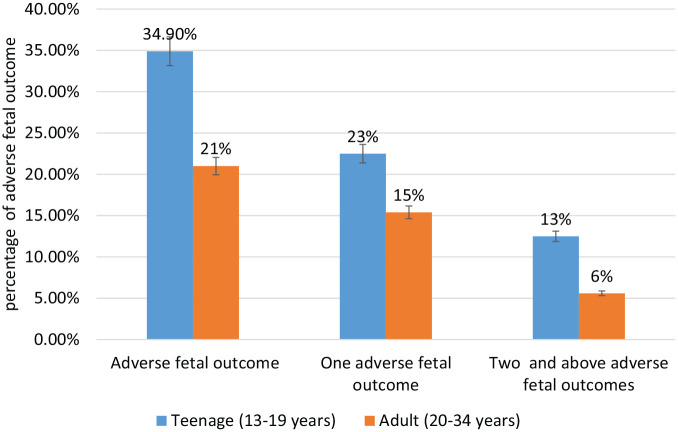
Background: According to the World Health Organization, teenage pregnancies are high-risk due to increased risks of fetal and infant morbidity and mortality. This study compares adverse fetal outcomes between teen and adult pregnant women from rural Eastern Ethiopia. Methods: Institutional-based cross-sectional study was conducted among women visiting maternity units from surrounding rural areas. A total of 481 teenagers (13-19 years old) and 481 adults (20-34 years old) women with a singleton pregnancy were included in the study. Two hospitals and 3 health centers were selected in Eastern Hararghe Zone, Eastern Ethiopia. Comparative analysis was carried out using the log-binomial regression model to identify factors associated with adverse fetal outcomes in both categories. The results are reported in adjusted prevalence ratios with 95% confidence intervals. Results: High proportion of adverse fetal outcome was observed among teenage women than adult (34.9% vs 21%). Statistically significant difference (P < .05) in the proportion of low birth weight (21.1% vs 9.3%), preterm birth (18.7% vs 10.6%), APGAR score at 5th minute (9.3% vs 4%) were found in teenagers compared to adult women. Antenatal care attendance (APR = 0.44; 95% CI: 0.23, 0.86); eclampsia (APR = 1.96; 95% CI: 1.26, 3.06); pre-eclampsia (APR = 1.73; 95% CI: 1.12, 2.67); and wealth index (rich) (APR = 0.55; 95% CI: 0.32, 0.94) were significantly associated with adverse fetal outcomes among the teenage women. Whereas intimate partner violence (APR = 2.22; 95% CI: 1.26, 3.90); preeclampsia (APR = 3.05; 95% CI: 1.61, 5.69); antepartum hemorrhage (APR = 2.77; 95% CI: 1.73, 4.46); and hyperemesis gravderm (APR = 1.75; 95% CI: 1.09, 2.79) were significantly associated with adverse fatal outcomes among the adult women. Conclusion: teenage pregnancy is associated with a high rate of adverse fetal outcomes. Early identification and treatment of problems during antenatal follow-up should be the mainstay to avert the massive adverse fetal effects.
Keywords: adverse fetal outcomes; rural eastern Ethiopia; teenage pregnancy.
© The Author(s) 2021.
Conflict of interest statement
Declaration of Conflicting Interests: The author(s) declared no potential conflicts of interest with respect to the research, authorship, and/or publication of this article.
Figures
References
-
- Narukhutrpichai P, Khrutmuang D, Chattrapiban T. The obstetrics and neonatal outcomes of teenage pregnancy in Naresuan University Hospital. J Med Assoc Thai. 2016;99:361-367. - PubMed
-
- WHO. Making pregnancy safer. Reducing maternal mortality by improving care for pregnant adolescents. 2008.Accessed February, 2020. https://www.who.int/maternal_child_adolescent/documents/mps_newsletter_i...
-
- Sharda S, Ambade PV, Mehta M, Parween A. Teenage pregnancy-a systematic review of fetal and maternal outcome when compared with normal aged pregnant women. J Evid Based Med Healthc. 2018;5:2719-2722. doi: 10.18410/jebmh/2018/557 - DOI
LinkOut - more resources
Full Text Sources
Other Literature Sources
Miscellaneous
