


Nonviral liver disease is the leading indication for liver transplant in the United States in persons living with human immunodeficiency virus
- PMID: 33749113
- PMCID: PMC8522205
- DOI: 10.1111/ajt.16569
Nonviral liver disease is the leading indication for liver transplant in the United States in persons living with human immunodeficiency virus
Abstract
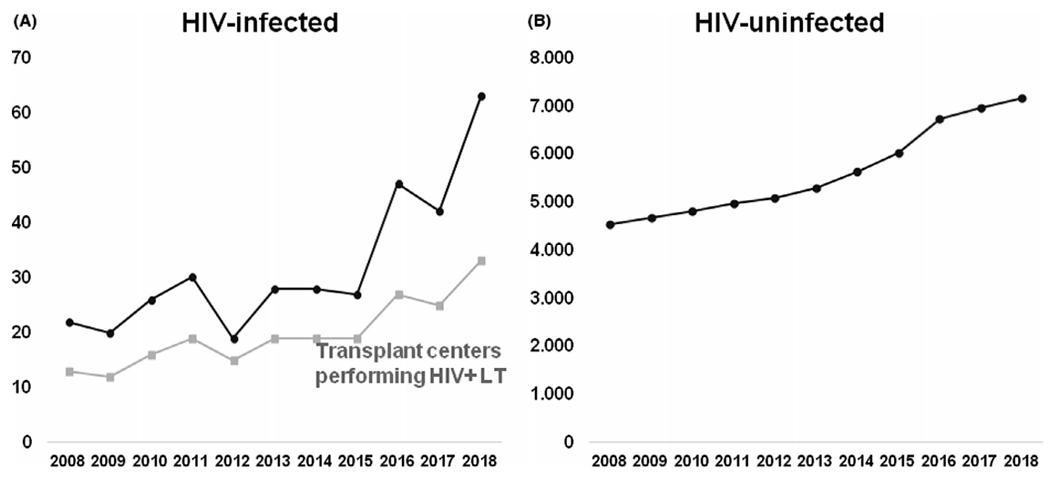
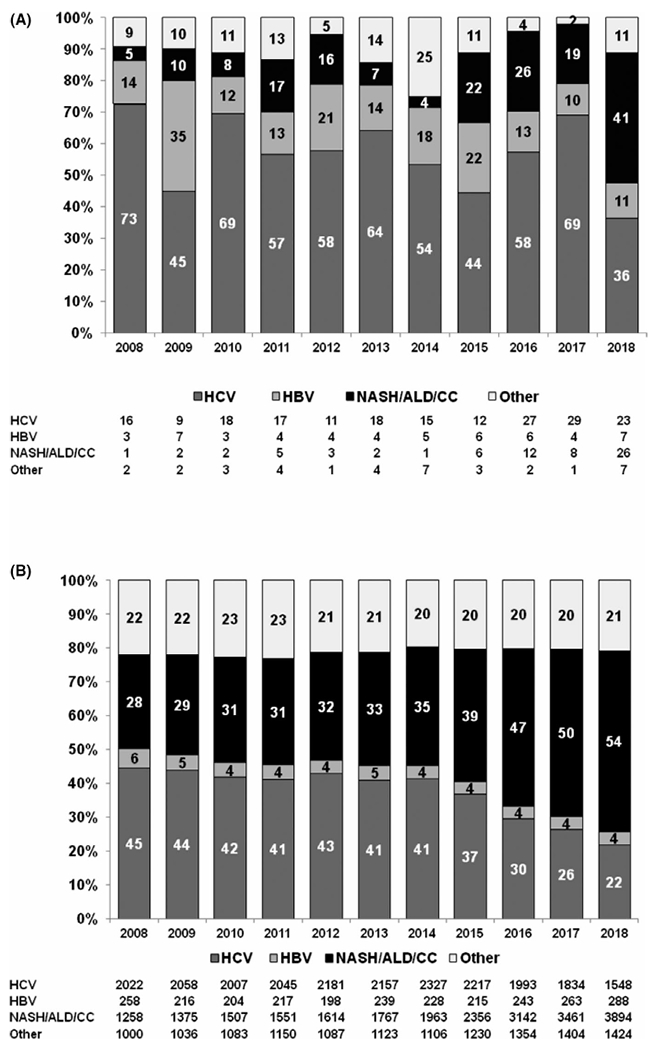
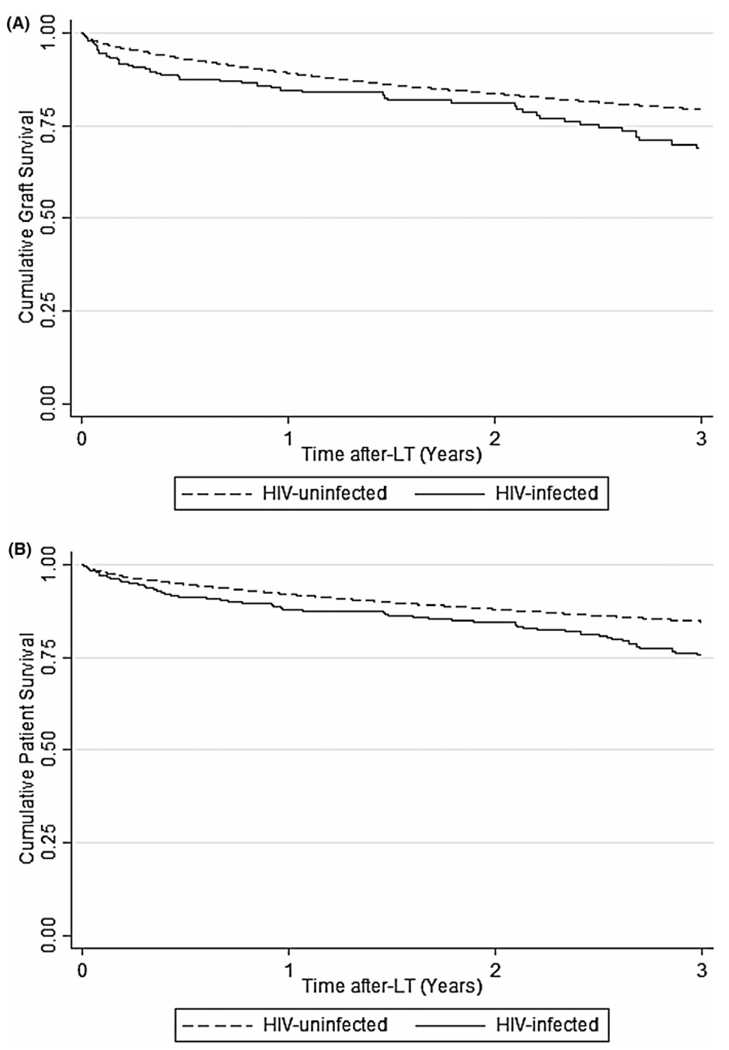
We evaluated whether indications for liver transplantation (LT) have changed among people with/without human immunodeficiency virus (HIV) infection and compared LT outcomes and trends by HIV serostatus. LT recipients (2008-2018) from the United Network for Organ Sharing and Organ Procurement and Transplantation Network (UNOS/OPTN) were identifed. Among 62 195 LT recipients, 352 (0.6%) were HIV-infected. The proportion of HIV-infected patients increased over time (P trend = .001), as did the number of transplant centers performing LT for HIV-infected recipients; average annual percentage change of 9.2% (p < .001). Nonviral causes became the leading indication in 2015 for HIV-uninfected and in 2018 for HIV-infected (P trend < .001). Three-year cumulative patient survival rates were 77.5%, for HIV-infected and 84.6%, for HIV-uninfected (p = .15). Over time, graft and patient survival rates improved for both HIV-infected and uninfected (p < .001). Among HCV-infected LT recipients, 3-year patient survival rates were 72.5% for HIV-infected and 81.8% for HIV-uninfected (p = .02). However, in a subanalysis restricted to 2014-2018, differences in graft and patient survival by HIV serostatus were no longer observed (3-year patient survival rates were 81.2% for HIV-infected and 86.4% for HIV-uninfected, p = .34). In conclusion, in the United States, nonviral liver disease is now the leading indication for LT in HIV-infected patients, and posttransplant outcomes have improved over time.
Keywords: HIV/HCV coinfection, HCV, MELD, NASH, trends, UNOS.
© 2021 The American Society of Transplantation and the American Society of Transplant Surgeons.
Figures
Comment in
-
Clearing the hepatitis hurdle: Obstacles and opportunities in liver transplantation for people with HIV.Am J Transplant. 2021 Sep;21(9):2931-2932. doi: 10.1111/ajt.16608. Epub 2021 Apr 29. Am J Transplant. 2021. PMID: 33856113 No abstract available.
References
-
- Charlton MR, Burns JM, Pedersen RA, Watt KD, Heimbach JK, Dierkhising RA. Frequency and outcomes of liver transplantation for nonalcoholic steatohepatitis in the United States. Gastroenterology. 2011;141(4):1249–1253. - PubMed
-
- Wong RJ, Aguilar M, Cheung R, et al. Nonalcoholic steatohepatitis is the second leading etiology of liver disease among adults awaiting liver transplantation in the United States. Gastroenterology. 2015;148(3):547–555. - PubMed
-
- Cholankeril G, Wong RJ, Hu M, et al. Liver transplantation for nonalcoholic steatohepatitis in the US: temporal trends and outcomes. Dig Dis Sci. 2017;62(10):2915–2922. - PubMed
Publication types
MeSH terms
Grants and funding
LinkOut - more resources
Full Text Sources
Other Literature Sources
Medical
