


Prenatal developmental toxicity of alkyl dimethyl benzyl ammonium chloride and didecyl dimethyl ammonium chloride in CD rats and New Zealand White rabbits
- PMID: 33749149
- PMCID: PMC8359997
- DOI: 10.1002/bdr2.1889
Prenatal developmental toxicity of alkyl dimethyl benzyl ammonium chloride and didecyl dimethyl ammonium chloride in CD rats and New Zealand White rabbits
Abstract
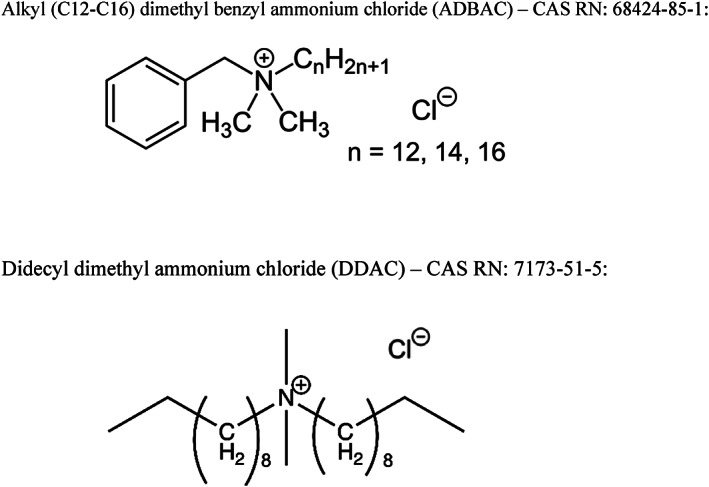
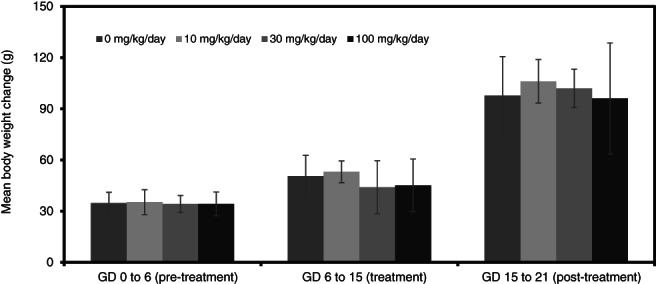
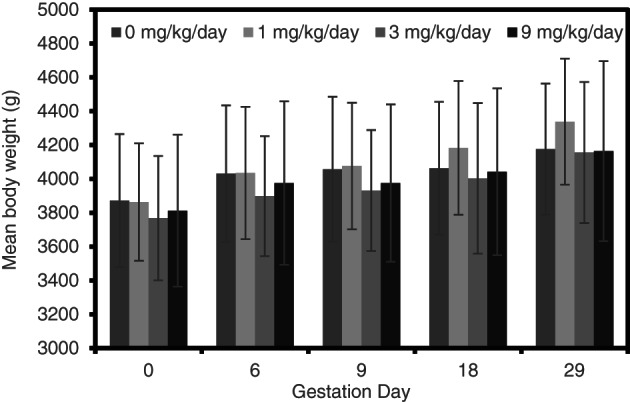
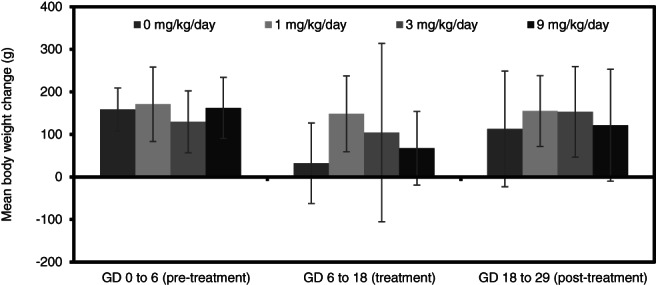
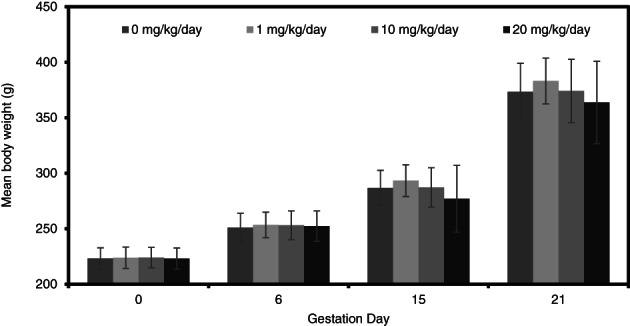
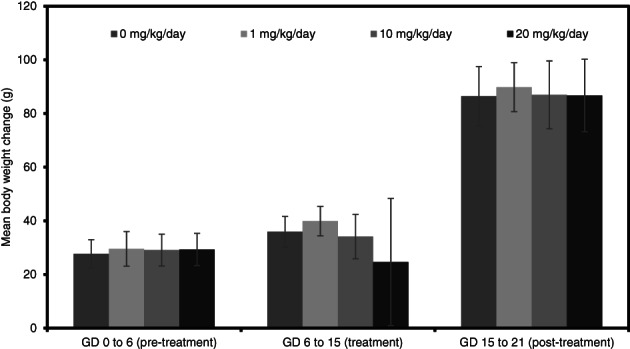
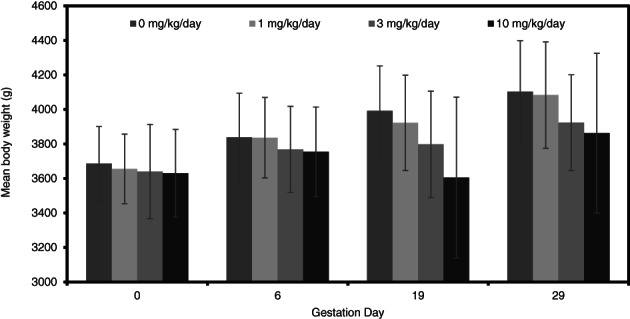
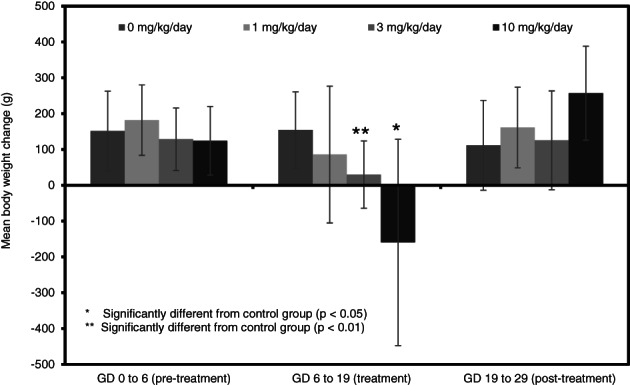
The prenatal developmental toxicity potential of alkyl dimethyl benzyl ammonium chloride (ADBAC) and didecyl dimethyl ammonium chloride (DDAC) was evaluated in regulatory-compliant studies. Pregnant female CD rats (25/group) and New Zealand White rabbits (16/group) were administered ADBAC (0, 10, 30, or 100 mg/kg/day and 0, 1, 3, or 9 mg/kg/day, respectively), or DDAC (0, 1, 10, or 20 mg/kg/day and 0, 1, 3, or 10 mg/kg/day, respectively), by oral gavage on gestation days (GD) 6-15 for rats and GD 6-18 for rabbits. At scheduled termination (GD 21 for rats; GD 29 for rabbits), maternal necropsies were conducted and live fetuses were weighed and examined for external, visceral, and skeletal malformations and variations. Clinical signs of maternal toxicity were observed in rats and rabbits dosed with ADBAC, resulting in no-observed-adverse-effect levels (NOAELs) of 10 and 3 mg/kg/day, respectively. Despite the treatment-related maternal toxicity of ADBAC, the NOAEL for prenatal developmental toxicity was 100 and 9 mg/kg/day for rats and rabbits, respectively, the highest doses evaluated. Repeated oral doses of DDAC resulted in maternal toxicity in both species at the top two doses, with 25% mortality noted in rabbits at 10 mg/kg/day. No teratogenic effects were observed at any dose for either species. However, increased incidence of dead fetuses per litter and decreased fetal body weights were observed in rabbits at the maternally lethal dose of 10 mg/kg/day. The NOAEL for maternal toxicity of DDAC was 1 mg/kg/day for both species and the NOAEL for prenatal developmental toxicity was 20 and 3 mg/kg/day, for rats and rabbits, respectively.
Keywords: alkyl dimethyl benzyl ammonium chloride; didecyl dimethyl ammonium chloride; prenatal developmental toxicity; quaternary ammonium compounds.
© 2021 ADBAC and DDAC Issues Steering Committee. Birth Defects Research published by Wiley Periodicals LLC.
Conflict of interest statement
K.A. H., L.C. F., and B. L. B. are consultants to the ADBAC and DDAC Issues Steering Committees, the studies' sponsor. L. C. F. was employed at and participated in the collection and tabulation of the data for these studies conducted by Bushy Run Research Center, which received funding from the ADBAC and DDAC Issues Steering Committees to conduct these studies.
Figures

References
-
- Brown, K. S., Johnston, M. C., & Murphy, P. F. (1974). Isolated cleft palate in A/J mice after transitory exposure to drinking‐water deprivation and low humidity in pregnancy. Teratology, 9(2), 151–158. - PubMed
-
- Brown, K. S., Johnston, M. C., & Niswander, J. D. (1972). Isolated cleft palate in mice after transportation during pregnancy. Teratology, 5, 119–124. - PubMed
-
- Brown, M. B., & Forsythe, A. B. (1974). The small sample behavior of some statistics which test the equality of several means. Technometrics, 16, 129–132.
-
- Bruce, H. M. (1961). Time relations in the pregnancy‐block induced in mice by strange males. Journal of Reproduction and Fertility, 2(2), 138–142.
-
- Crary, D. D. (1962). Modified benzyl alcohol clearing of alizarin‐stained specimens without loss of flexibility. Stain Technology, 37, 124–125. - PubMed
MeSH terms
Substances
LinkOut - more resources
Full Text Sources
Other Literature Sources
