Association of Age With SARS-CoV-2 Antibody Response
- PMID: 33749770
- PMCID: PMC7985726
- DOI: 10.1001/jamanetworkopen.2021.4302
Association of Age With SARS-CoV-2 Antibody Response
Abstract
Importance: Accumulating evidence suggests that children infected with severe acute respiratory syndrome coronavirus 2 (SARS-CoV-2) are more likely to manifest mild symptoms and are at a lower risk of developing severe respiratory disease compared with adults. It remains unknown how the immune response in children differs from that of adolescents and adults.
Objective: To investigate the association of age with the quantity and quality of SARS-CoV-2 antibody responses.
Design, setting, and participants: This cross-sectional study used 31 426 SARS-CoV-2 antibody test results from pediatric and adult patients. Data were collected from a New York City hospital from April 9 to August 31, 2020. The semiquantitative immunoglobin (Ig) G levels were compared between 85 pediatric and 3648 adult patients. Further analysis of SARS-CoV-2 antibody profiles was performed on sera from 126 patients aged 1 to 24 years.
Main outcomes and measures: SARS-CoV-2 antibody positivity rates and IgG levels were evaluated in patients from a wide range of age groups (1-102 years). SARS-CoV-2 IgG level, total antibody (TAb) level, surrogate neutralizing antibody (SNAb) activity, and antibody binding avidity were compared between children (aged 1-10 years), adolescents (aged 11-18 years), and young adults (aged 19-24 years).
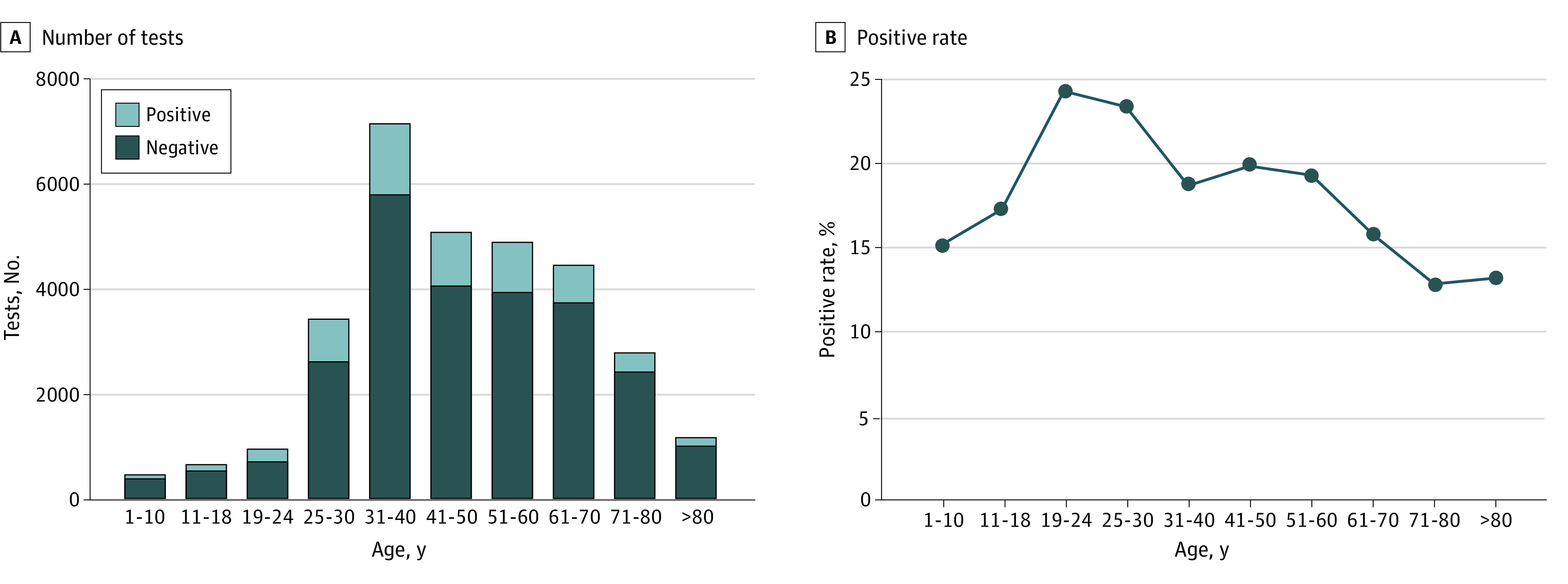
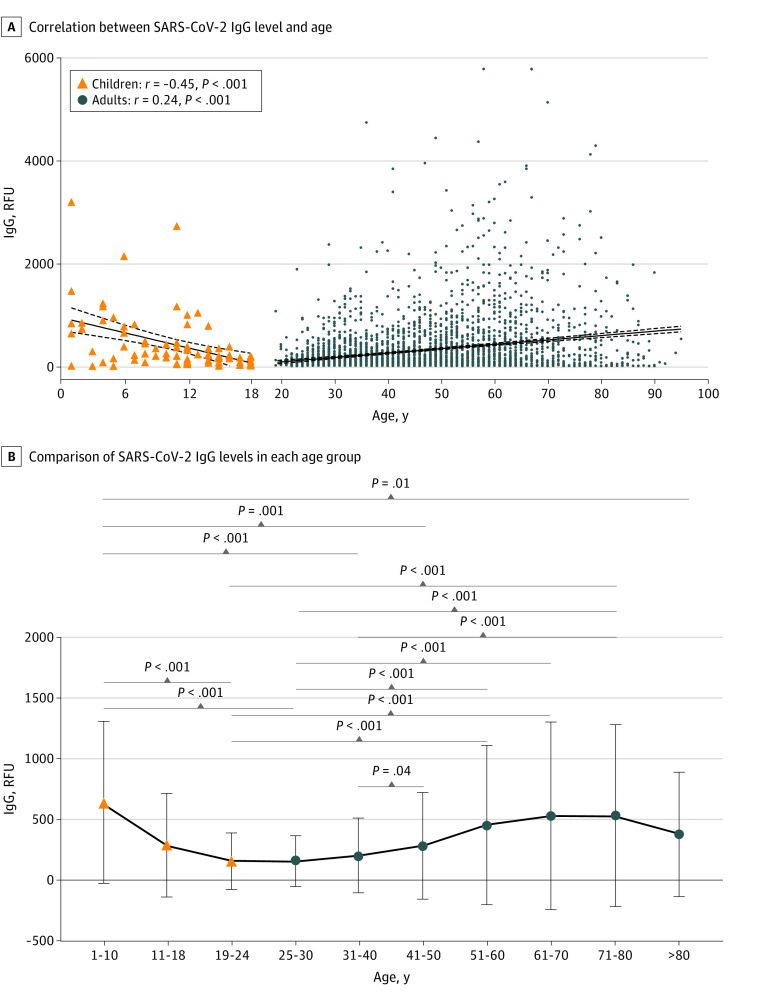
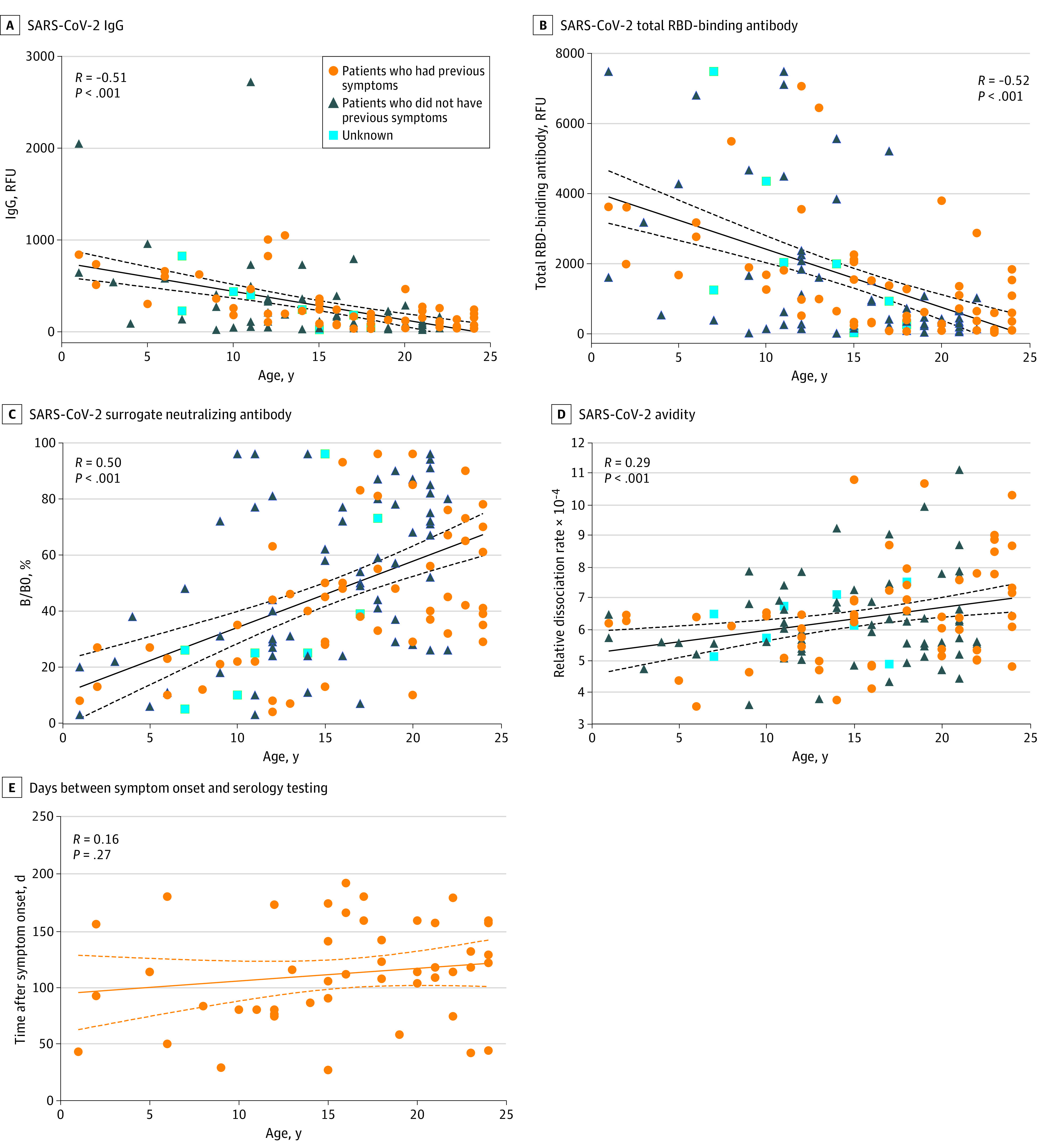
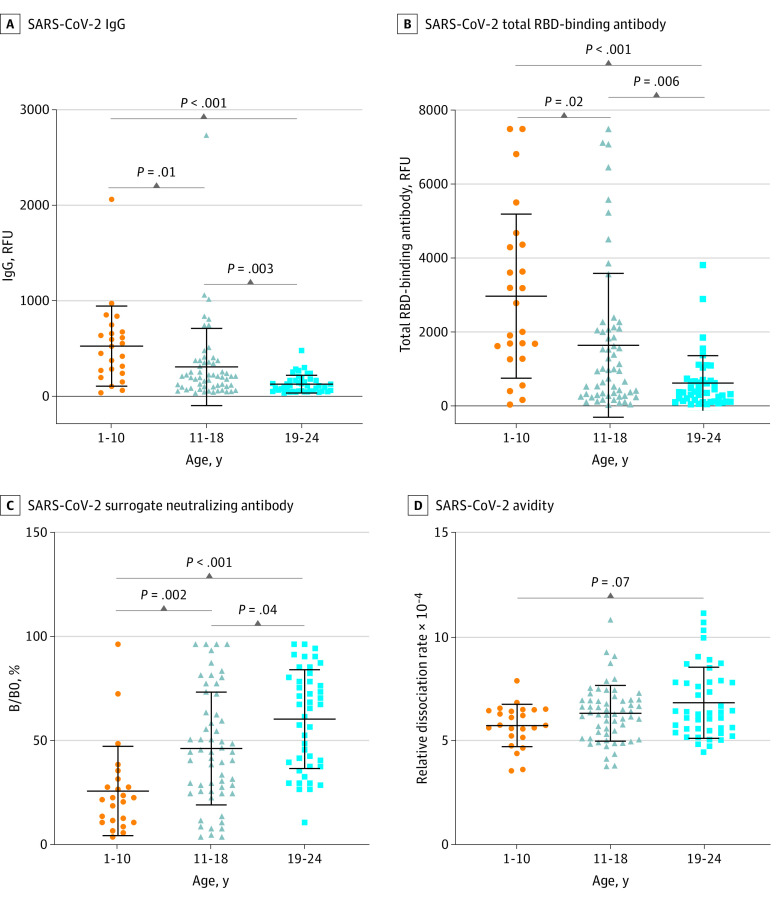
Results: Among 31 426 antibody test results (19 797 [63.0%] female patients), with 1194 pediatric patients (mean [SD] age, 11.0 [5.3] years) and 30 232 adult patients (mean [SD] age, 49.2 [17.1] years), the seroprevalence in the pediatric (197 [16.5%; 95% CI, 14.4%-18.7%]) and adult (5630 [18.6%; 95% CI, 18.2%-19.1%]) patient populations was similar. The SARS-CoV-2 IgG level showed a negative correlation with age in the pediatric population (r = -0.45, P < .001) and a moderate but positive correlation with age in adults (r = 0.24, P < .001). Patients aged 19 to 30 years exhibited the lowest IgG levels (eg, aged 25-30 years vs 1-10 years: 99 [44-180] relative fluorescence units [RFU] vs 443 [188-851] RFU). In the subset cohort aged 1 to 24 years, IgG, TAb, SNAb and avidity were negatively correlated with age (eg, IgG: r = -0.51; P < .001). Children exhibited higher median (IQR) IgG levels, TAb levels, and SNAb activity compared with adolescents (eg, IgG levels: 473 [233-656] RFU vs 191 [82-349] RFU; P < .001) and young adults (eg, IgG levels: 473 [233-656] RFU vs 85 [38-150] RFU; P < .001). Adolescents also exhibited higher median (IQR) TAb levels, IgG levels, and SNAb activity than young adults (eg, TAb levels: 961 [290-2074] RFU vs 370 [125-697]; P = .006). In addition, children had higher antibody binding avidity compared with young adults, but the difference was not significant.
Conclusions and relevance: The results of this study suggest that SARS-CoV-2 viral specific antibody response profiles are distinct in different age groups. Age-targeted strategies for disease screening and management as well as vaccine development may be warranted.
Conflict of interest statement
Figures
References
-
- World Health Organization . WHO coronavirus disease (COVID-19) dashboard. Accessed January 31, 2021. https://covid19.who.int/?gclid=CjwKCAiAtK79BRAIEiwA4OskBtAbOw6T6wNgUS76d...
-
- Centers for Disease Control and Prevention . Demographic trends of COVID-19 cases and deaths in the US reported to CDC. Data retrieved July 27, 2020. https://www.cdc.gov/covid-data-tracker/index.html#demographics
Publication types
MeSH terms
Substances
Grants and funding
LinkOut - more resources
Full Text Sources
Other Literature Sources
Medical
Miscellaneous