


Sodium-glucose co-transporter 2 inhibitors in COVID-19: meeting at the crossroads between heart, diabetes and infectious diseases
- PMID: 33751323
- PMCID: PMC7942520
- DOI: 10.1007/s11096-021-01256-9
Sodium-glucose co-transporter 2 inhibitors in COVID-19: meeting at the crossroads between heart, diabetes and infectious diseases
Abstract
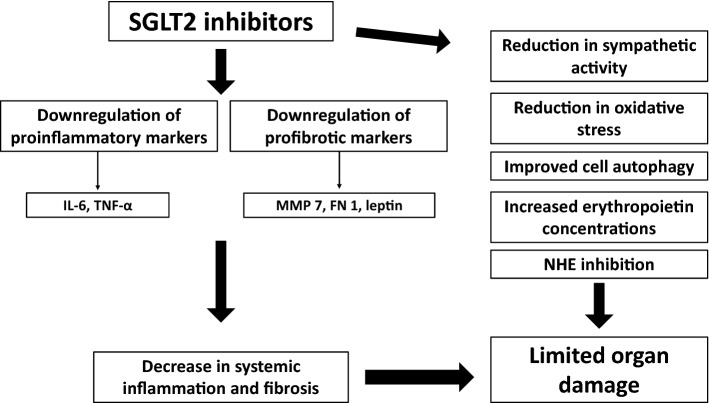
Sodium-glucose co-transporter 2 inhibitors (SGLT2i) are a new class of glucose-lowering agents which have changed the landscape of diabetes therapy, due to their remarkable cardiorenal protective properties. The attack of severe acute respiratory syndrome coronavirus 2 on the heart and kidneys shares similarities with diabetes; therefore, the notion that SGLT2i might have a role in the future management of Coronavirus Disease 2019 (COVID-19) is based on a solid pathophysiological hypothesis. SGLT2i have been proved to decrease the expression of proinflammatory cytokines, ameliorate oxidative stress and reduce sympathetic activity, thus resulting in downregulation of both systemic and adipose tissue inflammation. On the other hand, they have been linked to an increased risk of euglycemic diabetic ketoacidosis. Therefore, the efficacy and safety of SGLT2i in COVID-19 are still debatable and remain to be clarified by ongoing randomized trials, to assess whether the benefits of treatment with these drugs outweigh the potential risks.
Keywords: COVID-19; Diabetes; Organ damage; SGLT2 inhibitors.
Conflict of interest statement
TK has received honoraria as a speaker from AstraZeneca, Boehringer Ingelheim and Novo Nordisk and has participated in sponsored studies by Eli-Lilly. KK has received honoraria for lectures/advisory boards and research support. from Astra Zeneca, Boehringer Ingelheim, Pharmaserve Lilly, Sanofi-Aventis, ELPEN, MSD, and Novo Nordisk.Other authors report no conflict of interest.
Figures
References
MeSH terms
Substances
LinkOut - more resources
Full Text Sources
Other Literature Sources
Medical
