


A systematic review of physical activity in people with haemophilia and its relationship with bleeding phenotype and treatment regimen
- PMID: 33751742
- PMCID: PMC8359343
- DOI: 10.1111/hae.14282
A systematic review of physical activity in people with haemophilia and its relationship with bleeding phenotype and treatment regimen
Abstract
Introduction: Although the measurement of physical activity (PA) amongst people with haemophilia (PWH) has become increasingly widespread in recent years, the relationship between PA and bleeding phenotype remains poorly understood. In addition, the influence of various treatment regimens on this relationship has not been defined.
Aim: This review aimed to systematically assess the data that are available regarding PA levels amongst PWH, as well as the relationship between PA and bleeding.
Methods: A systematic search of the online databases EMBASE, Cochrane, MEDLINE Ovid, CINAHL and Web of Science was conducted by two independent reviewers. Quality assessment was undertaken using the AXIS Critical Appraisal Tool for Cross-sectional Studies and the STROBE checklist.
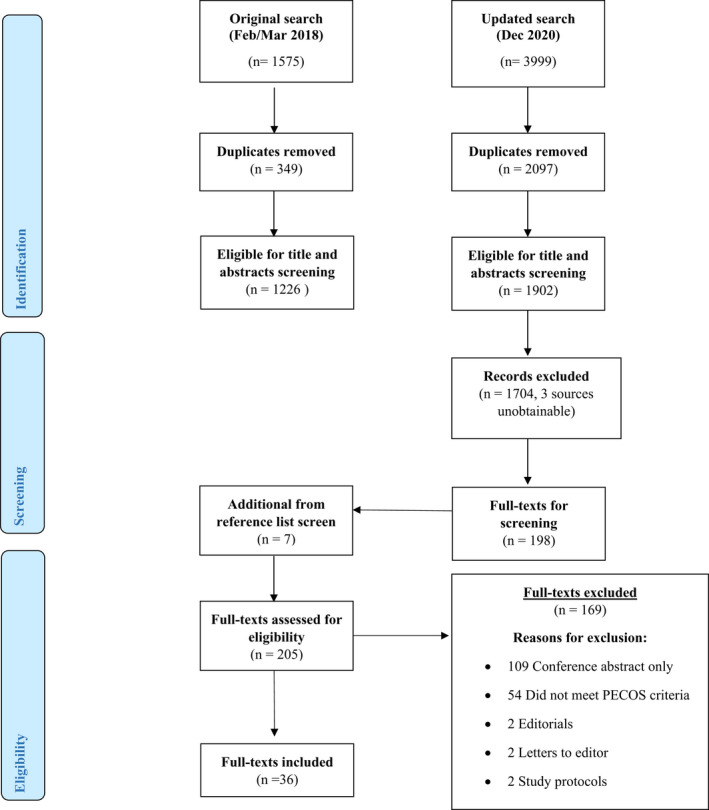
Results: Of 1902 sources identified overall, 36 articles were included. Low-to-moderate transparency of reporting and various sources of bias were identified. PA levels varied amongst heterogeneous samples of PWH. The relationship between PA and bleeds was inconclusive, although there was evidence that improvements in treatment over recent decades have appeared to enable PWH to become more physically active.
Conclusion: Based upon the limited available evidence, the relationship between PA and bleeding phenotype in PWH remains unclear. However, with the development of improved prophylaxis treatment regimens in recent years, there is evidence that PA levels have increased, especially amongst people with severe haemophilia. The use of validated outcome measures of PA and more robust reporting of bleeds and treatment regimen are warranted in future research, especially in a rapidly evolving era of new treatments for PWH.
Keywords: bleeding; exercise; haemophilia; physical activity; prophylaxis; treatment.
© 2021 The Authors. Haemophilia published by John Wiley & Sons Ltd.
Conflict of interest statement
M. L. has received speaker's fees from Siemens Healthineers and served as on an advisory board to Tremeau Pharmaceuticals. She previously served on a speaker's bureau for Shire (now part of Takeda). N. M. O’C has received research support from SOBI; participated in advisory boards for F. Hoffmann‐La Roche Ltd, UniQure, SOBI, Freeline; and participated in speakers’ bureaus for F. Hoffmann‐La Roche Ltd, SOBI and Novo Nordisk. J. S. O’D has served on the speaker's bureau for Baxter, Bayer, Novo Nordisk, Boehringer Ingelheim, Leo Pharma, Takeda and Octapharma. He has also served on the advisory boards of Baxter, Bayer, Octapharma CSL Behring, Daiichi Sankyo, Boehringer Ingelheim, Takeda and Pfizer. J. S. O. D has received research grant funding awards from Baxter, Bayer, Pfizer, Shire (now part of Takeda), Takeda and Novo Nordisk. P. L. T. is full‐time employee of Baxalta Innovations GmbH, a member of the Takeda group of companies and shareholder of Takeda Pharmaceutical Company Limited. The remaining authors have no competing interests.
Figures
References
-
- Darby SC, Kan SW, Spooner RJ, et al. Mortality rates, life expectancy, and causes of death in people with hemophilia A or B in the United Kingdom who were not infected with HIV. Blood. 2007;110(3):815‐825. - PubMed
-
- Canaro M, Goranova‐Marinova V, Berntorp E. The ageing patient with haemophilia. Eur J Haematol. 2015;94(Suppl 77):17‐22. - PubMed
-
- Von Mackensen S. Quality of life and sports activities in patients with haemophilia. Haemophilia. 2007;13(SUPPL. 2):38‐43. - PubMed
-
- Weigel N, Carlson BR. Physical activity and the hemophiliac: yes or no? Am Correct Ther J. 1975;29(6):197‐205. - PubMed
-
- Negrier C, Seuser A, Forsyth A, et al. The benefits of exercise for patients with haemophilia and recommendations for safe and effective physical activity. Haemophilia. 2013;19(4):487‐498. - PubMed
Publication types
MeSH terms
Grants and funding
LinkOut - more resources
Full Text Sources
Other Literature Sources
Medical
