


Optimizing the design of a contraceptive microarray patch: a discrete choice experiment on women's preferences in India and Nigeria
- PMID: 33752700
- PMCID: PMC7986031
- DOI: 10.1186/s12978-021-01113-y
Optimizing the design of a contraceptive microarray patch: a discrete choice experiment on women's preferences in India and Nigeria
Abstract
Background: Efforts are underway to develop an easy-to-use contraceptive microarray patch (MAP) that could expand the range of self-administrable methods. This paper presents results from a discrete choice experiment (DCE) designed to support optimal product design.
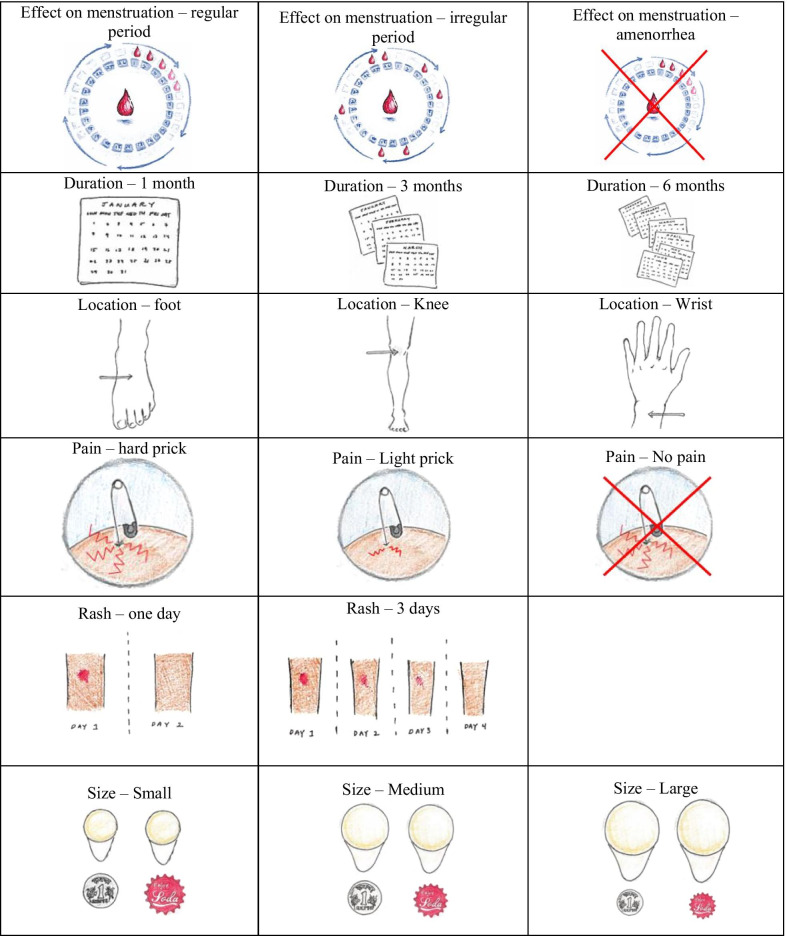
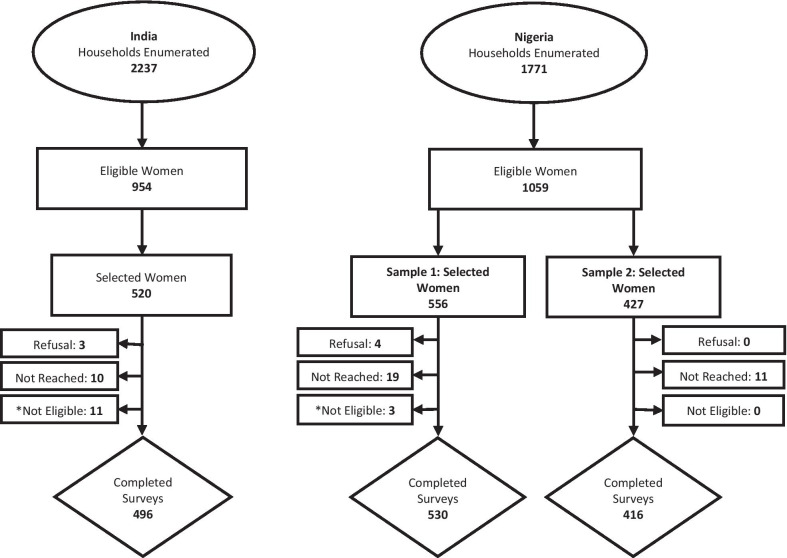
Methods: We conducted a DCE survey of users and non-users of contraception in New Delhi, India (496 women) and Ibadan, Nigeria (two versions with 530 and 416 women, respectively) to assess stated preferences for up to six potential product attributes: effect on menstruation, duration of effectiveness, application pain, location, rash after application, and patch size. We estimated Hierarchical Bayes coefficients (utilities) for each attribute level and ran simulations comparing women's preferences for hypothetical MAPs with varying attribute combinations.
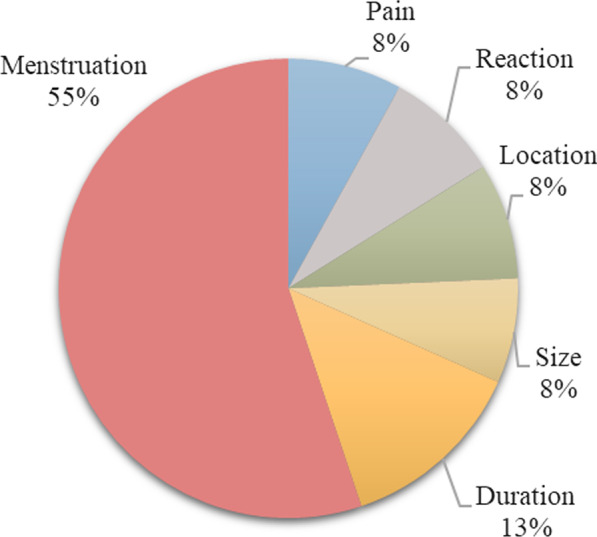
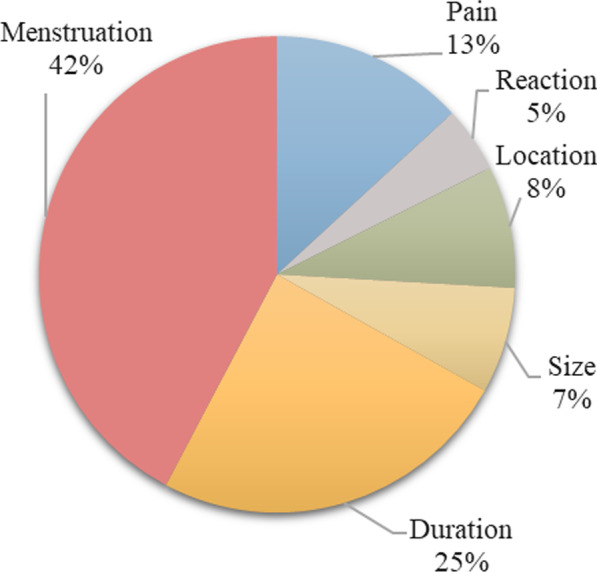
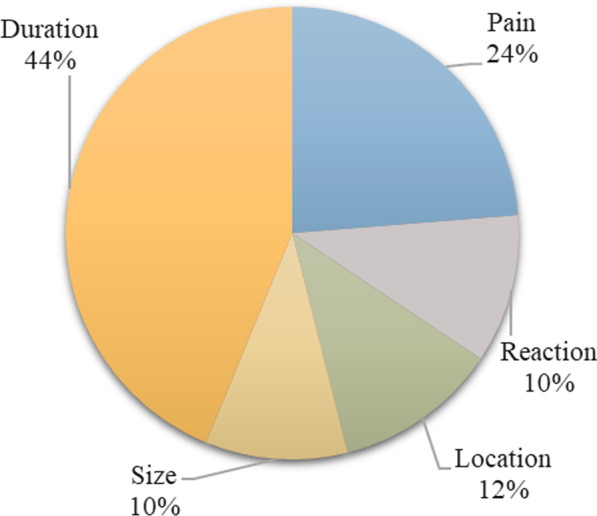
Results: The most important attributes of the MAP were potential for menstrual side effects (55% of preferences in India and 42% in Nigeria) and duration (13% of preferences in India and 24% in Nigeria). Women preferred a regular period over an irregular or no period, and a six-month duration to three or one month. Simulations show that the most ideal design would be a small patch, providing 6 months of protection, that would involve no pain on administration, result in a one-day rash, and be applied to the foot.
Conclusions: To the extent possible, MAP developers should consider method designs and formulations that limit menstrual side effects and provide more than one month of protection.
Keywords: Contraception; Discrete choice experiment; India; Microarray patch; Nigeria; User preferences.
Conflict of interest statement
The study was implemented by FHI 360, which also provides grant funding to the MAP product developer, the Georgia Institute of Technology.
Figures

References
-
- Kruk ME, Gage AD, Arsenault C, Jordan K, Leslie HH, Roder-DeWan S, Adeyi O, Barker P, Daelmans B, Doubova SV, English M. High-quality health systems in the Sustainable Development Goals era: time for a revolution. Lancet Glob Health. 2018;6(11):e1196–e1252. doi: 10.1016/S2214-109X(18)30386-3. - DOI - PMC - PubMed
MeSH terms
Substances
Grants and funding
LinkOut - more resources
Full Text Sources
Other Literature Sources
Miscellaneous
