


Impact of sex in the prevalence and progression of glioblastomas: the role of gonadal steroid hormones
- PMID: 33752729
- PMCID: PMC7986260
- DOI: 10.1186/s13293-021-00372-5
Impact of sex in the prevalence and progression of glioblastomas: the role of gonadal steroid hormones
Abstract
Background: As in other types of cancers, sex is an essential factor in the origin and progression of glioblastomas. Research in the field of endocrinology and cancer suggests that gonadal steroid hormones play an important role in the progression and prevalence of glioblastomas. In the present review, we aim to discuss the actions and mechanism triggered by gonadal steroid hormones in glioblastomas.
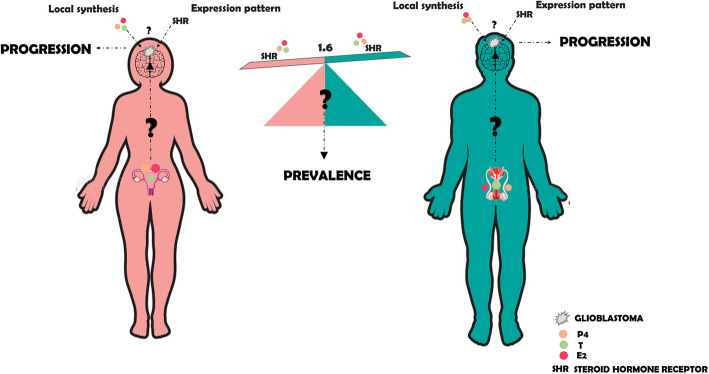
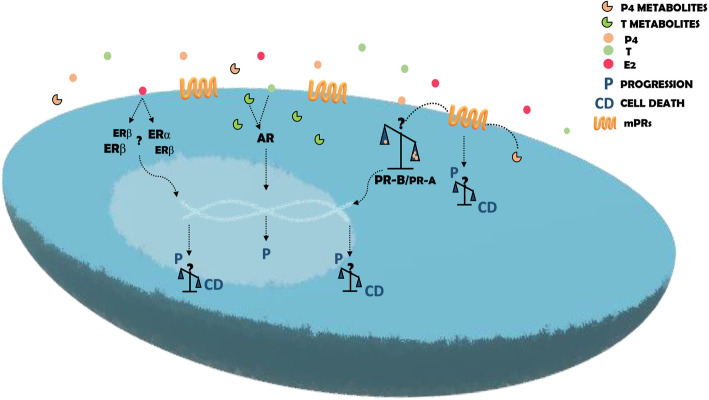
Main body: Glioblastoma is the most common malignant primary brain tumor. According to the epidemiological data, glioblastomas are more frequent in men than in women in a 1.6/1 proportion both in children and adults. This evidence, and the knowledge about sex influence over the prevalence of countless diseases, suggest that male gonadal steroid hormones, such as testosterone, promote glioblastomas growth. In contrast, a protective role of female gonadal steroid hormones (estradiol and progesterone) against glioblastomas has been questioned. Several pieces of evidence demonstrate a variety of effects induced by female and male gonadal steroid hormones in glioblastomas. Several studies indicate that pregnancy, a physiological state with the highest progesterone and estradiol levels, accelerates the progression of low-grade astrocytomas to glioblastomas and increases the symptoms associated with these tumors. In vitro studies have demonstrated that progesterone has a dual role in glioblastoma cells: physiological concentrations promote cell proliferation, migration, and invasion while very high doses (out physiological range) reduce cell proliferation and increases cell death.
Conclusion: Gonadal steroid hormones can stimulate the progression of glioblastomas through the increase in proliferation, migration, and invasion. However, the effects mentioned above depend on the concentrations of these hormones and the receptor involved in hormone actions. Estradiol and progesterone can exert promoter or protective effects while the role of testosterone has been always associated to glioblastomas progression.
Keywords: Estradiol; Glioblastoma; Prevalence; Progesterone; Progression; Sex differences; Testosterone.
Conflict of interest statement
The authors declare that they have no competing interests.
Figures
References
-
- Louis DN, Perry A, Reifenberger G, von Deimling A, Figarella-Branger D, Cavenee WK, et al. The 2016 World Health Organization Classification of Tumors of the Central Nervous System: a summary. Vol. 131, Acta Neuropathologica. Springer Verlag; 2016. p. 803–820. - PubMed
-
- Kabat GC, Etgen AM, Rohan TE. Do steroid hormones play a role in the etiology of glioma? Vol. 19, Cancer Epidemiology Biomarkers and Prevention. American Association for Cancer Research; 2010. p. 2421–2427. - PubMed
-
- Bhatia A, Sekhon HK, Kaur G. Sex hormones and immune dimorphism. Vol. 2014, Scientific World Journal. Hindawi Publishing Corporation; 2014.
Publication types
MeSH terms
Substances
LinkOut - more resources
Full Text Sources
Other Literature Sources
Research Materials
