


The development of adult intestinal stem cells: Insights from studies on thyroid hormone-dependent anuran metamorphosis
- PMID: 33752821
- PMCID: PMC12268621
- DOI: 10.1016/bs.vh.2021.02.010
The development of adult intestinal stem cells: Insights from studies on thyroid hormone-dependent anuran metamorphosis
Abstract
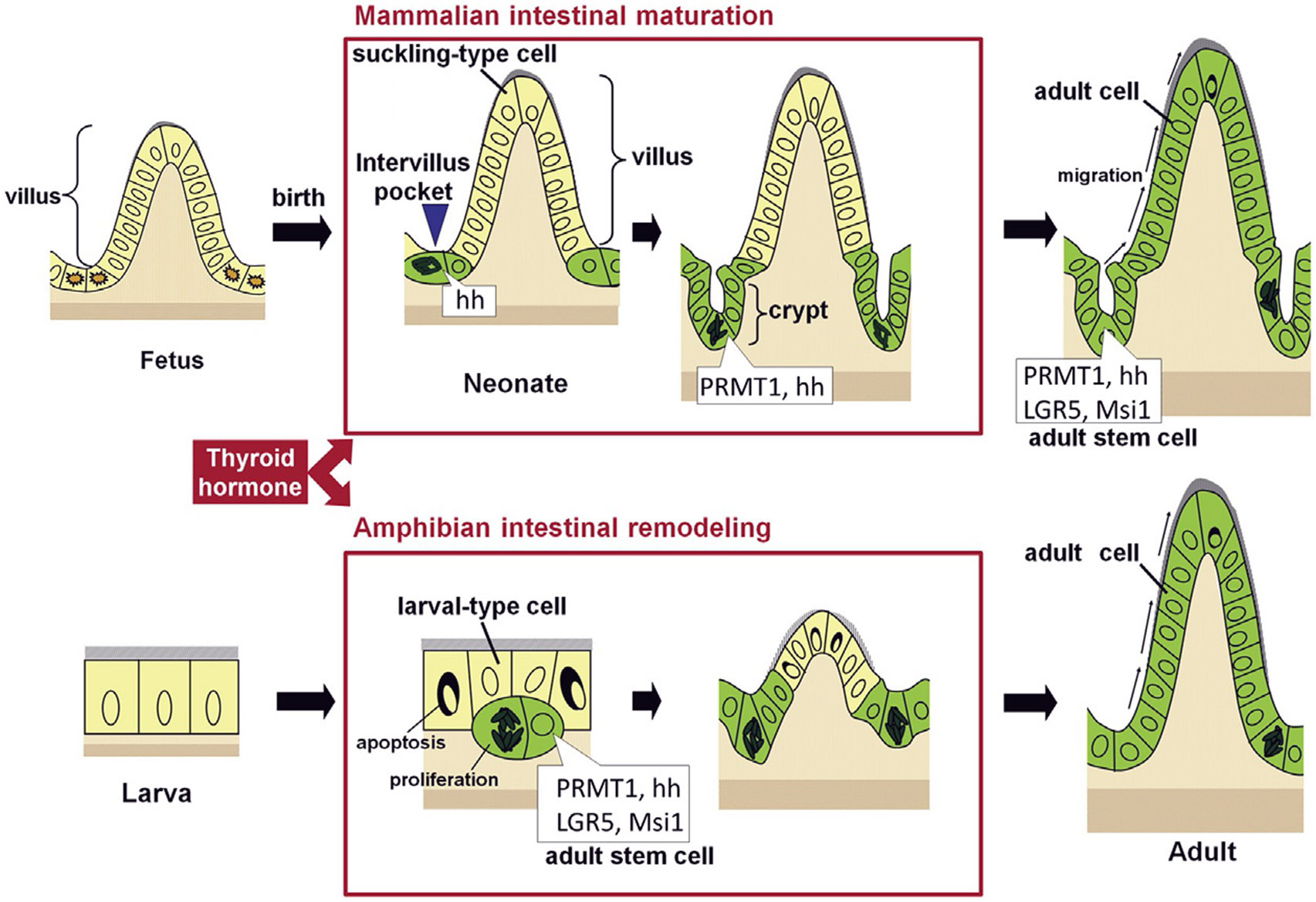
Vertebrates organ development often takes place in two phases: initial formation and subsequent maturation into the adult form. This is exemplified by the intestine. In mouse, the intestine at birth has villus, where most differentiated epithelial cells are located, but lacks any crypts, where adult intestinal stem cells reside. The crypt is formed during the first 3 weeks after birth when plasma thyroid hormone (T3) levels are high. Similarly, in anurans, the intestine undergoes drastic remodeling into the adult form during metamorphosis in a process completely dependent on T3. Studies on Xenopus metamorphosis have revealed important clues on the formation of the adult intestine during metamorphosis. Here we will review our current understanding on how T3 induces the degeneration of larval epithelium and de novo formation of adult intestinal stem cells. We will also discuss the mechanistic conservations in intestinal development between anurans and mammals.
Keywords: Intestine; Metamorphosis; Postembryonic development; Stem cell; Thyroid hormone receptor; Xenopus laevis; Xenopus tropicalis.
Copyright © 2021 Elsevier Inc. All rights reserved.
Figures
References
-
- Amano T, & Yoshizato K (1998). Isolation of genes involved in intestinal remodeling during anuran metamorphosis. Wound Repair and Regeneration, 6, 302–313. - PubMed
-
- Amati B, & Land H (1994). Myc-Max-Mad: A transcription factor network controlling cell cycle progression, differentiation and death. Current Opinion in Genetics & Development, 4, 102–108. - PubMed
-
- Bagamasbad P, Howdeshell KL, Sachs LM, Demeneix BA, & Denver RJ (2008). A role for basic transcription element-binding protein 1 (BTEB1) in the autoinduction of thyroid hormone receptor beta. The Journal of Biological Chemistry, 283, 2275–2285. - PubMed
Publication types
MeSH terms
Substances
Grants and funding
LinkOut - more resources
Full Text Sources
Other Literature Sources
