. 2021 Jun;40(6):504-512.
doi: 10.1016/j.healun.2021.02.005. Epub 2021 Feb 17.

Exercise right ventricular ejection fraction predicts right ventricular contractile reserve

Affiliations

Exercise right ventricular ejection fraction predicts right ventricular contractile reserve

Catherine G Ireland et al. J Heart Lung Transplant. 2021 Jun.

Abstract

Background: Right ventricular (RV) contractile reserve shows promise as an indicator of occult RV dysfunction in pulmonary vascular disease. We investigated which measure of RV contractile reserve during exercise best predicts occult RV dysfunction and clinical outcomes.

Methods: We prospectively studied RV contractile reserve in 35 human subjects referred for right heart catheterization for known or suspected pulmonary hypertension. All underwent cardiac magnetic resonance imaging, echocardiography, and supine invasive cardiopulmonary exercise testing with concomitant RV pressure-volume catheterization. Event-free survival was prospectively adjudicated from time of right heart catheterization for a 4-year follow-up period.

Results: RV contractile reserve during exercise, as measured by a positive change in end-systolic elastance (Ees) during exertion, was associated with elevation in pulmonary pressures but preservation of RV volumes. Lack of RV reserve, on the other hand, was tightly coupled with acute RV dilation during exertion (R2 = 0.76, p< 0.001). RV Ees and dilation changes each predicted resting RV-PA dysfunction. RV ejection fraction during exercise, which captured exertional changes in both RV Ees and RV dilation, proved to be a robust surrogate for RV contractile reserve. Reduced exercise RV ejection fraction best predicted occult RV dysfunction among a variety of resting and exercise RV measures, and was also associated with clinical worsening.

Conclusions: RV ejection fraction during exercise, as an index of RV contractile reserve, allows for excellent identification of occult RV dysfunction, more so than resting measures of RV function, and may predict clinical outcomes as well.

Keywords: exercise; heart ventricles; pulmonary hypertension.


Figures

FIGURE 1.
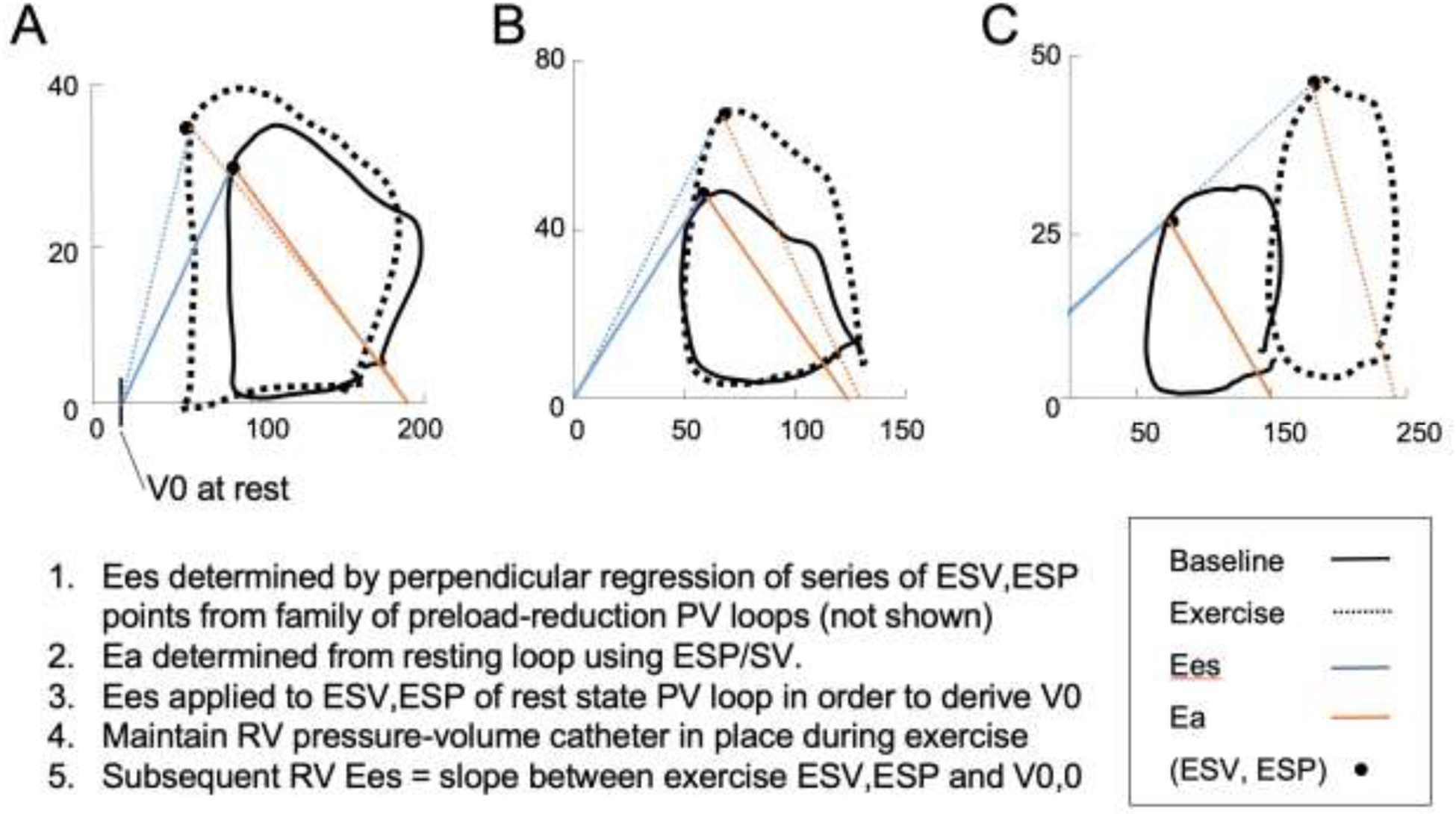
FIGURE 1.. Acquisition of resting and exercise RV pressure-volume loop measurements.
Resting exercise end-systolic elastance and effective arterial elastance were calculated, and V0 determined from the rest state. Subsequent PV loops obtained during exercise, in combination with resting V0, were used to calculate Ees and Ea at each stage. Actual pressure-volume loops shown for a subject with (A) excellent, (B) preserved, and (C) no RV contractile reserve.
FIGURE 2.
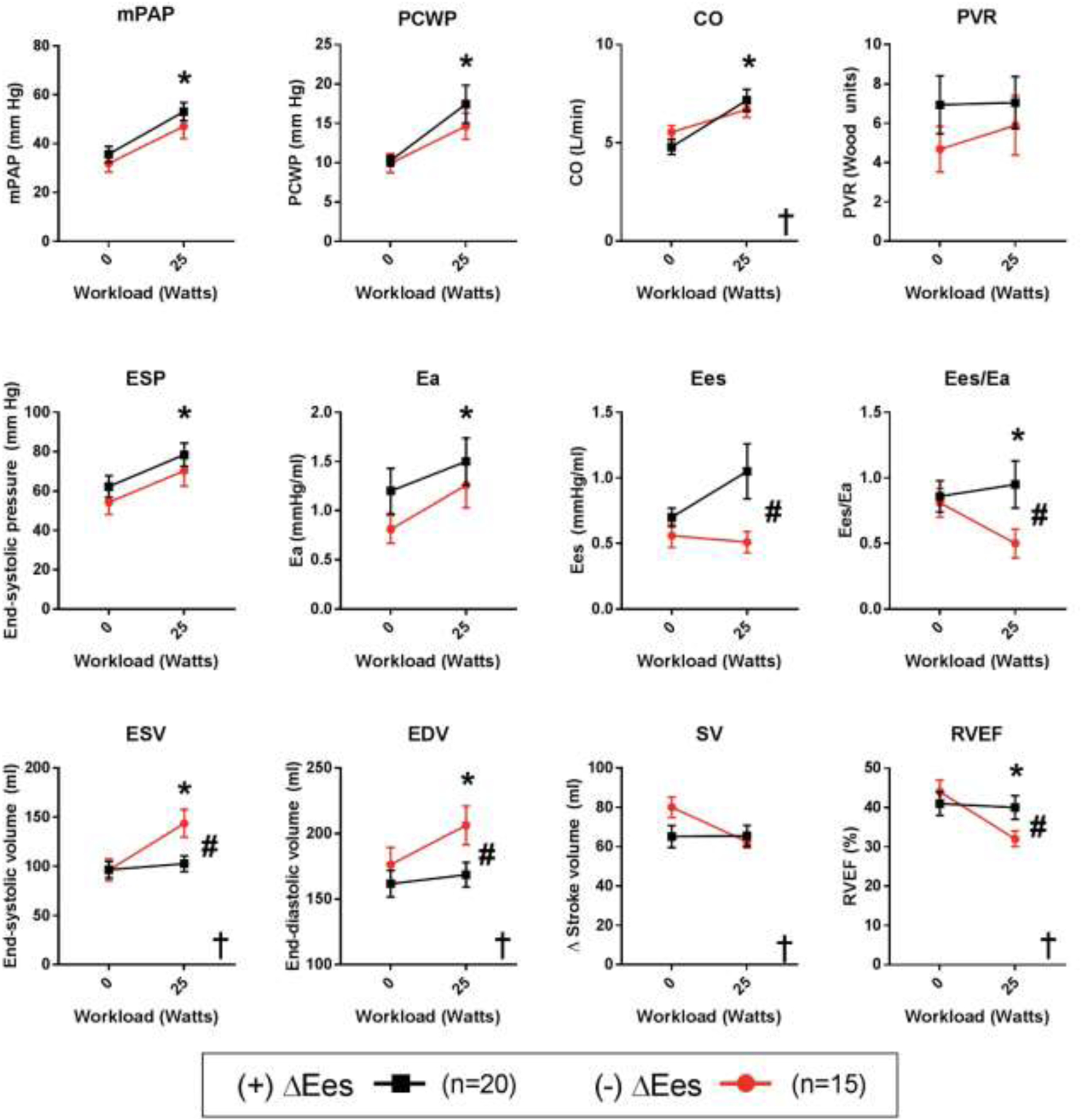
FIGURE 2.. Effect of RV contractile reserve and exercise on cardiopulmonary hemodynamics.
Cohort divided into those with (n=20) and without (n=15) RV contractile reserve during exercise. * P<0.05 for significant change with exercise; # P<0.05 for significant group difference; † P<0.05 for group-exercise interaction term. Overall, both groups saw similar increases in pressures and flow. However, the RV reserve group preserved RV-PA coupling, RV volumes, and RVEF, while those without RV reserve saw acute RV dilation, reduction in stroke volume, and reduced RVEF. RV reserve therefore significantly influenced the effect of exercise on RV volume changes.
FIGURE 3.
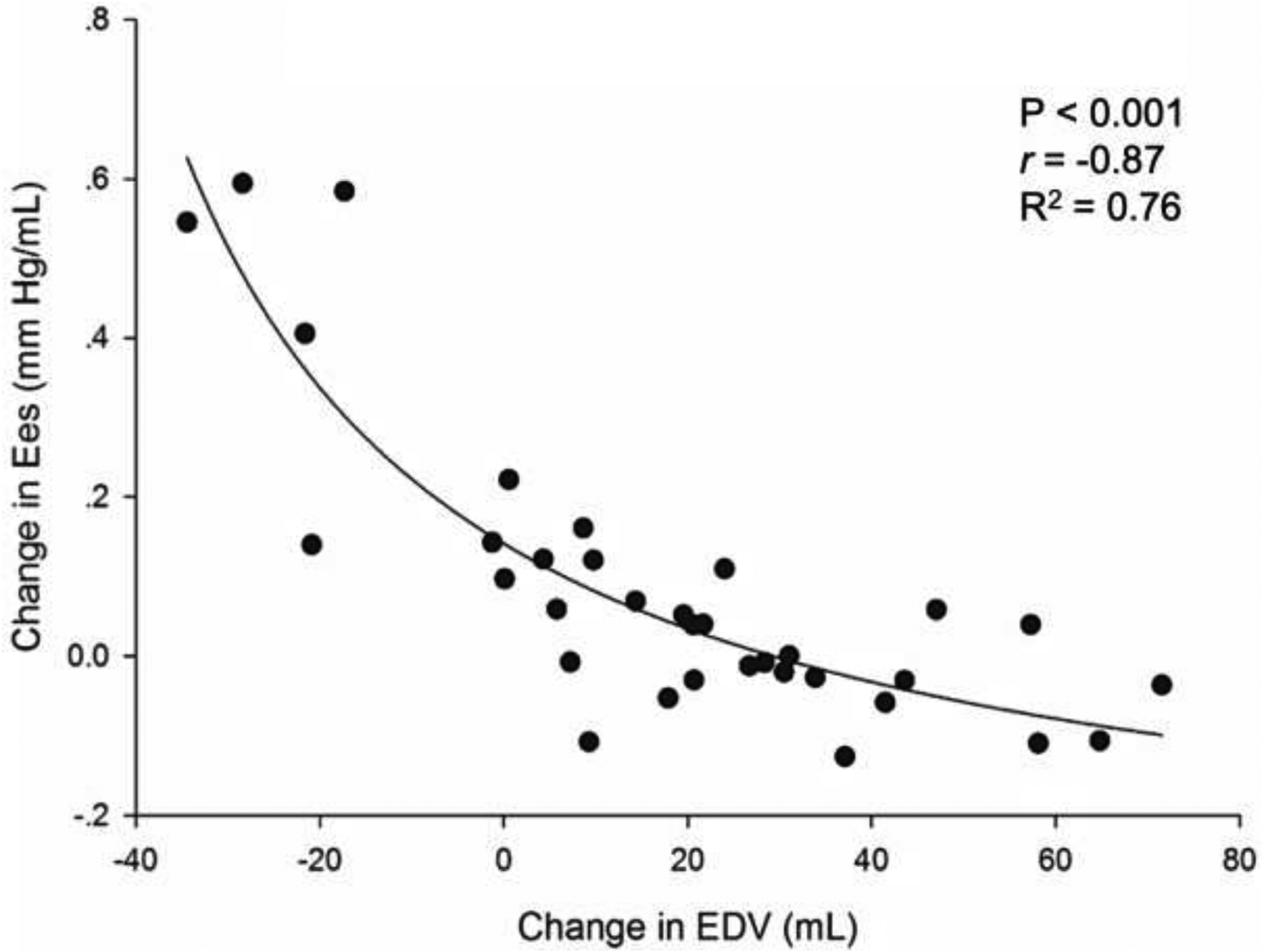
FIGURE 3.. Relationship between Exercise Changes in RV End-Systolic Elastance and End-Diastolic Volume.
Non-linear regression shows an inverse hyperbolic relationship between RV dilation (change in EDV) and RV contractile reserve (change in Ees) during exercise.
FIGURE 4.
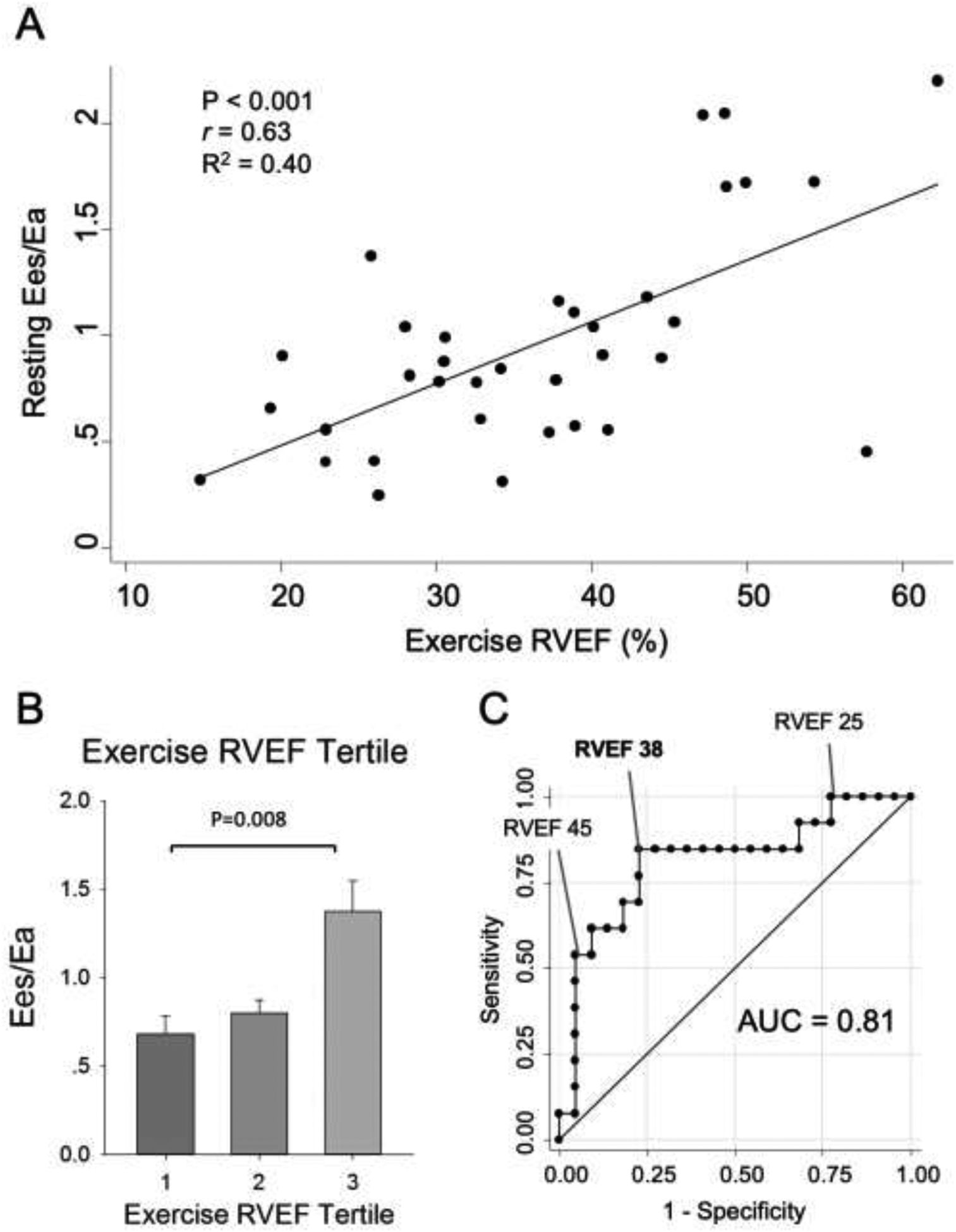
FIGURE 4.. Exercise RVEF Correlates with Resting RV-PA Coupling and Predicts Early RV-PA Uncoupling.
(A) Two-way scatter plot and correlation of Exercise RVEF and resting Ees/Ea (r=0.63, P<0.001). (B) Full cohort split into tertiles of exercise RVEF; Ees/Ea (mean±SEM) shown for each tertile. Only the highest (i.e., third) tertile of exercise RVEF had a preserved Ees/Ea; even a small decline in exercise RVEF signifies worsening resting Ees/Ea. (C) Exercise RVEF showed excellent ability for predicting occult RV dysfunction (Ees/Ea<1.0) with AUC=0.81. Exercise RVEF <38% had optimal sensitivity (85%) and specificity (77%).
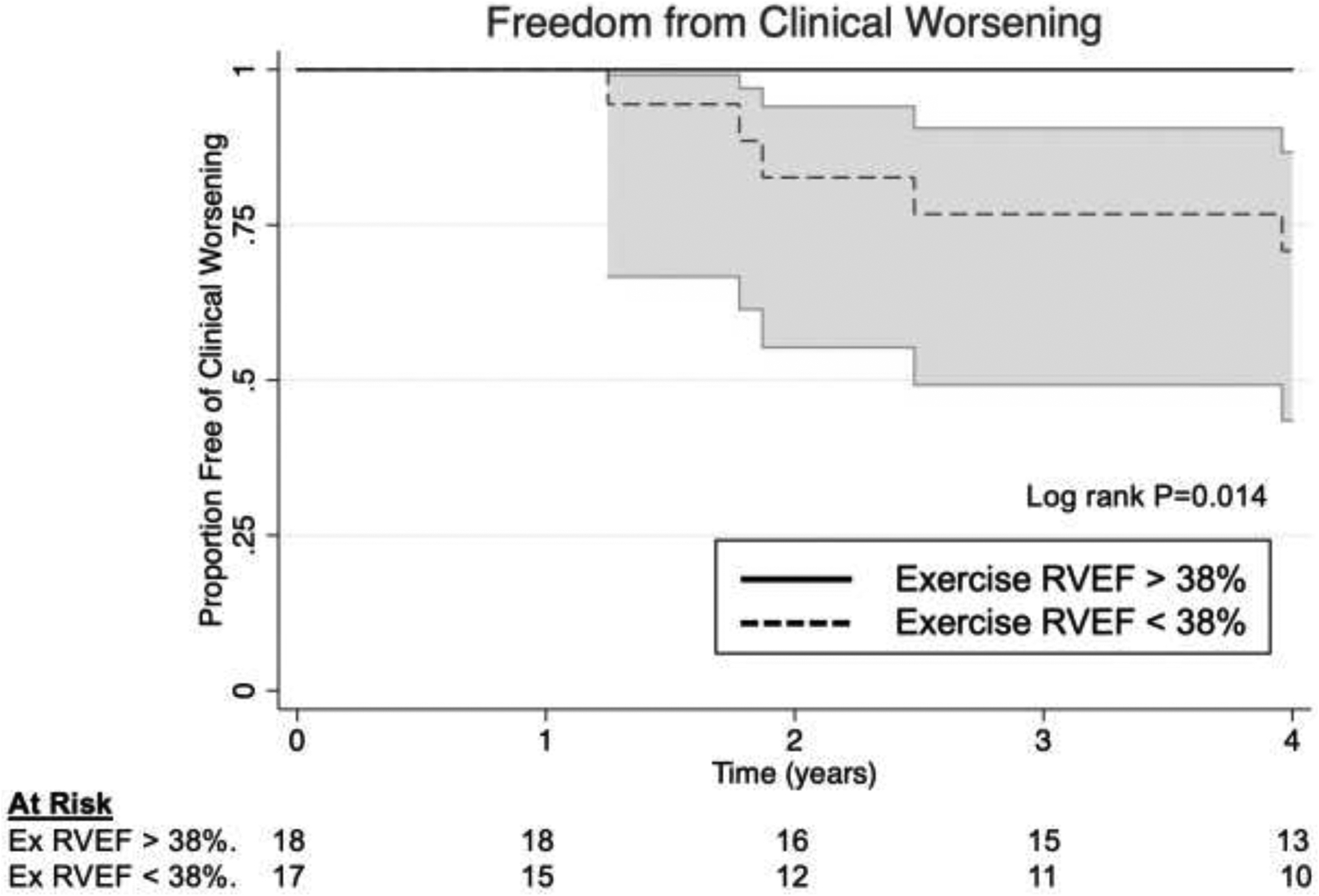
FIGURE 5.
FIGURE 5.. Exercise RVEF predicts clinical worsening.
Cohort dichotomized by median exercise RVEF (38%). Subjects with exercise RVEF>38% were free of clinical worsening over the 4-year follow-up period (log rank P=0.01).

References

    1. Vonk Noordegraaf A, Westerhof BE, Westerhof N. The Relationship Between the Right Ventricle and its Load in Pulmonary Hypertension. J Am Coll Cardiol. 2017;69(2):236–243. doi:10.1016/j.jacc.2016.10.047. - DOI - PubMed
    1. Tello K, Dalmer A, Axmann J, et al. Reserve of Right Ventricular-Arterial Coupling in the Setting of Chronic Overload. Circ Heart Fail. 2019;12(1):e005512. doi:10.1161/CIRCHEARTFAILURE.118.005512. - DOI - PubMed
    1. Kovacs G, Berghold A, Scheidl S, Olschewski H. Pulmonary arterial pressure during rest and exercise in healthy subjects: a systematic review. Eur Respir J. 2009;34(4):888–894. doi:10.1183/09031936.00145608. - DOI - PubMed
    1. Grünig E, Tiede H, Enyimayew EO, et al. Assessment and prognostic relevance of right ventricular contractile reserve in patients with severe pulmonary hypertension. Circulation. 2013;128(18):2005–2015. doi:10.1161/CIRCULATIONAHA.113.001573. - DOI - PubMed
    1. Spruijt OA, de Man FS, Groepenhoff H, et al. The effects of exercise on right ventricular contractility and right ventricular-arterial coupling in pulmonary hypertension. Am J Respir Crit Care Med. 2015;191(9):1050–1057. doi:10.1164/rccm.201412-2271OC. - DOI - PubMed

Publication types

MeSH terms