Homeostasis of Naive and Memory T Lymphocytes
- PMID: 33753403
- PMCID: PMC8411951
- DOI: 10.1101/cshperspect.a037879
Homeostasis of Naive and Memory T Lymphocytes
Abstract
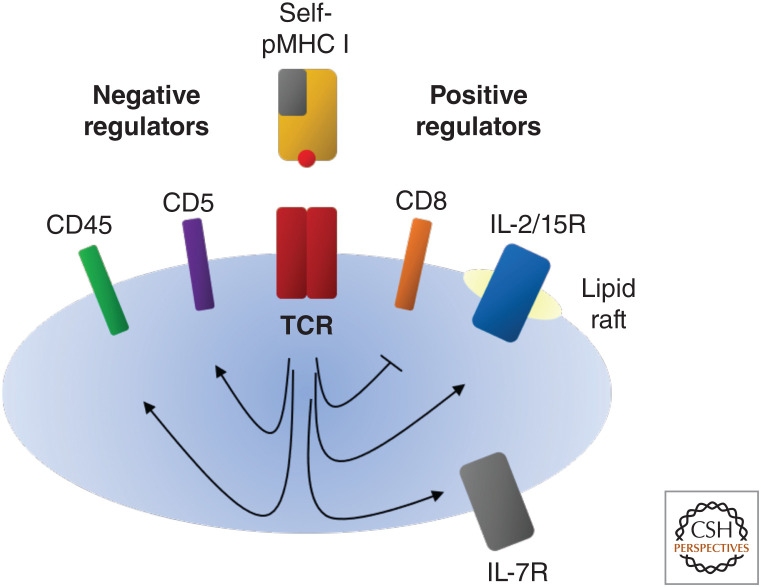
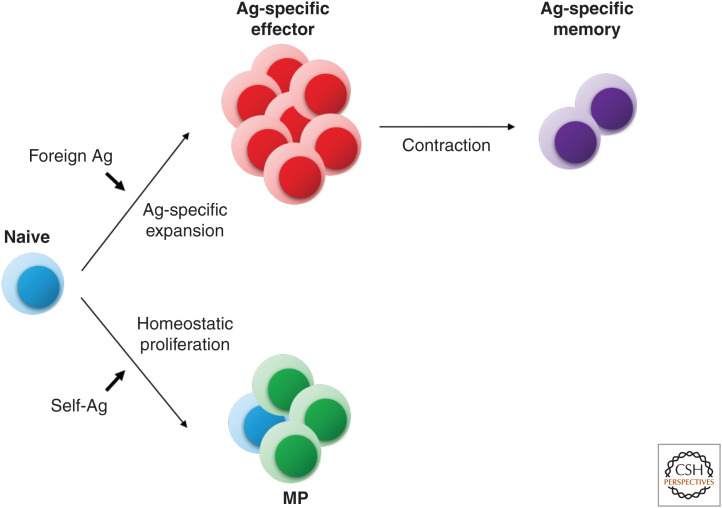
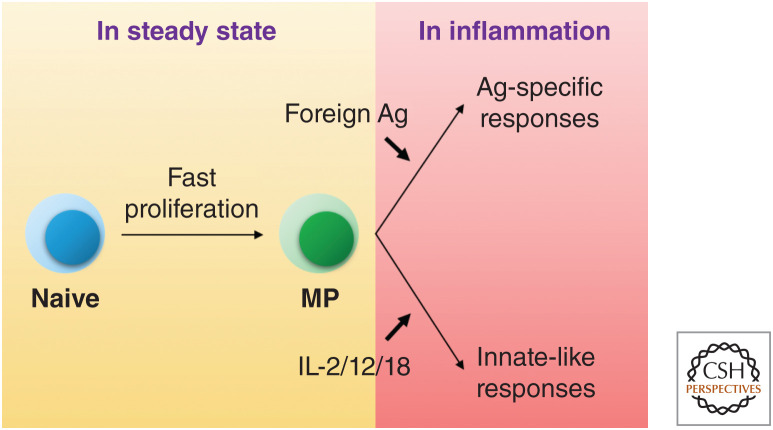
Conventional CD4+ and CD8+ T lymphocytes comprise a mixture of naive and memory cells. Generation and survival of these T-cell subsets is under strict homeostatic control and reflects contact with self-major histocompatibility complex (MHC) and certain cytokines. Naive T cells arise in the thymus via T-cell receptor (TCR)-dependent positive selection to self-peptide/MHC complexes and are then maintained in the periphery through self-MHC interaction plus stimulation via interleukin-7 (IL-7). By contrast, memory T cells are largely MHC-independent for their survival but depend strongly on stimulation via cytokines. Whereas typical memory T cells are generated in response to foreign antigens, some arise spontaneously through contact of naive precursors with self-MHC ligands; we refer to these cells as memory-phenotype (MP) T cells. In this review, we discuss the generation and homeostasis of naive T cells and these two types of memory T cells, focusing on their relative interaction with MHC ligands and cytokines.
Copyright © 2021 Cold Spring Harbor Laboratory Press; all rights reserved.
Figures
References
Publication types
MeSH terms
LinkOut - more resources
Full Text Sources
Other Literature Sources
Research Materials