


Time until treatment initiation is associated with catheter survival in peritoneal dialysis-related peritonitis
- PMID: 33753829
- PMCID: PMC7985378
- DOI: 10.1038/s41598-021-86071-y
Time until treatment initiation is associated with catheter survival in peritoneal dialysis-related peritonitis
Abstract
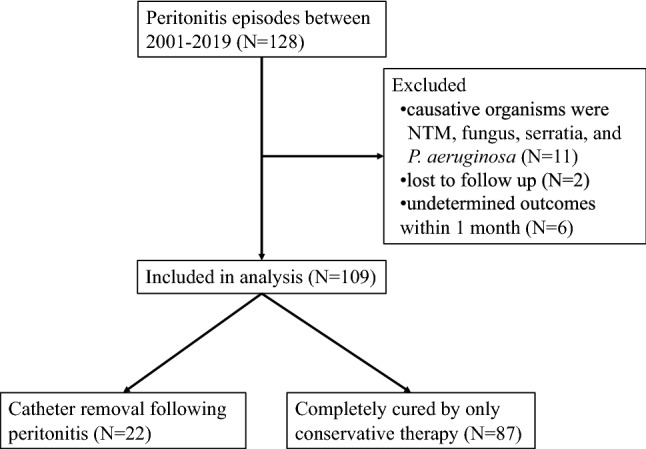
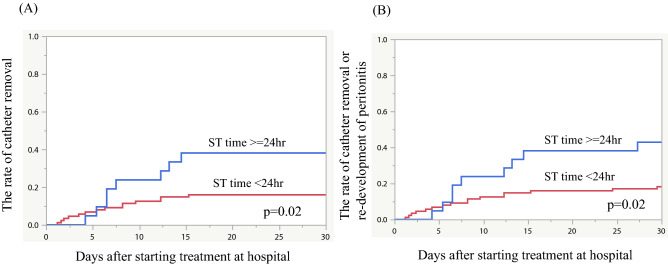
For peritonitis, a serious complication of peritoneal dialysis (PD), we investigated the relation between duration from the sign (PD effluent abnormalities) to treatment with appropriate antibiotics (ST time) and catheter removal. For 62 PD hospital patients, data of PD-related peritonitis (n = 109) were collected retrospectively. We examined ST time and PD catheter removal times using univariate and multivariate analyses. The catheter removal rate in the delayed ST time group (≥ 24 h) was higher than that in early ST time group (< 24 h) (38 vs. 16%, p = 0.02). Concomitant tunnel infection and delayed ST time were associated with catheter removal (OR [95% CI] 32.3 [3.15-329] and 3.52 [1.11-11.1]). Rates of catheter removal and re-development of peritonitis within 1 month after starting treatment were higher in the delayed ST time group (p = 0.02). PD duration at peritonitis and the first peritonitis episode were associated with delayed ST time (1.02 [1.00-1.04] and 3.42 [1.09-10.7]). Significant association was found between PD catheter removal and the start of treatment more than 24 h after appearance of abnormal effluent. Education for patients about prompt visitation at the onset of peritonitis with long PD duration might improve outcomes.
Conflict of interest statement
The authors declare no competing interests.
Figures
References
MeSH terms
Substances
LinkOut - more resources
Full Text Sources
Other Literature Sources
