


The Development of an Escape Room-Based Serious Game to Trigger Social Interaction and Communication Between High-Functioning Children With Autism and Their Peers: Iterative Design Approach
- PMID: 33755023
- PMCID: PMC8294642
- DOI: 10.2196/19765
The Development of an Escape Room-Based Serious Game to Trigger Social Interaction and Communication Between High-Functioning Children With Autism and Their Peers: Iterative Design Approach
Abstract
Background: Children with autism spectrum disorder (ASD) have social deficits that affect social interactions, communication, and relationships with peers. Many existing interventions focus mainly on improving social skills in clinical settings. In addition to the direct instruction-based programs, activity-based programs could be of added value, especially to bridge the relational gap between children with ASD and their peers.
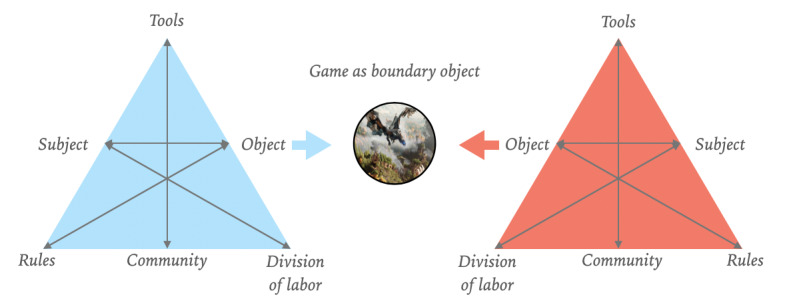
Objective: The aim of this study is to describe an iterative design process for the development of an escape room-based serious game as a boundary object. The purpose of the serious game is to facilitate direct communication between high-functioning children with ASD and their peers, for the development of social skills on the one hand and strengthening relationships with peers through a fun and engaging activity on the other hand.
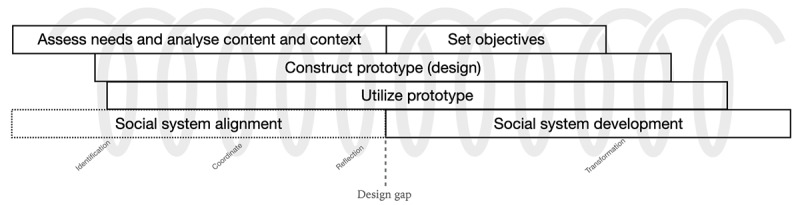
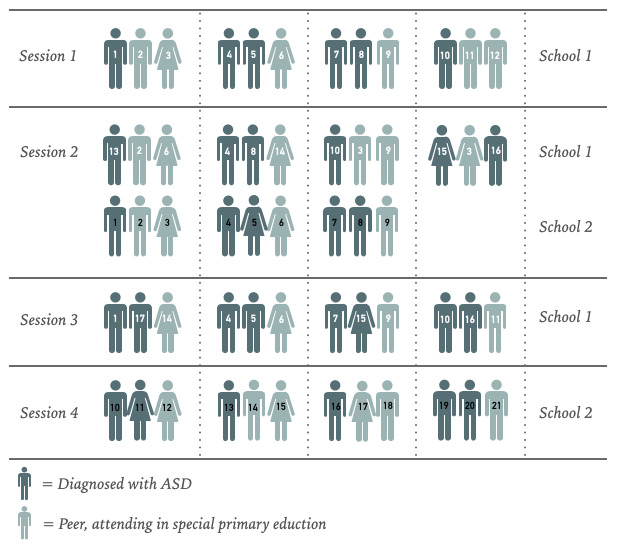
Methods: This study is structured around the Design Research Framework to develop an escape room through an iterative-incremental process. With a pool of 37 children, including 23 children diagnosed with ASD (5 girls) and 14 children (7 girls) attending special primary education for other additional needs, 4 testing sessions around different prototypes were conducted. The beta prototype was subsequently reviewed by experts (n=12). During the design research process, we examined in small steps whether the developed prototypes are feasible and whether they have the potential to achieve the formulated goals of different stakeholders.
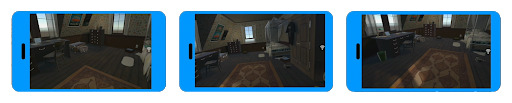
Results: By testing various prototypes, several insights were found and used to improve the design. Insights were gained in finding a fitting and appealing theme for the children, composing the content, and addressing different constraints in applying the goals from the children's and therapeutic perspectives. Eventually, a multiplayer virtual escape room, AScapeD, was developed. Three children can play the serious game in the same room on tablets. The first test shows that the game enacts equal cooperation and communication among the children.
Conclusions: This paper presents an iterative design process for AScapeD. AScapeD enacts equal cooperation and communication in a playful way between children with ASD and their peers. The conceptual structure of an escape room contributes to the natural emergence of communication and cooperation. The iterative design process has been beneficial for finding a constructive game structure to address all formulated goals, and it contributed to the design of a serious game as a boundary object that mediates the various objectives of different stakeholders. We present 5 lessons learned from the design process. The developed prototype is feasible and has the potential to achieve the goals of the serious game.
Keywords: autism; boundary object; design research; serious game.
©Gijs Terlouw, Derek Kuipers, Job van 't Veer, Jelle T Prins, Jean Pierre E N Pierie. Originally published in JMIR Serious Games (http://games.jmir.org), 23.03.2021.
Conflict of interest statement
Conflicts of Interest: None declared.
Figures


References
-
- Volkmar F, Klin A. Encyclopedia of Applied Psychology. Cambridge: Academic Press; 2004. Autism and Asperger's Syndrome; pp. 257–260.
-
- Klin A, McPartland J, Volkmar F. Handbook of Autism and Pervasive Developmental Disorders. Hoboken, New Jersey: Wiley; 2013. Asperger Syndrome; pp. 88–125.
-
- Attwood T. The Complete Guide to Asperger's Syndrome. London, United Kingdom: Jessica Kingsley Publishers; 2006.
-
- Grynszpan O, Martin J, Nadel J. Multimedia interfaces for users with high functioning autism: An empirical investigation. International Journal of Human-Computer Studies. 2008 Aug;66(8):628–639. doi: 10.1016/j.ijhcs.2008.04.001. - DOI
-
- Baron-Cohen S. “Reading the Mind in the Eyes” Test--Revised. PsycTESTS Dataset. 2001 doi: 10.1037/t00387-000. - DOI
LinkOut - more resources
Full Text Sources
Other Literature Sources
Miscellaneous
