


Biomechanics of a cemented short stem: a comparative in vitro study regarding primary stability and maximum fracture load
- PMID: 33755800
- PMCID: PMC8437915
- DOI: 10.1007/s00402-021-03843-x
Biomechanics of a cemented short stem: a comparative in vitro study regarding primary stability and maximum fracture load
Abstract
Purpose: In total hip arthroplasty, uncemented short stems have been used more and more frequently in recent years. Especially for short and curved femoral implants, bone-preserving and soft tissue-sparing properties are postulated. However, indication is limited to sufficient bone quality. At present, there are no curved short stems available which are based on cemented fixation.
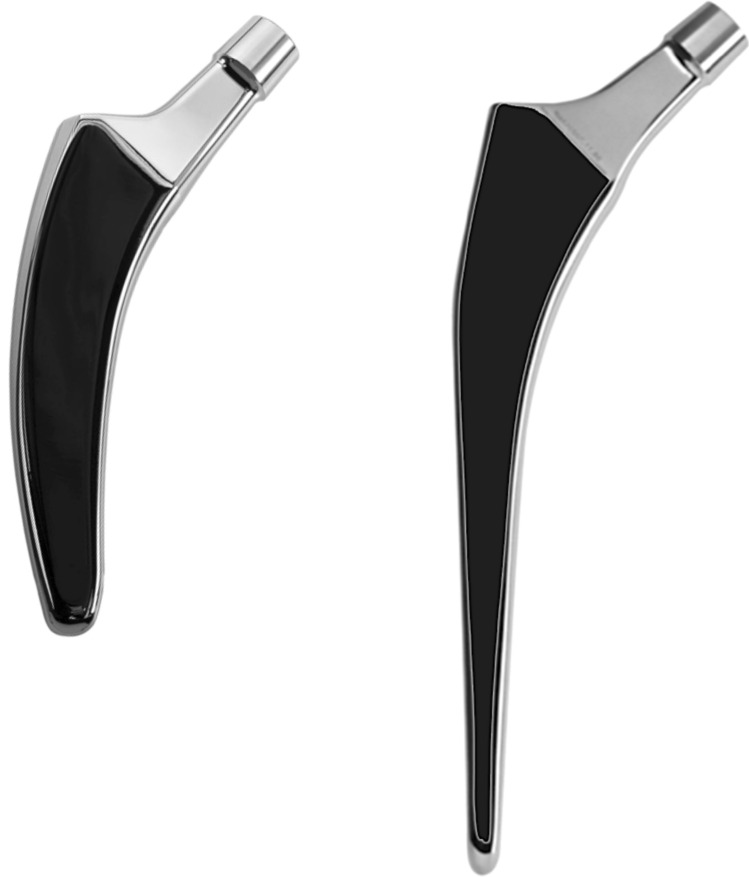
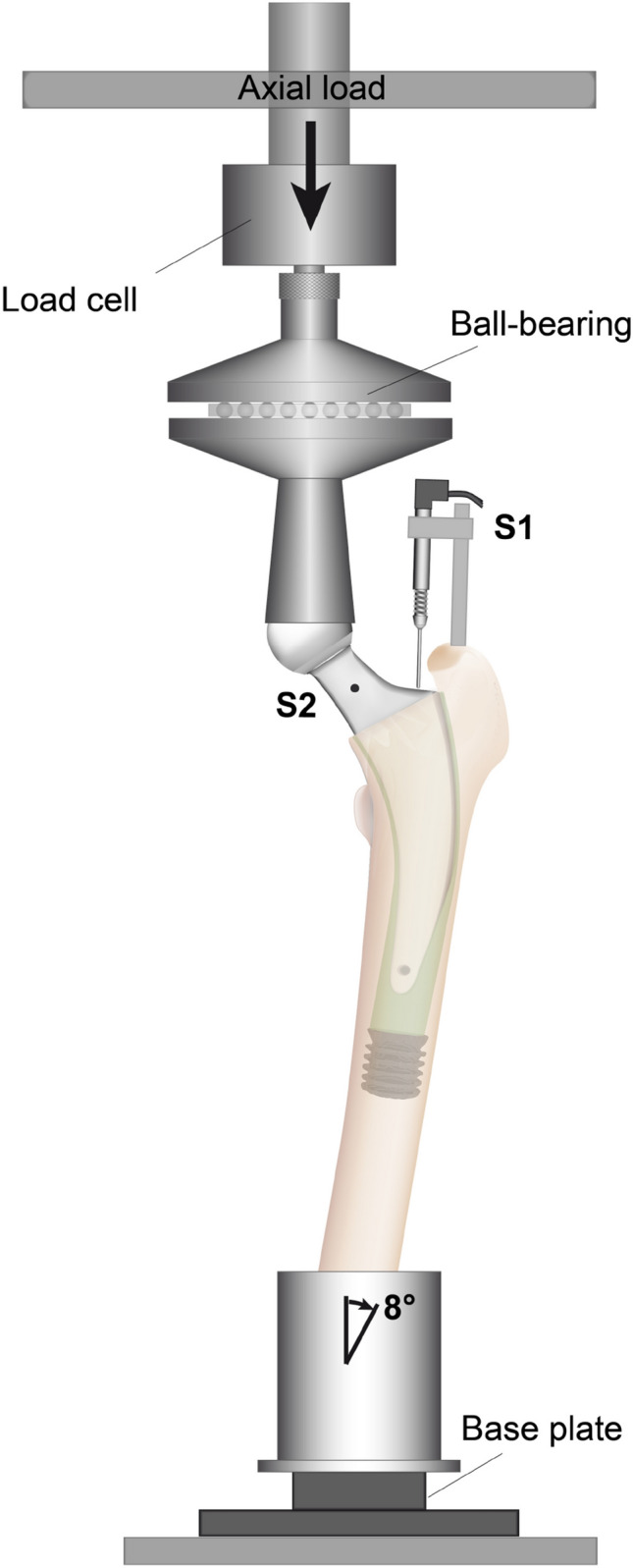
Methods: In this in vitro study, primary stability and maximum fracture load of a newly developed cemented short-stem implant was evaluated in comparison to an already well-established cemented conventional straight stem using six pairs of human cadaver femurs with minor bone quality. Primary stability, including reversible micromotion and irreversible migration, was assessed in a dynamic material-testing machine. Furthermore, a subsequent load-to-failure test revealed the periprosthetic fracture characteristics.
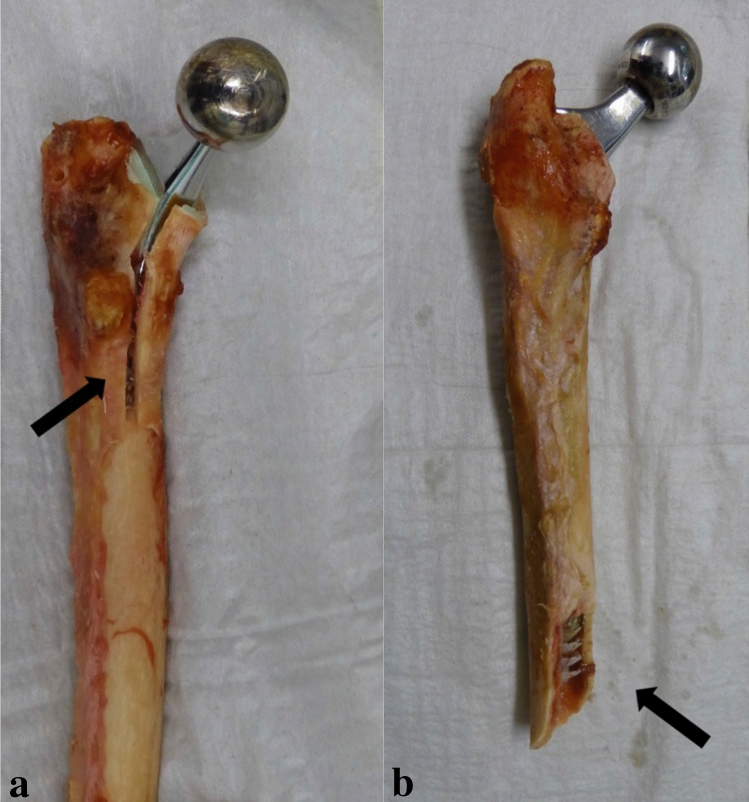
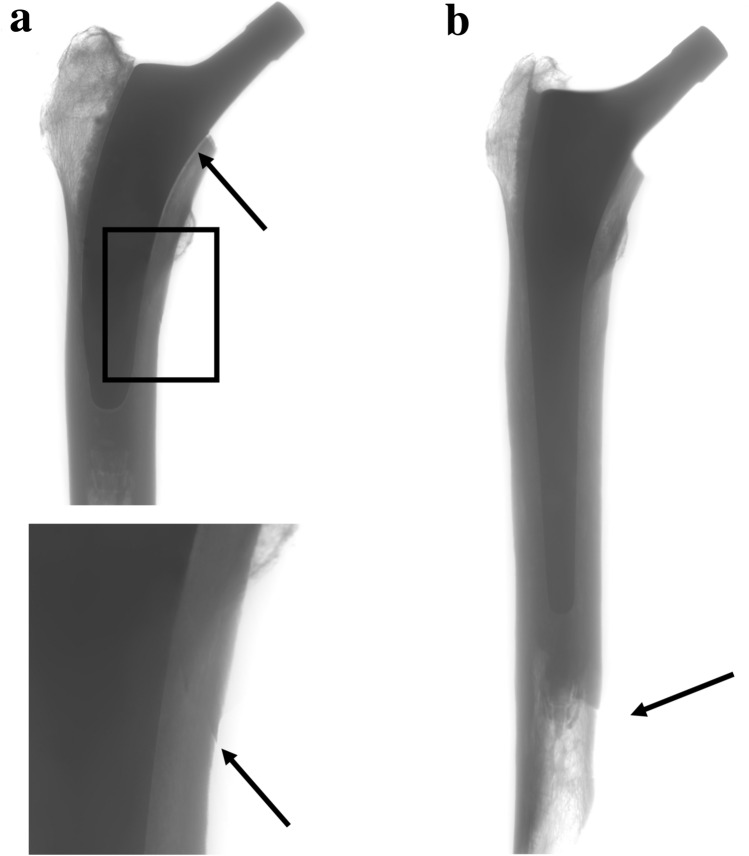
Results: Reversible and irreversible micromotions showed no statistical difference between the two investigated stems. All short stems fractured under maximum load according to Vancouver type B3, whereas 4 out of 6 conventional stems suffered a periprosthetic fracture according to Vancouver type C. Mean fracture load of the short stems was 3062 N versus 3160 N for the conventional stems (p = 0.84).
Conclusion: Primary stability of the cemented short stem was not negatively influenced compared to the cemented conventional stem and no significant difference in fracture load was observed. However, a clear difference in the fracture pattern has been identified.
Keywords: Biomechanics; Cadaver; Cemented total hip arthroplasty; Fracture pattern; Micromotion; Migration; Primary stability; Short stem.
© 2021. The Author(s).
Conflict of interest statement
KPK reports personal fees and non-financial support from Mathys Ltd. HR reports paid presentations for Smith & Nephew Co. and Mathys Ltd. All the other authors declare, that they have no conflicts of interest.
Figures
References
-
- The Swedish hip arthroplasty register annual report 2017. https://registercentrum.blob.core.windows.net/shpr/r/Eng_Arsrapport_2017.... Accessed 13 Mar 2021
-
- The Norwegian arthroplasty register annual report 2018. http://nrlweb.ihelse.net/eng/Rapporter/Report2018_english.pdf. Accessed 13 Mar 2021
-
- National Joint Registry (NJR) for England, Wales, Northern Ireland and the Isle of Man 2018 Annual Report. https://www.hqip.org.uk/wp-content/uploads/2018/11/NJR-15th-Annual-Repor.... Accessed 13 Mar 2021
-
- Australian Orthopaedic Association National Joint Registry annual report 2018. https://aoanjrr.sahmri.com/documents/10180/576950/Hip%2C%20Knee%20%26%20.... Accessed 13 Mar 2021
MeSH terms
LinkOut - more resources
Full Text Sources
Other Literature Sources
Medical
