


Copy number variants in neurexin genes: phenotypes and mechanisms
- PMID: 33756113
- PMCID: PMC8491281
- DOI: 10.1016/j.gde.2021.02.010
Copy number variants in neurexin genes: phenotypes and mechanisms
Abstract
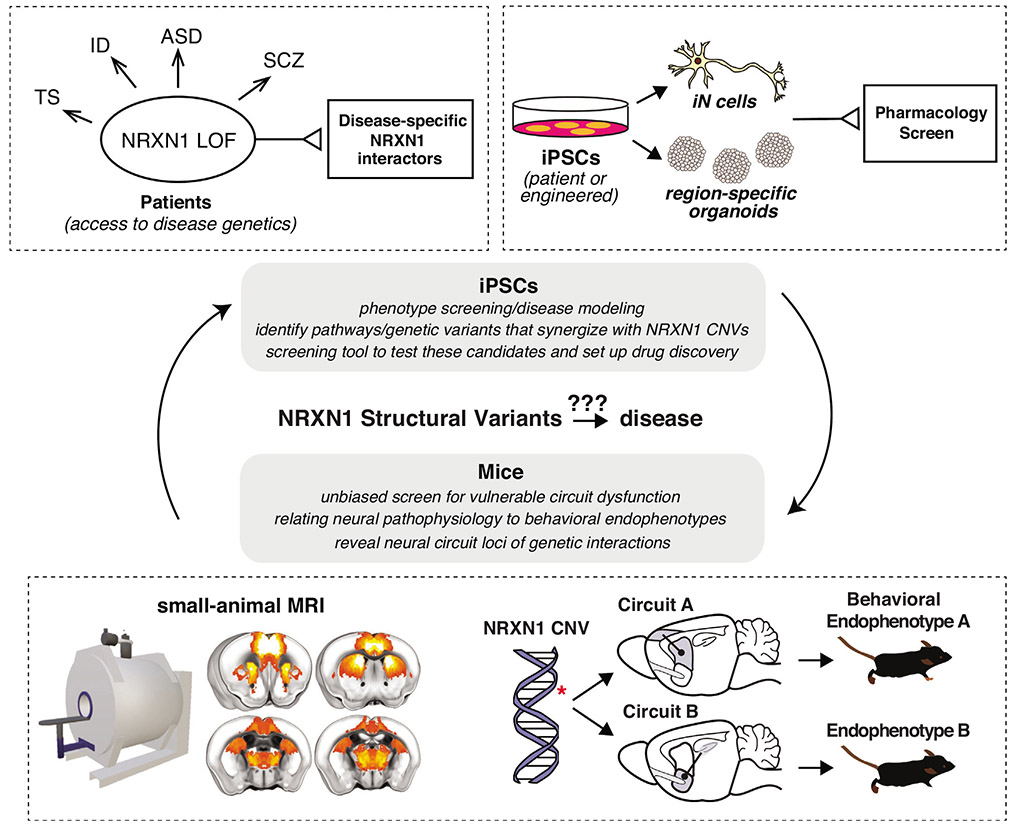
Neurexins are central to trans-synaptic cell adhesion and signaling during synapse specification and maintenance. The past two decades of human genetics research have identified structural variations in the neurexin gene family, in particular NRXN1 copy number variants (CNVs), implicated in multiple neuropsychiatric and developmental disorders. The heterogeneity and reduced penetrance of NRXN1 deletions, in addition to the pleiotropic, circuit-specific functions of NRXN1, present substantial obstacles to understanding how compromised NRXN1 function predisposes individuals to neuropsychiatric disorders. Here, we provide an updated review of NRXN1 genetics in disease, followed by recently published work using both human induced pluripotent stem cell (iPSC) derived systems and animal models to understand the mechanisms of disease pathophysiology. Finally, we suggest our outlook on how the field should progress to improve our understanding of neurexin mediated disease pathogenesis. We believe that understanding how structural genetic variants in NRXN1 contribute to disease pathophysiology requires parallel approaches in iPSC and mouse model systems, each leveraging their unique strengths - analysis of genetic interactions and background effects in iPSCs and neural circuit and behavioral analysis in mice.
Copyright © 2021 The Authors. Published by Elsevier Ltd.. All rights reserved.
Conflict of interest statement
Declarations of interest
None.
Figures
References
Publication types
MeSH terms
Substances
Grants and funding
LinkOut - more resources
Full Text Sources
Other Literature Sources
Medical
Miscellaneous
