


High dose versus low dose standardized cranberry proanthocyanidin extract for the prevention of recurrent urinary tract infection in healthy women: a double-blind randomized controlled trial
- PMID: 33757474
- PMCID: PMC7986024
- DOI: 10.1186/s12894-021-00811-w
High dose versus low dose standardized cranberry proanthocyanidin extract for the prevention of recurrent urinary tract infection in healthy women: a double-blind randomized controlled trial
Abstract
Purpose: Our objective was to assess the efficacy of a high dose cranberry proanthocyanidin extract for the prevention of recurrent urinary tract infection.
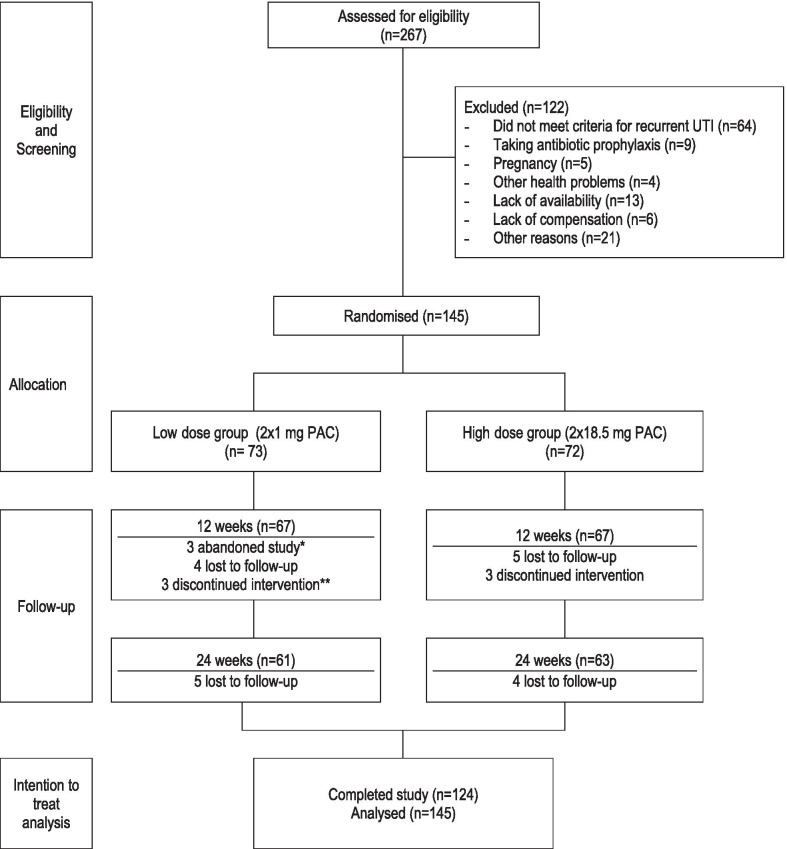
Material and methods: We recruited 145 healthy, adult women with a history of recurrent urinary tract infection, defined as ≥ 2 in the past 6 months or ≥ 3 in the past 12 months in this randomized, controlled, double-blind clinical trial. Participants were randomized to receive a high dose of standardized, commercially available cranberry proanthocyanidins (2 × 18.5 mg daily, n = 72) or a control low dose (2 × 1 mg daily, n = 73) for a 24-week period. During follow-up, symptomatic women provided urine samples for detection of pyuria and/or bacteriuria and received an appropriate antibiotic prescription. The primary outcome for the trial was the mean number of new symptomatic urinary tract infections during a 24-week intervention period. Secondary outcomes included symptomatic urinary tract infection with pyuria or bacteriuria.
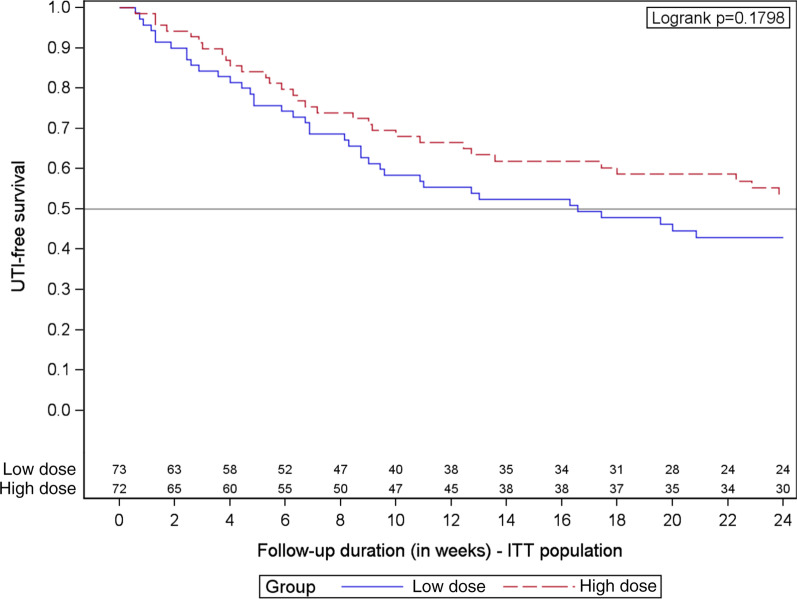
Results: In response to the intervention, a non-significant 24% decrease in the number of symptomatic urinary tract infections was observed between groups (Incidence rate ratio 0.76, 95%CI 0.51-1.11). Post-hoc analyses indicated that among 97 women who experienced less than 5 infections in the year preceding enrolment, the high dose was associated with a significant decrease in the number of symptomatic urinary tract infections reported compared to the low dose (age-adjusted incidence rate ratio 0.57, 95%CI 0.33-0.99). No major side effects were reported.
Conclusion: High dose twice daily proanthocyanidin extract was not associated with a reduction in the number of symptomatic urinary tract infections when compared to a low dose proanthocyanidin extract. Our post-hoc results reveal that this high dose of proanthocyanidins may have a preventive impact on symptomatic urinary tract infection recurrence in women who experienced less than 5 infections per year.
Trial registration: Clinicaltrials.gov, identifier NCT02572895.
Keywords: Cranberry; Prevention; Proanthocyanidins; Urinary tract infections; Women.
Conflict of interest statement
Denis Guyonnet and Valerie Bochard are employees of Diana Food Canada. All other authors report no conflict of interest. The authors alone are responsible for the content and writing of the paper.
Figures
References
-
- Howell AB, Botto H, Combescure C, et al. Dosage effect on uropathogenic Escherichia coli anti-adhesion activity in urine following consumption of cranberry powder standardized for proanthocyanidin content: a multicentric randomized double blind study. BMC Infect Dis. 2010;10:94. doi: 10.1186/1471-2334-10-94. - DOI - PMC - PubMed
Publication types
MeSH terms
Substances
Associated data
LinkOut - more resources
Full Text Sources
Other Literature Sources
Medical
Miscellaneous
