


Mesenchymal stem cells cultured in serum-free medium ameliorate experimental peritoneal fibrosis
- PMID: 33757592
- PMCID: PMC7986267
- DOI: 10.1186/s13287-021-02273-1
Mesenchymal stem cells cultured in serum-free medium ameliorate experimental peritoneal fibrosis
Abstract
Background: Mesenchymal stem cells (MSCs) provide potential treatments for peritoneal fibrosis. However, MSCs cultured in media containing serum bring risks of infection and other problems. In this study, we compared the effect of human MSCs in serum-free medium (SF-MSCs) on peritoneal fibrosis with that of MSCs cultured in medium containing 10% fetal bovine serum (10%MSCs).
Methods: Peritoneal fibrosis was induced by intraperitoneally injecting 0.1% chlorhexidine gluconate (CG). SF-MSCs or 10%MSCs were intraperitoneally administered 30 min after the CG injection. Ten days after the CG and MSC injections, we performed histological analyses and peritoneal equilibrium testing. In the in vitro experiments, we used transforming growth factor (TGF)-β1-stimulated human peritoneal mesothelial cells incubated in conditioned medium from MSCs to examine whether the SF-MSCs showed enhanced ability to produce antifibrotic humoral factors.
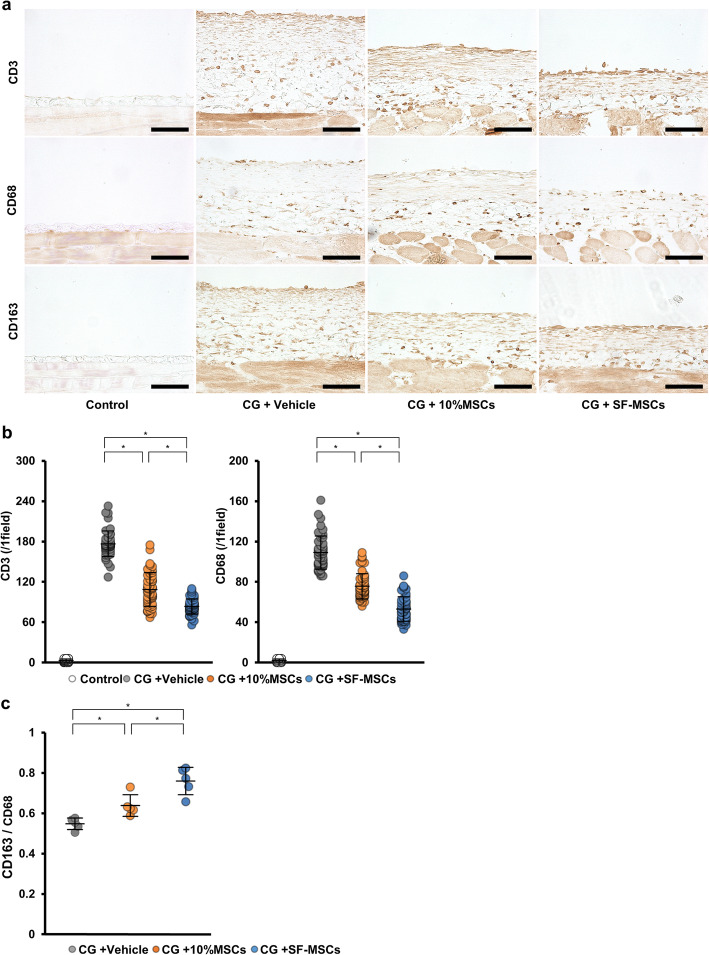
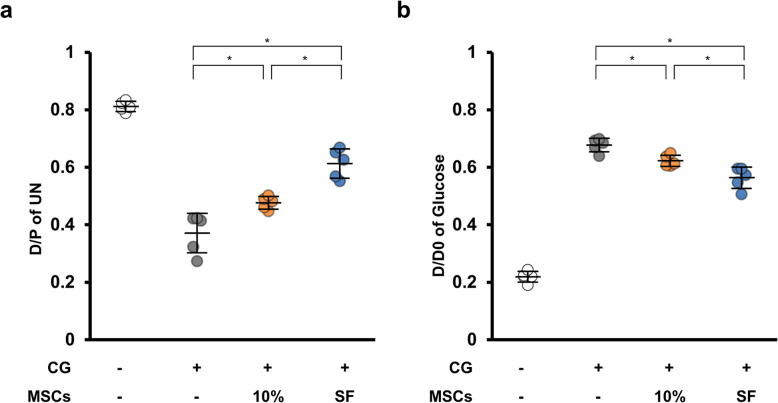
Results: Histological staining showed that the SF-MSCs significantly suppressed CG-induced cell accumulation and thickening compared with that of the 10%MSCs. Additionally, the SF-MSCs significantly inhibited mesenchymal cell expression, extracellular matrix protein deposition and inflammatory cell infiltration. Peritoneal equilibration testing showed that compared with administering 10%MSCs, administering SF-MSCs significantly reduced the functional impairments of the peritoneal membrane. The in vitro experiments showed that although the conditioned medium from MSCs suppressed TGF-β1 signaling, the suppression did not significantly differ between the SF-MSCs and 10%MSCs.
Conclusions: Serum-free culture conditions can enhance the antifibrotic abilities of MSCs by suppressing inflammation. Administering ex vivo expanded SF-MSCs may be a potential therapy for preventing peritoneal fibrotic progression.
Keywords: Immunosuppression; Mesenchymal stem cells; Peritoneal dialysis; Peritoneal fibrosis; Serum-free culture condition.
Conflict of interest statement
The Department of Stem Cell Biology and Medicine, Graduate School of Biomedical & Health Sciences, Hiroshima University, is a collaborative research laboratory funded by TWOCELLS Company, Limited. Emeritus Prof. Kato is the vice president of TWOCELLS Company, Limited. All remaining authors have declared that no conflicts of interest exist.
Figures




References
-
- Liyanage T, Ninomiya T, Jha V, Neal B, Patrice HM, Okpechi I, Zhao MH, Lv J, Garg AX, Knight J, Rodgers A, Gallagher M, Kotwal S, Cass A, Perkovic V. Worldwide access to treatment for end-stage kidney disease: a systematic review. Lancet. 2015;385(9981):1975–1982. doi: 10.1016/S0140-6736(14)61601-9. - DOI - PubMed
-
- Williams JD, Craig KJ, Topley N, Von Ruhland C, Fallon M, Newman GR, et al. Morphologic changes in the peritoneal membrane of patients with renal disease. J Am Soc Nephrol. 2002;13(2):470–479. - PubMed
-
- Margetts PJ, Churchill DN. Acquired ultrafiltration dysfunction in peritoneal dialysis patients. J Am Soc Nephrol. 2002;13(11):2787–2794. - PubMed
Publication types
MeSH terms
Substances
LinkOut - more resources
Full Text Sources
Other Literature Sources
Research Materials
