


Effectiveness of functional orthodontic appliances in obstructive sleep apnea treatment in children: literature review
- PMID: 33757756
- PMCID: PMC9422464
- DOI: 10.1016/j.bjorl.2021.02.010
Effectiveness of functional orthodontic appliances in obstructive sleep apnea treatment in children: literature review
Abstract
Introduction: Obstructive sleep apnea syndrome is a common condition in childhood and if left untreated can result in many health problems. An accurate diagnosis of the etiology is crucial for obstructive sleep apnea treatment success. Functional orthodontic appliances that stimulate mandibular growth by forward mandibular positioning are an alternative therapeutic option in growing patients.
Objective: To perform a literature review about the effects of functional orthodontic appliances used to correct the mandibular deficiency in obstructive sleep apnea treatment.
Methods: The literature search was conducted in June 2020 using Cochrane Library; PubMed, EBSCO (Dentistry & Oral Sciences Source), LILACS Ovid; SciELO Web of Science; EMBASE Bireme and BBO Bireme electronic databases. The search included papers published in English, until June 2020, whose methodology referred to the types and effects of functional orthopedic appliances on obstructive sleep apnea treatment in children.
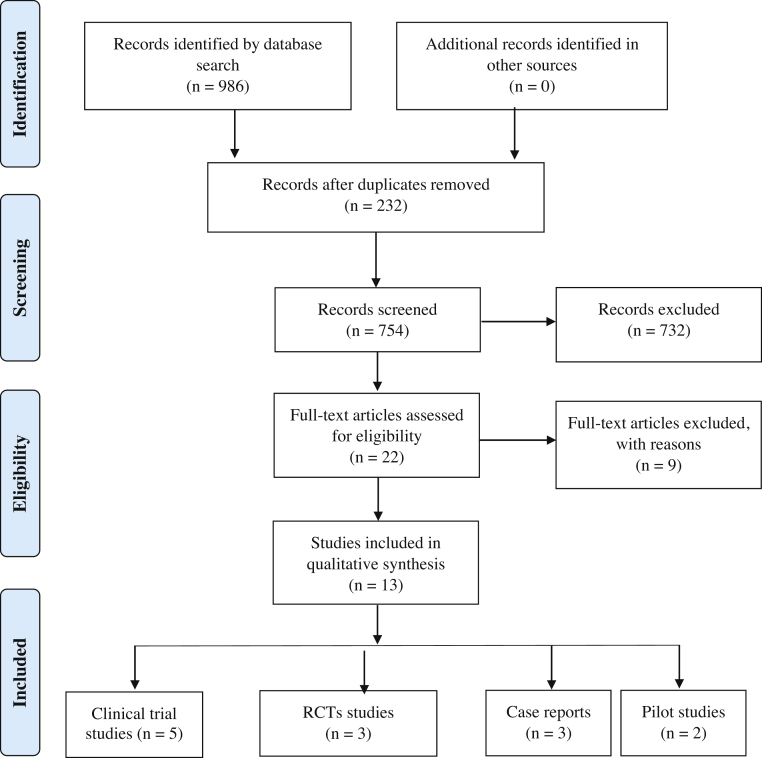
Results: The search strategy identified thirteen articles; only four articles were randomized clinical studies. All studies using the oral appliances or functional orthopedic appliances for obstructive sleep apnea in children resulted in improvements in the apnea-hypopnea index score. The cephalometric (2D) and tomographic (3D) evaluations revealed enlargement of the upper airway and increase in the upper airspace, improving the respiratory function in the short term.
Conclusion: Functional appliances may be an alternative treatment for obstructive sleep apnea, but it cannot be concluded that they are effective in treating pediatric obstructive sleep apnea. There are significant deficiencies in the existing evidence, mainly due to absence of control groups, small sample sizes, lack of randomization and no long-term results.
Keywords: Children; Craniofacial abnormalities; Functional orthodontic appliance; Obstructive sleep apnea; Upper airway resistance.
Copyright © 2021 Associação Brasileira de Otorrinolaringologia e Cirurgia Cérvico-Facial. Published by Elsevier Editora Ltda. All rights reserved.
Figures
References
-
- Tsara V., Amfilochiou A., Papagrigorakis J.M., Georgopoulos D., Liolios D., Kadiths A., et al. Guidelines for diagnosing and treating sleep related breathing disorders in adults and children (Part 3: obstructive sleep apnea in children, diagnosis and treatment) Hippokratia. 2010;14:57–62. - PMC - PubMed
-
- Marcus C.L., Brooks L.J., Draper K.A., Gozal D., Halbower A.C., Jones J., et al. Diagnosis and management of childhood obstructive sleep apnea syndrome. Pediatrics. 2012;130:e714–55. - PubMed
-
- Aiello K.D., Caughey W.G., Nelluri B., Sharma A., Mookadam F., Mookadam M. Effect of exercise training on sleep apnea: a systematic review and meta-analysis. Respir Med. 2016;116:85–92. - PubMed
-
- Behrents R.G., Shelgikar A.V., Conley R.S., Flores-Mir C., Hans M., Levine M., et al. Obstructive sleep apnea and orthodontics: an American Association of Orthodontists white paper. Am J Orthod Dentofacial Orthop. 2019;156 13–28.e1. - PubMed
-
- Bertoz A.P.M., Souki B.Q., Lione R., Theresa Webber S.A., Bigliazzi R., Oliveira P.M., et al. Three-dimensional airway changes after adenotonsillectomy in children with obstructive apnea: do expectations meet reality? Am J Orthod Dentofacial Orthop. 2019;155:791–800. - PubMed
Publication types
MeSH terms
LinkOut - more resources
Full Text Sources
Other Literature Sources
Medical
