This is a preprint.
The role of connectivity on COVID-19 preventive approaches
- PMID: 33758876
- PMCID: PMC7987035
- DOI: 10.1101/2021.03.11.21253348
The role of connectivity on COVID-19 preventive approaches
Update in
-
The role of connectivity on COVID-19 preventive approaches.PLoS One. 2022 Sep 1;17(9):e0273906. doi: 10.1371/journal.pone.0273906. eCollection 2022. PLoS One. 2022. PMID: 36048855 Free PMC article.
Abstract
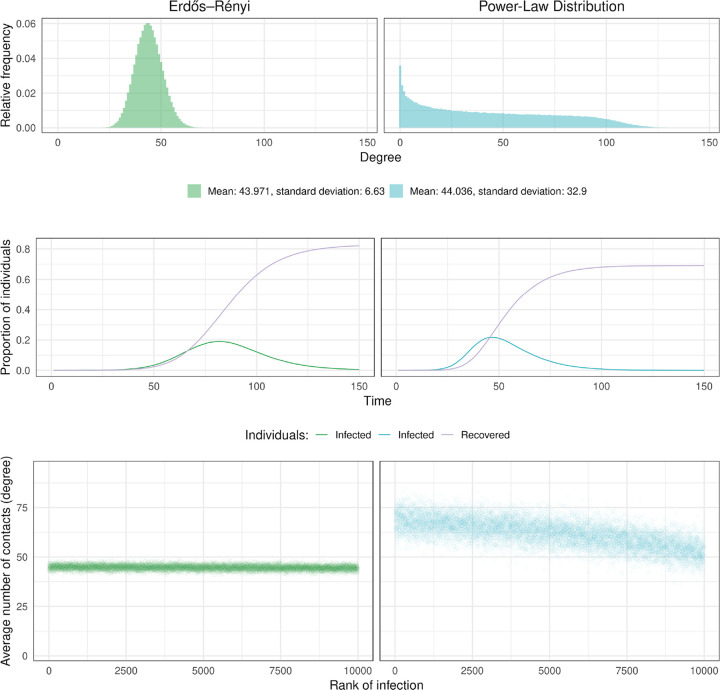
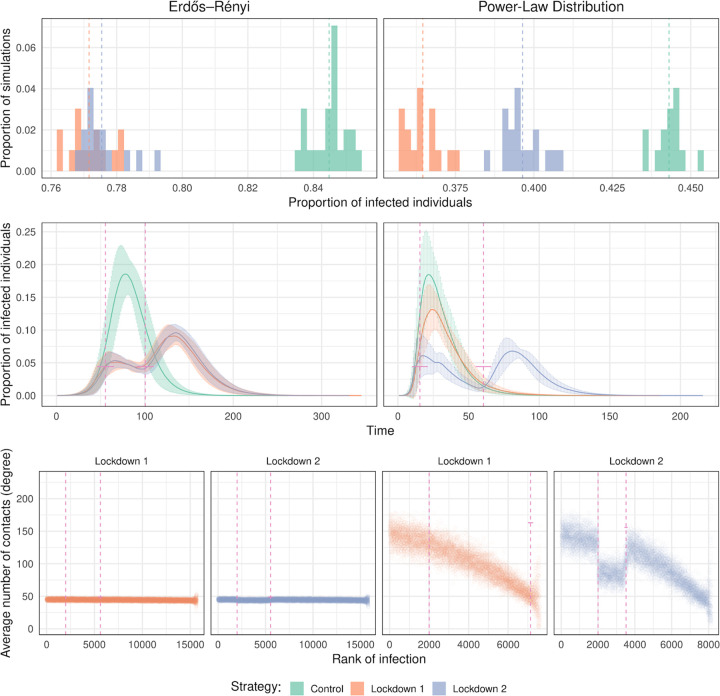
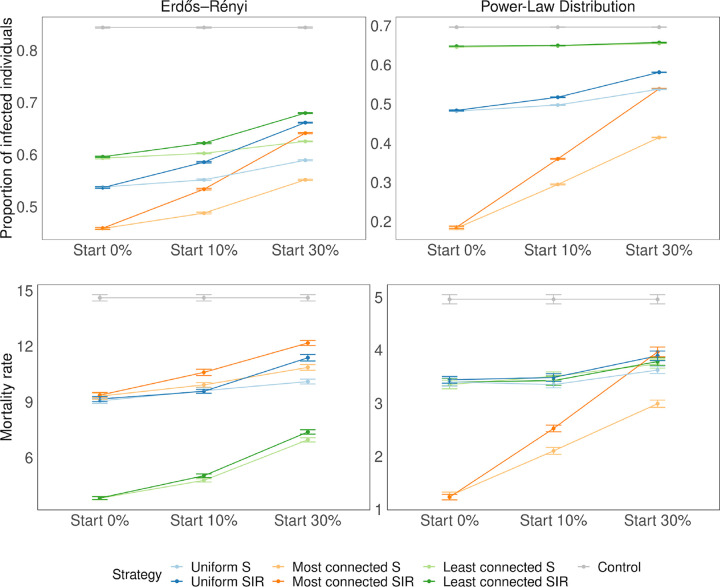
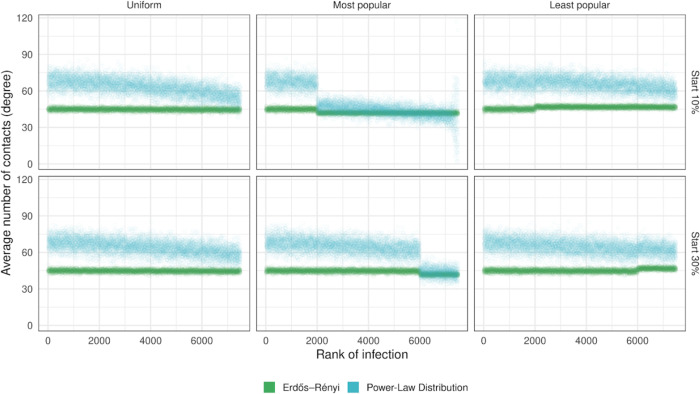
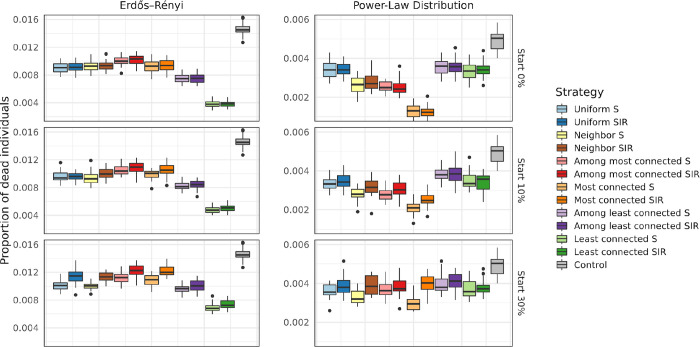
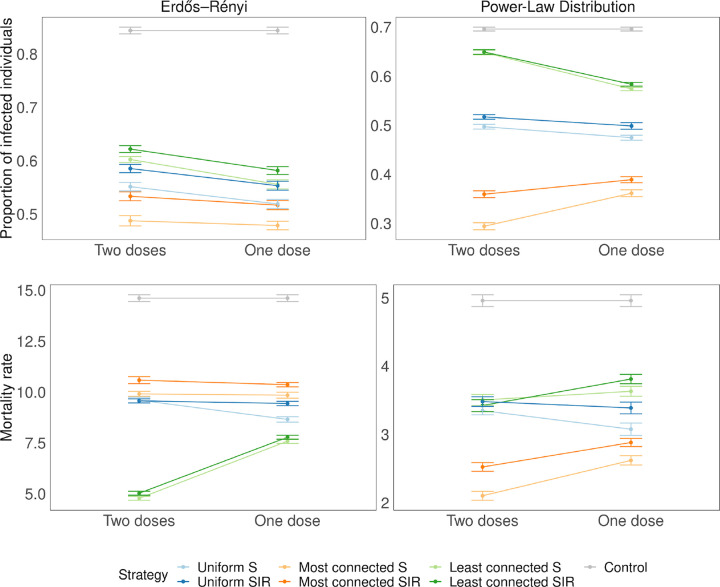
Preventive and modelling approaches to address the COVID-19 pandemic have been primarily based on the age or occupation, and often disregard the importance of heterogeneity in population contact structure and individual connectivity. To address this gap, we developed models based on Erdős-Rényi and a power law degree distribution that first incorporate the role of heterogeneity and connectivity and then can be expanded to make assumptions about demographic characteristics. Results demonstrate that variations in the number of connections of individuals within a population modify the impact of public health interventions such as lockdown or vaccination approaches. We conclude that the most effective strategy will vary depending on the underlying contact structure of individuals within a population and on timing of the interventions.
Conflict of interest statement
Conflict of interest statement Authors declare no competing interests.
Figures
References
-
- COVID-19 Data Repository by the Center for Systems Science and Engineering (CSSE) at Johns Hopkins University. 2021. Feb 2 [Cited 2021 Apr 12].
-
- Persad G. Peek ME, and Emanuel EJ. Fairly Prioritizing Groups for Access to COVID-19 Vaccines. JAMA, 2020; 324(16): 1601–1602. - PubMed
Publication types
Grants and funding
LinkOut - more resources
Full Text Sources
Other Literature Sources
Miscellaneous