Prevalence and Nature of Sexist and Racial/Ethnic Microaggressions Against Surgeons and Anesthesiologists
- PMID: 33760000
- PMCID: PMC7992024
- DOI: 10.1001/jamasurg.2021.0265
Prevalence and Nature of Sexist and Racial/Ethnic Microaggressions Against Surgeons and Anesthesiologists
Abstract
Importance: Workplace mistreatment can manifest as microaggressions that cause chronic, severe distress. As physician burnout becomes a global crisis, quantitative research to delineate the impact of microaggressions is imperative.
Objectives: To examine the prevalence and nature of sexist and racial/ethnic microaggressions against female and racial/ethnic-minority surgeons and anesthesiologists and assess the association with physician burnout.
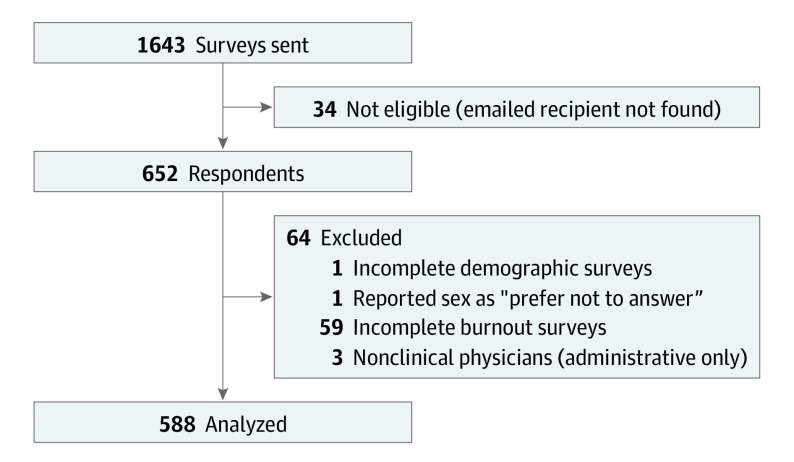
Design, setting, and participants: This cross-sectional survey evaluated microaggressions and physician burnout within a diverse cohort of surgeons and anesthesiologists in a large health maintenance organization. A total of 1643 eligible participants were sent a recruitment email on January 8, 2020, 1609 received the email, and 652 replied, for a response rate of 41%. The study survey remained open until February 20, 2020. A total of 588 individuals (37%) were included in the study after exclusion criteria were applied.
Exposures: The Maslach Burnout Inventory, the Racial Microaggression Scale, and the Sexist Microaggression Experience and Stress Scale.
Main outcomes and measures: The primary outcomes were prevalence and nature of sexist and racial/ethnic microaggressions against female and racial/ethnic-minority surgeons and anesthesiologists using the Sexist Microaggression Experience and Stress Scale and Racial Microaggression Scale. Secondary outcomes were frequency and severity of microaggressions, prevalence of physician burnout, and associations between microaggressions and physician burnout.
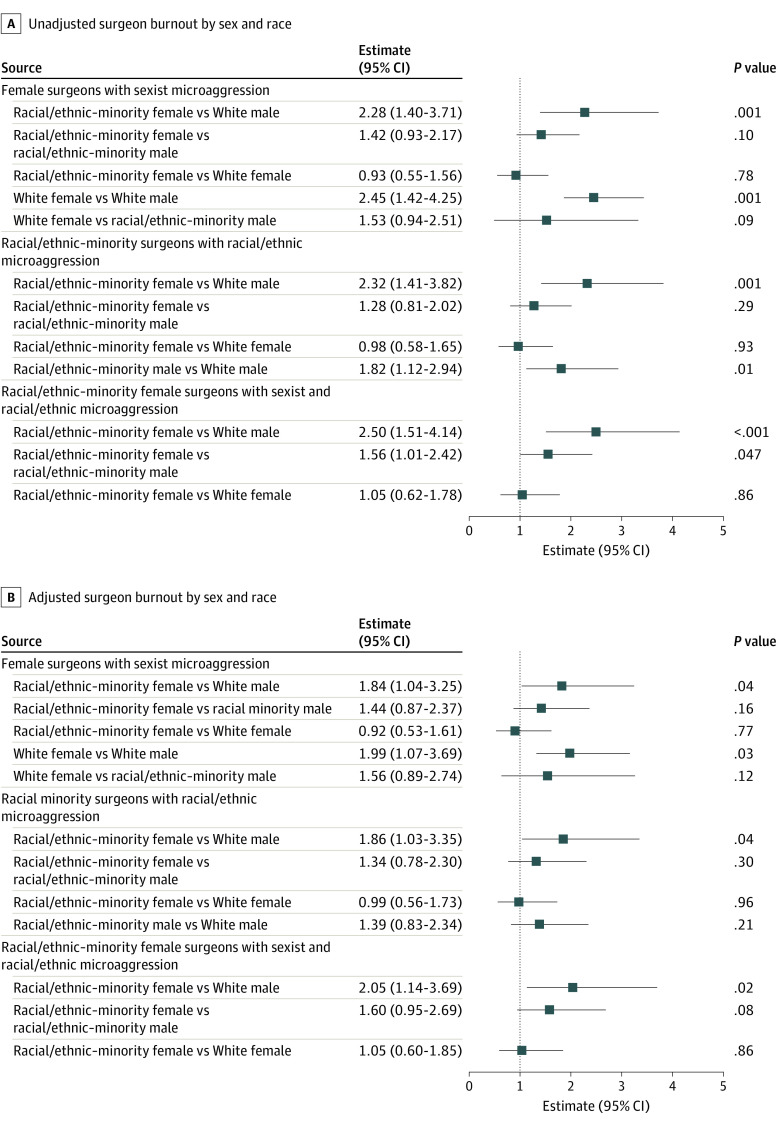
Results: Data obtained from 588 respondents (249 [44%] female, 367 [62%] racial/ethnic minority, 224 [38.1%] 40-49 years of age) were analyzed. A total of 245 of 259 female respondents (94%) experienced sexist microaggressions, most commonly overhearing or seeing degrading female terms or images. Racial/ethnic microaggressions were experienced by 299 of 367 racial/ethnic-minority physicians (81%), most commonly reporting few leaders or coworkers of the same race/ethnicity. Criminality was rare (18 of 367 [5%]) but unique to and significantly higher for Hispanic and Black physicians. Individuals who identified as underrepresented minorities were more likely to experience environmental inequities (odds ratio [OR], 4.21; 95% CI, 1.6-10.75; P = .002) and criminality (OR, 14.93; 95% CI, 4.5-48.5; P < .001). The prevalence of physician burnout was 47% (280 of 588 physicians) and higher among female physicians (OR, 1.60; 95% CI, 1.03-2.47; P = .04) and racial/ethnic-minority physicians (OR, 2.08; 95% CI, 1.31-3.30; P = .002). Female physicians who experienced sexist microaggressions (racial/ethnic-minority female physicians: OR, 1.84; 95% CI, 1.04-3.25; P = .04; White female physicians: OR, 1.99; 95% CI, 1.07-3.69; P = .03) were more likely to experience burnout. Racial/ethnic-minority female physicians (OR, 1.86; 95% CI, 1.03-3.35; P = .04) who experienced racial microaggressions were more likely to report burnout. Racial/ethnic-minority female physicians who had the compound experience of sexist and racial/ethnic microaggressions (OR, 2.05; 95% CI, 1.14-3.69; P = .02) were more likely to experience burnout.
Conclusions and relevance: The prevalence of sexist and racial/ethnic microaggressions against female and racial/ethnic-minority surgeons and anesthesiologists was high and associated with physician burnout. This study provides a valuable response to the increasing call for evidence-based data on surgical workplace mistreatment.
Conflict of interest statement
Figures
Comment in
-
Microaggressions, Intersectionality, and Criminality.JAMA Surg. 2021 May 1;156(5):e210266. doi: 10.1001/jamasurg.2021.0266. Epub 2021 May 12. JAMA Surg. 2021. PMID: 33760005 No abstract available.
References
-
- Websters Dictionary . Microaggressions. Accessed August 26, 2020. https://www.merriam-webster.com/dictionary/microaggression
-
- Derthick AO. The Sexist Mess: Development and Initial Validation Of The Sexist Microaggressions Experiences and Stress Scale and the Relationship of Sexist Microaggressions to Women’s Mental Health. Dissertation. Accessed August 26, 2020. https://search.proquest.com/docview/1752638981?pq-origsite=gscholar
-
- Maslach C, Jackson SE, Leiter MP. Maslach Burnout Inventory Manual. Consulting Psychologists Press; 1996.
Publication types
MeSH terms
LinkOut - more resources
Full Text Sources
Other Literature Sources
Research Materials
Miscellaneous