


The impact of reducing the femoral stem length in total hip arthroplasty during gait
- PMID: 33760941
- PMCID: PMC8497290
- DOI: 10.1007/s00402-021-03852-w
The impact of reducing the femoral stem length in total hip arthroplasty during gait
Abstract
Aim: The length of the femoral stem in total hip arthroplasty (THA) is a practical consideration to prevent gait impairment. The aim of this study was to determine if reducing the femoral stem length in THA would lead to impaired gait biomechanics.
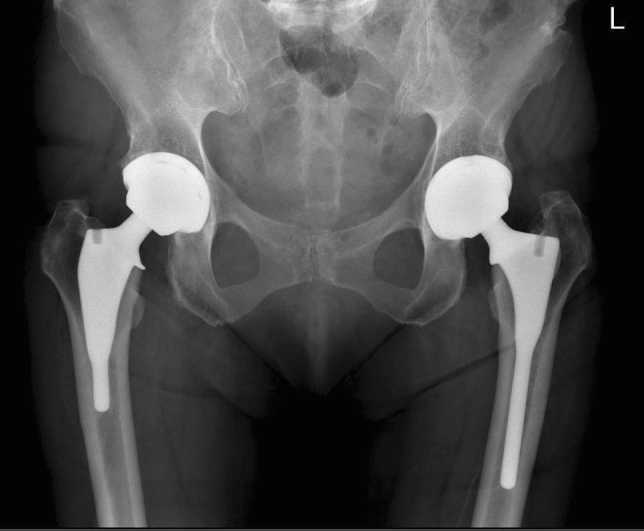
Methods: Patients uniformly with the same brand implant of differing lengths (100 mm vs 140-166 mm) were taken retrospectively from a prospective trial introducing a new short stem. Twelve patients without any other disorder to alter gait besides contralateral differing length stem THA were tested at differing gradients and speed on a validated instrumented treadmill measuring ground reaction forces. An anthropometrically similar group of healthy controls were analysed to compare.
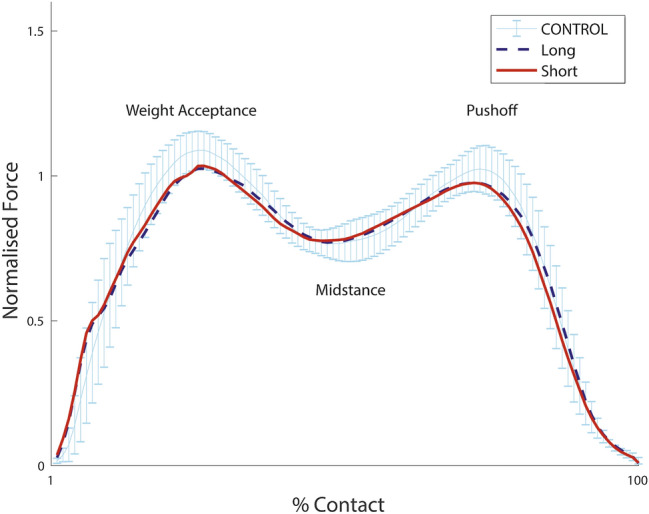
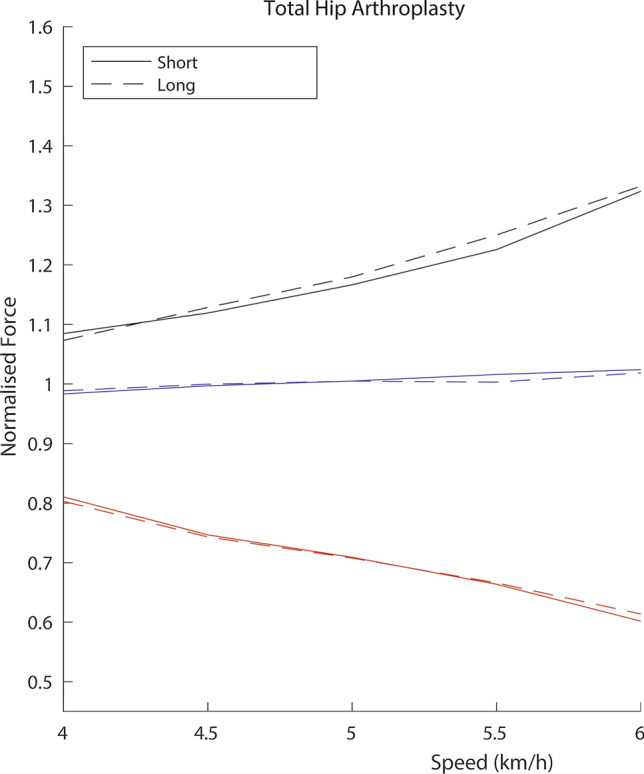
Results: With the same posterior surgical approach, the offset and length of both hips were reconstructed within 5 mm of each other with an identical mean head size of 36 mm. The short stem was the last procedure for all the hips with gait analysis occurring at a mean of 31 and 79 months postoperatively for the short and long stem THA, respectively. Gait analysis between limbs of both stem lengths demonstrated no statistical difference during any walking condition. In the 90 gait assessments with three loading variables, the short stem was the favoured side 51% of the time compared 49% for the long stem.
Conclusion: By testing a range of practical walking activities, no lower limb loading differences can be observed by reducing the femoral stem length. A shorter stem demonstrates equivalence in preference during gait when compared to a reputable conventional stem in total hip arthroplasty.
Keywords: Biomechanics; Gait; Short stem total hip arthroplasty.
© 2021. The Author(s).
Conflict of interest statement
Anatole Vilhelm Wiik has no conflicts of interest, Adeel Aqil has no conflicts of interest, Bilal Al-Obaidi has no conflicts of interest, Mads Brevadt has no conflicts of interest, Justin Peter Cobb is the principle investigator on the medicines and healthcare products regulatory agency (MHRA) regulated post market surveillance study on the Furlong Evolution stem.
Figures
References
-
- Patel HBW, Phillips JRA, Toms AD (2019) 50 years of total knee arthroplasty. Bone Joint 8(3)
-
- Ferguson RJ, Broomfield JA, Malak TT, Palmer AJR, Whitwell D, Kendrick B, et al. Primary stability of a short bone-conserving femoral stem: a two-year randomized controlled trial using radiostereometric analysis. Bone Joint J. 2018;100-B(9):1148–1156. doi: 10.1302/0301-620X.100B9.BJJ-2017-1403.R1. - DOI - PubMed
-
- Pogliacomi F, Schiavi P, Grappiolo G, Ceccarelli F, Vaienti E. Outcome of short versus conventional stem for total hip arthroplasty in the femur with a high cortical index: a five year follow-up prospective multicentre comparative study. Int Orthop. 2020;44(1):61–68. doi: 10.1007/s00264-019-04335-9. - DOI - PubMed
MeSH terms
LinkOut - more resources
Full Text Sources
Other Literature Sources
Medical
