


The spatiotemporal movement of patients in and out of a psychiatric hospital: an observational GPS study
- PMID: 33761921
- PMCID: PMC7992323
- DOI: 10.1186/s12888-021-03147-9
The spatiotemporal movement of patients in and out of a psychiatric hospital: an observational GPS study
Abstract
Background: Movement is a basic component of health. Little is known about the spatiotemporal movement of patients with mental disorders. The aim of this study was to determine how spatiotemporal movement of patients related to their symptoms and wellbeing.
Method: A total of 106 patients (inpatients (n = 69) and outpatients (n = 37)) treated for a wide range of mental disorders (transdiagnostic sample) carried a GPS-enabled smartphone for one week at the beginning of treatment. Algorithms were applied to establish spatiotemporal clusters and subsequently related to known characteristics of these groups (i.e., at the hospital, at home). Symptomatology, Wellbeing, and Psychological flexibility were also assessed.
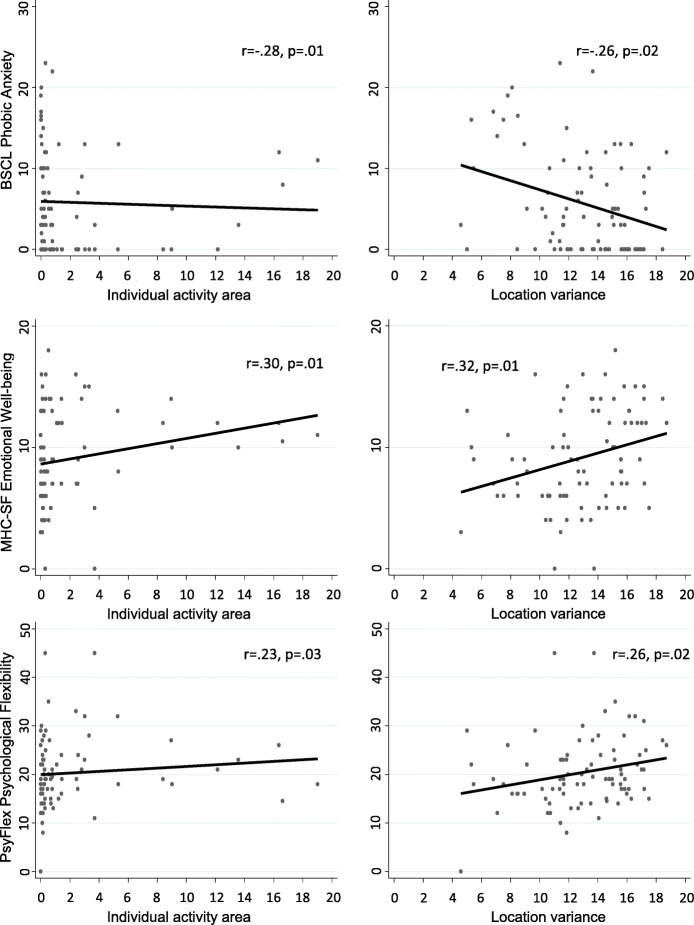
Results: Spatiotemporal patterns of inpatients and outpatients showed differences consistent with predictions (e.g., outpatients showed higher active areas). These patterns were largely unassociated with symptoms (except for agoraphobic symptoms). Greater movement and variety of movement were more predictive of wellbeing, however, in both inpatients and outpatients.
Conclusion: Measuring spatiotemporal patterns is feasible, predictive of wellbeing, and may be a marker of patient functioning. Ethical issues of collecting GPS data are discussed.
Keywords: Global positioning system (GPS); Spatiotemporal movement; Transdiagnostic; Wellbeing.
Conflict of interest statement
The authors declare that they have no competing interests.
Figures

References
-
- American Psychiatric Association . Diagnostic and Statistical Manual of Mental Disorders 5th ed. Washington D.C. 2013. Anxiety Disorders.
Publication types
MeSH terms
LinkOut - more resources
Full Text Sources
Other Literature Sources
Medical
