


The Impact of Estrogen and Estrogen-Like Molecules in Neurogenesis and Neurodegeneration: Beneficial or Harmful?
- PMID: 33762910
- PMCID: PMC7984366
- DOI: 10.3389/fncel.2021.636176
The Impact of Estrogen and Estrogen-Like Molecules in Neurogenesis and Neurodegeneration: Beneficial or Harmful?
Abstract
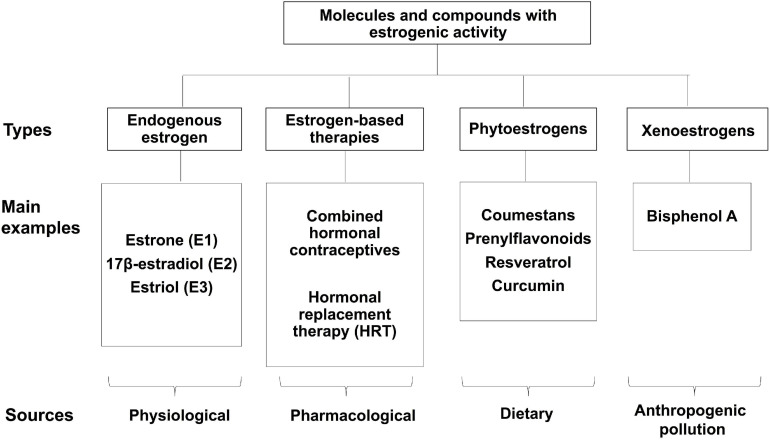
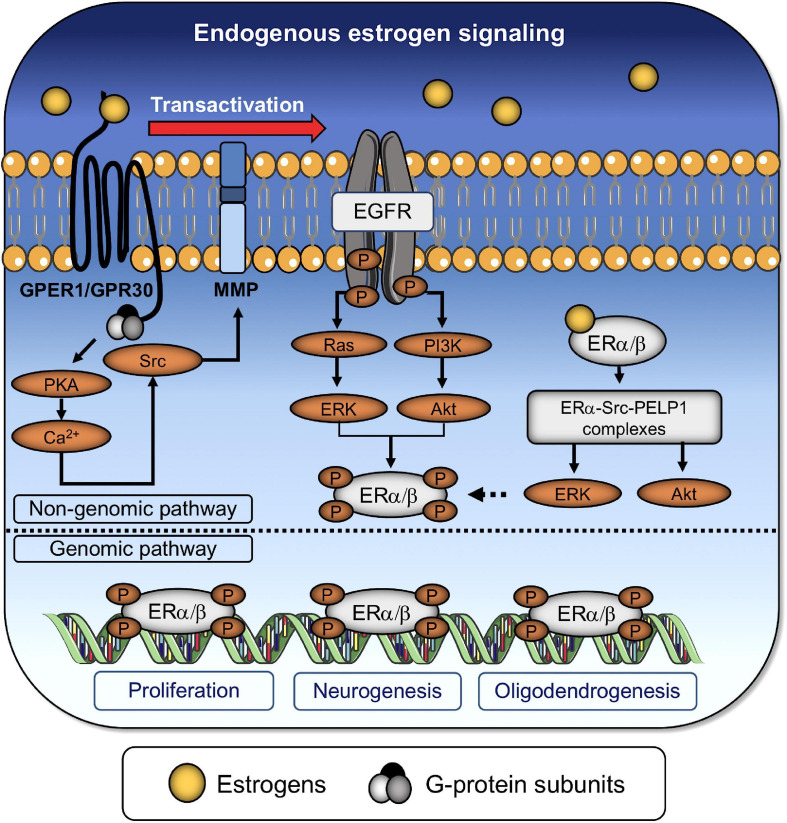
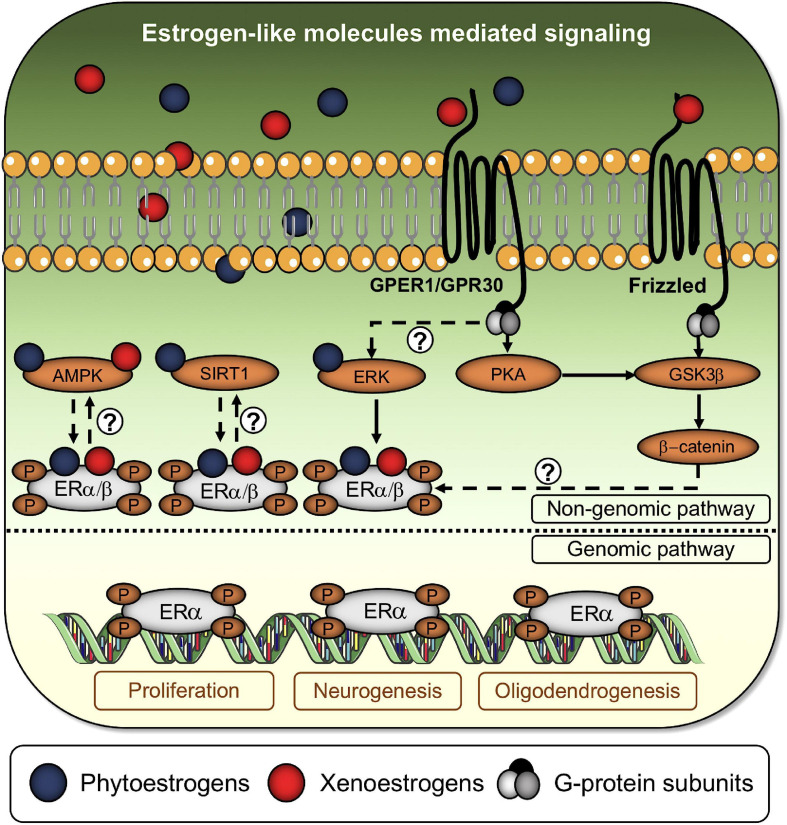
Estrogens and estrogen-like molecules can modify the biology of several cell types. Estrogen receptors alpha (ERα) and beta (ERβ) belong to the so-called classical family of estrogen receptors, while the G protein-coupled estrogen receptor 1 (GPER-1) represents a non-classical estrogen receptor mainly located in the plasma membrane. As estrogen receptors are ubiquitously distributed, they can modulate cell proliferation, differentiation, and survival in several tissues and organs, including the central nervous system (CNS). Estrogens can exert neuroprotective roles by acting as anti-oxidants, promoting DNA repair, inducing the expression of growth factors, and modulating cerebral blood flow. Additionally, estrogen-dependent signaling pathways are involved in regulating the balance between proliferation and differentiation of neural stem/progenitor cells (NSPCs), thus influencing neurogenic processes. Since several estrogen-based therapies are used nowadays and estrogen-like molecules, including phytoestrogens and xenoestrogens, are omnipresent in our environment, estrogen-dependent changes in cell biology and tissue homeostasis have gained attention in human health and disease. This article provides a comprehensive literature review on the current knowledge of estrogen and estrogen-like molecules and their impact on cell survival and neurodegeneration, as well as their role in NSPCs proliferation/differentiation balance and neurogenesis.
Keywords: 17β-estradiol; Alzheimer’s disease; ERα/β; GPER1/GPR30; Parkinson’s disease; bisphenol A; hormone replacement therapy; neural stem/progenitor cells.
Copyright © 2021 Bustamante-Barrientos, Méndez-Ruette, Ortloff, Luz-Crawford, Rivera, Figueroa, Molina and Bátiz.
Conflict of interest statement
FB-B was employed by company Cells for Cells (Chile). The remaining authors declare that the research was conducted in the absence of any commercial or financial relationships that could be construed as a potential conflict of interest.
Figures
References
-
- Agarwal S., Yadav A., Tiwari S. K., Seth B., Chauhan L. K., Khare P., et al. (2016). Dynamin-related protein 1 inhibition mitigates bisphenol a-mediated alterations in mitochondrial dynamics and neural stem cell proliferation and differentiation. J. Biol. Chem. 291 15923–15939. 10.1074/jbc.m115.709493 - DOI - PMC - PubMed
Publication types
LinkOut - more resources
Full Text Sources
Other Literature Sources
Research Materials
