


Characterization of Pathogenic Vibrio parahaemolyticus Isolated From Fish Aquaculture of the Southwest Coastal Area of Bangladesh
- PMID: 33763050
- PMCID: PMC7982743
- DOI: 10.3389/fmicb.2021.635539
Characterization of Pathogenic Vibrio parahaemolyticus Isolated From Fish Aquaculture of the Southwest Coastal Area of Bangladesh
Abstract
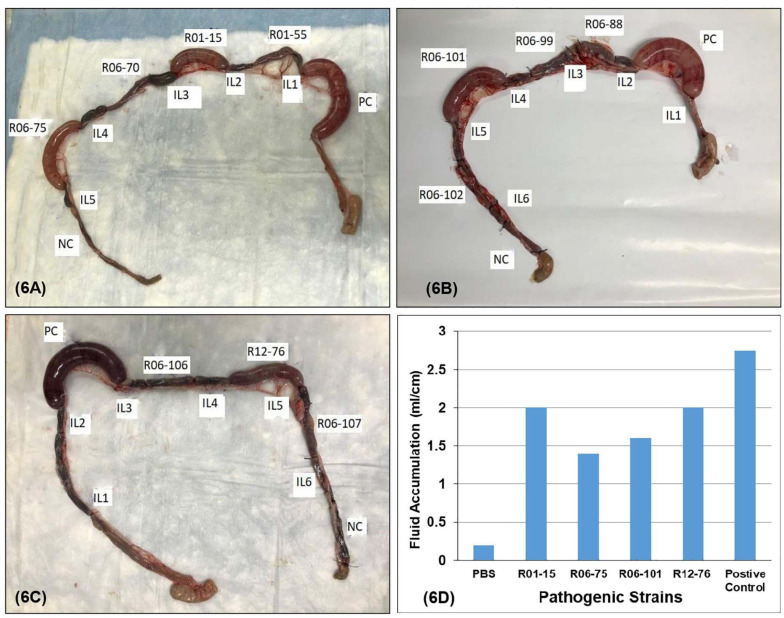
Vibrio parahaemolyticus is a major foodborne pathogen responsible for significant economic losses in aquaculture and a threat to human health. Here, we explored the incidence, virulence potential, and diversity of V. parahaemolyticus isolates from aquaculture farms in Bangladesh. We examined a total of 216 water, sediment, Oreochromis niloticus (tilapia), Labeo rohita (rui), and Penaeus monodon (shrimp) samples from the aquaculture system where 60.2% (130/216) samples were positive for V. parahaemolyticus. Furthermore, we identified 323 V. parahaemolyticus strains from contaminated samples, 17 of which were found positive for trh, a virulence gene. Four isolates out of the 17 obtained were able to accumulate fluid in the rabbit ileal loop assay. The correlation between the contamination of V. parahaemolyticus and environmental factors was determined by Pearson correlation. The temperature and salinity were significantly correlated (positive) with the incidence of V. parahaemolyticus. Most of the pathogenic isolates (94.1%) were found resistant to ampicillin and amoxicillin. O8: KUT was the predominant serotype of the potentially pathogenic isolates. ERIC-PCR reveals genetic variation and relatedness among the pathogenic isolates. Therefore, this region-specific study establishes the incidence of potential infection with V. parahaemolyticus from the consumption of tilapia, rui, and shrimp raised in farms in Satkhira, Bangladesh, and the basis for developing strategies to reduce the risk for diseases and economic burden.
Keywords: Vibrio parahaemolyticus; aquaculture; histopathology; rabbit ileal loop; trh.
Copyright © 2021 Siddique, Moniruzzaman, Ali, Dewan, Islam, Islam, Amin, Mondal, Parvez and Mahmud.
Conflict of interest statement
The authors declare that the research was conducted in the absence of any commercial or financial relationships that could be construed as a potential conflict of interest.
Figures



References
-
- Ansaruzzaman M., Lucas M., Deen J. L., Bhuiyan N. A., Wang X.-Y., Safa A., et al. (2005). Pandemic serovars (O3: K6 and O4: K68) of Vibrio parahaemolyticus associated with diarrhea in Mozambique: spread of the pandemic into the African continent. J. Clin. Microbiol. 43 2559–2562. 10.1128/JCM.43.6.2559-2562.2005 - DOI - PMC - PubMed
-
- Bag P. K., Nandi S., Bhadra R. K., Ramamurthy T., Bhattacharya S. K., Nishibuchi M., et al. (1999). Clonal diversity among recently emerged strains ofVibrio parahaemolyticus O3: K6 associated with pandemic spread. J. Clin. Microbiol. 37 2354–2357. 10.1128/JCM.37.7.2354-2357.1999 - DOI - PMC - PubMed
-
- Bancroft J. D., Gamble M. (2008). Theory and Practice of Histological Techniques. London: Churchill Livingstone.
LinkOut - more resources
Full Text Sources
Other Literature Sources
